Fifteen months into the role, Marriott’s new Vice President of Global Claims took a hard look at a workers’ compensation program that had largely run on autopilot for decades — and launched a methodical overhaul designed to bring consistency, speed, and a better associate experience to one of the world’s largest hospitality companies.
By bringing an athletic trainer onto its safety team, HEI Civil transformed how it manages workplace injuries — reducing claims, cutting costs, and earning the trust of a workforce that now sees care as a core part of the company’s culture.
When rising workers’ compensation costs signaled that there was opportunity for improvement, Griffin Health’s leadership team took an honest look in the mirror — and built a management-driven culture of accountability that cut claims, reduced costs, and made employee safety as central to the organization’s mission as patient care.
By transforming its approach to youth care and injury prevention, George Junior Republic achieved a dramatic reduction in workplace injuries and lost workdays — proving that caring for the young people they serve and protecting the staff that serve them are inseparable goals.
By pairing disciplined data analytics with a deeply held commitment to caring for its associates, Burlington, one of the fastest growing national off-price retailers, transformed its workers’ compensation program into a scalable, consistent, and genuinely people-first operation.
As Foundation Building Materials expanded rapidly through acquisition, its risk management team built a workers’ compensation program designed to scale without losing the one thing that matters most — the personal touch that keeps injured workers from ever feeling alone in the process.
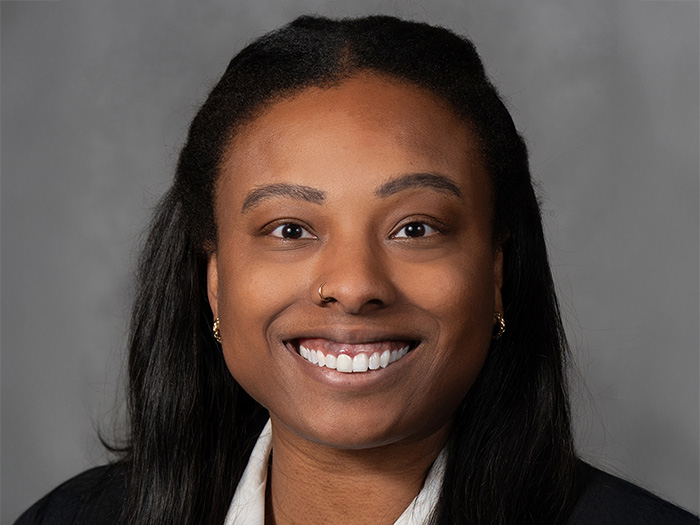
When Tiara Nelson stepped into the workers’ compensation leader role at Dauch Corporation, she inherited a program with almost no documentation, no formal training, and no playbook. In under a year, she built one — and the results have been transformative.
Over a decade of disciplined, incremental building, Essentia Health transformed a fragmented, claims-only workers’ compensation program into a fully integrated system of prevention, early intervention, and purposeful return-to-work — one that now serves caregivers across three states with the consistency and care they deserve.
By building a comprehensive, technology-enabled safety and risk management program specifically designed for school districts, the Georgia School Boards Association has turned a statewide self-insured fund into a model of prevention — delivering dividends, lowering costs, and reaching the school communities that need it most.
Emerging from the pandemic with an exhausted workforce and a stalled safety culture, Aspirus Health rebuilt its workers’ compensation and employee safety programs from the ground up — one hospital, one relationship, one conversation at a time.
By consolidating a fragmented workers’ compensation program and embedding dedicated case management resources, Continental Tire transformed a structurally inefficient system into a model of consistency, accountability, and measurable results — without losing sight of the injured employees at the heart of it.
When a post-pandemic claims crisis threatened to overwhelm its workers’ compensation program, Kelly overhauled its approach — forging a data-driven partnership that dramatically reduced litigation, accelerated claim closure, and put injured workers back at the center of the process.
Over 17 years, Larimer County’s Risk Manager Jeff Green transformed a bare-bones, deficit-ridden worker’ compensation program into one of the most consistent and cost-effective in the public sector — by making transparency, partnership, and getting people back to work the cornerstones of everything.
When two of the country’s largest health systems merged to form Advocate Health, the challenge of unifying their workers’ compensation programs fell to Melinda Daniel — who built a single enterprise program for 150,000 teammates across six states, guided by one simple principle: teammates taking care of teammates.
Panda Restaurant Group tackled a workers’ compensation crisis hiding in plain sight — building an in-house investigative team that cracked down on fraud and abuse while simultaneously making it easier than ever for genuinely injured employees to return to work.
By asking “why” one more time than most organizations are willing to, Professional Contract Services built a nurse triage program that dramatically reduced lost time and claim volume — while proving that caring for employees as whole human beings is the smartest risk management strategy of all.
By treating every injured employee like a family member — and finding vendor partners willing to do the same — Rumpke Waste & Recycling built a workers’ compensation program with sustained cost reductions and a 98% return-to-work rate that reflects something deeper than good claims management.
By building a disciplined, multi-layered opioid management program from the ground up, Nevada’s Risk Management Division has dramatically reduced opioid prescribing across its Workers’ Compensation plan of more than 900 open claims, protecting workers from addiction while cutting costs and improving recovery outcomes.
By unifying its approach to risk across workers’ compensation, auto liability, and general liability — and backing it with predictive analytics, behavioral safety training, and aggressive early intervention — Verizon achieved tens of millions of dollars in savings while building a stronger culture of care for its workforce.