Newsletters
 Risk Central
 Digital Edition
2026 Theo Award Winner: Panda Restaurant Group
 Panda Restaurant Group operates more than 2,500 locations across the United States, serving up American Chinese cuisine from Rosemead, California. With roughly 55,000 associates nationwide, the company behind Panda Express is one of the country’s largest restaurant operators. And for years, its workers’ compensation program carried a cost that didn’t add up.
Although only about a quarter of Panda’s restaurants are in California, the state was consuming a vastly disproportionate share of workers’ compensation spend — with Southern California locations alone accounting for a significant portion of that. The math, as Shaun Jackson put it, simply didn’t make sense.
“We’ve got 620 restaurants in California, and 1,900 everywhere else,” said Jackson, Panda’s Executive Director of Risk Management. “Sixty-five percent of our spend was coming from California, even though we’re in 50 states.”
The problem wasn’t just geographic. A significant share of claims were questionable — some clearly fraudulent, many in a gray area that traditional third-party claims management wasn’t equipped to sort through effectively.
Meanwhile, structural barriers within the business were keeping legitimately injured employees out of work longer than necessary.
Operators hesitant to absorb the cost of accommodated workers were leaving people on the sidelines — a dynamic that inflated disability costs and, ironically, created more exposure to the very claims abuses the company was trying to address.
Something had to change.
Building the Team
Jackson and his leadership team identified two pressure points that needed to be addressed together: return-to-work barriers and fraud oversight. They had addressed each in isolation before. The shift was combining them into a unified, holistic program — one that maximized every opportunity to get injured employees back to work while simultaneously deploying rigorous oversight for claims that didn’t pass scrutiny.
The centerpiece was something few companies had attempted: an in-house investigative team of employees working directly for Panda.
“I haven’t met anybody who has investigators that work for the company going out and doing actual surveillance,” Jackson said. “They’re not just doing initial statements and paper investigations. They’re going out, taking the medical report, observing the person in public — and doing it early, ideally before a claim ever gets to an attorney.”
Panda hired six investigators — initially concentrating in California, then expanding nationally. Rather than bringing in generalists, they recruited heavily from law enforcement and state insurance fraud divisions. Former DOI investigators. Licensed private investigators with workers’ comp backgrounds. People whose credentials would hold up to scrutiny.
“We ended up finding extremely qualified people who had worked in the workers’ comp space before,” Jackson said. Their mandate went well beyond surveillance. From day one, investigators are embedded in the claims process — working alongside Panda’s in-house adjusters and Sedgwick, its third-party administrator — reviewing files, conducting background checks and interviews, and engaging directly with claimants and their attorneys when warranted.
An emerging AI platform now helps flag claims with elevated fraud indicators, giving the team an additional intake channel and allowing them to work toward reviewing 100% of subjective claims at scale.
Orange Chicken Economics
One of the most effective tools in the program has been education — and Jackson has a talent for making the stakes concrete.
“We show our operations people, our store managers, our team leaders — what is workers’ comp fraud? This is actually a crime,” he said. “We show them how much we’re spending. We show them what the value is to them as restaurant operators. How much orange chicken do you have to sell to cover one workers’ comp claim? That could be a month’s worth of sales.”
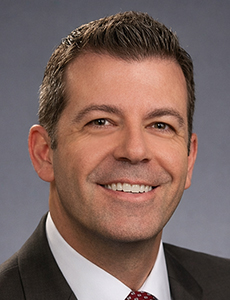
Shaun Jackson, Executive Director of Risk Management, Panda Express
That framing resonated. Operators who had once been indifferent to claim costs began to understand the direct connection between claims management and their own bottom lines.
The return-to-work piece worked through a different kind of incentive. Panda began subsidizing labor costs for operators who reintegrated injured employees on modified duty — effectively removing the financial disincentive that had been keeping people out of work.
“A major obstacle was the operational cost associated with accommodating injured associates in transitional roles,” Jackson explained.
“By offsetting those payroll costs, Panda removed a key barrier to return-to-work participation, allowing operations teams to focus on recovery, engagement, and getting associates back into productive roles as quickly and appropriately as possible.”
The logic is circular in the best possible way: savings generated by fraud prevention fund the return-to-work subsidies, which reduce disability durations, which reduce overall claims costs. “As long as we can keep the fraud and abuse at bay,” Jackson said, “we can reallocate that money to incentivize the store operators to return more people to work.”
Results — and a Broader Mission
The program achieved a positive return on investment within months of launch. Fraudulent claims have been identified and dismissed. Attorney involvement on questionable claims has decreased. In one Florida case, early surveillance shifted the reserve on a single matter from more than half a million dollars to essentially zero — while sending a message that rippled outward.
“We’ve discouraged some applicant attorneys from pursuing claims,” Jackson says. “We’ve actually changed some doctors’ minds through this process.”
Equally important, the program has improved the experience for legitimately injured workers. By focusing resources on early intervention and eliminating waste from abusive claims, Panda can direct more attention — and more funding — toward supporting employees who genuinely need it.
The investigative team’s value has expanded well beyond workers’ compensation. The same investigators now handle general liability matters, employment issues, and other situations requiring due diligence.
When a plaintiff law firm files a major claim, investigators do the groundwork. When concerns arise about workplace misconduct, they’re brought in. Their skills, Jackson noted, can create value across virtually every area of a company Panda’s size.
“Panda Restaurant Group stood out for its proactive approach to managing workers’ compensation, combining strong employee support with disciplined oversight of complex claims,” said Devora Brainard-DeLong, Vice President, Client Services, Sedgwick. “In partnership with Sedgwick, their use of advanced analytics and AI to guide decision-making has helped create a more efficient program that delivers meaningful results for both the business and its people.”
Looking ahead, Jackson sees AI as the multiplier that will allow Panda to do what it’s doing now — but at scale, as the company continues to grow. The goal is to replicate the program’s philosophy across thousands of claims, flagging what needs attention and freeing human experts to focus where they matter most.
For Jackson, the whole program comes back to a simple principle: Treat every claim the same way, get every injured person back to work if at all possible, and let the investigation follow naturally from there.
“We want every single person to have every opportunity to recover,” he said. “And we’re going to give everybody as much opportunity as possible — only at the point that’s exhausted will we need to have investigators in the mix.”
It’s a philosophy that has shifted mindsets across the organization — from examiners and operators to leadership and external partners. And increasingly, other large employers are taking note, reaching out to Panda for guidance on building programs of their own. &

 The Theo Award celebrates its sophomore year, honoring 28 workers’ compensation programs for their excellence and service to workers across the nation. To learn more about the award and amazing qualities each winner possesses, visit here.