Newsletters
 Risk Central
 Digital Edition
2026 Theo Award Winner: Professional Contract Services, Inc.
 Professional Contract Services, Inc. is not your “typical” employer. The Austin, Texas-based nonprofit operates 33 job sites across 15 states providing meaningful employment for people with disabilities and veterans — on military installations and government facilities — delivering services that range from hospital housekeeping and food service to grounds maintenance, vehicle repair, and total facilities management.
The workforce is as diverse as the work itself. Employees speak dozens of languages. Some work overnight shifts. Many perform physically demanding tasks in high-risk environments. And a significant share have disabilities — because employing people with disabilities isn’t just a company practice at PCSI, it’s the mission.
Managing safety and workers’ compensation across that landscape requires more than standard protocols. It requires a willingness to keep asking questions until you get to the real answer.
“They didn’t stop at the first answer of ‘why,’ ” said Tony Cucollo, PCSI’s CEO and President. “Why are they not reporting right away? Why did you send them to the emergency room? Why does this person have more lost time than others for perhaps the same mishap? We kept asking why. And you get down to root causes that have solutions.”
The Problem Beneath the Problem
What Barbara Curd, VP of Safety and Risk Mitigation, and her team found when they dug into the data was a set of compounding challenges. Injuries weren’t being reported promptly. Employees were being sent to emergency rooms for conditions that didn’t require emergency care. Claims were taking longer than they should have.
And a significant share of incidents involved tenured employees — people with years of experience who had, perhaps, developed a certain comfort with risk.
The diversity of PCSI’s operations made a one-size-fits-all solution impossible. A safety approach designed for a hospital housekeeping crew at Naval Medical Center Portsmouth in Virginia isn’t necessarily right for a team repairing airfield fire trucks at Tinker Air Force Base in Oklahoma.
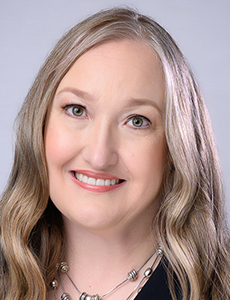
Barbara Curd, VP of Safety and Risk Mitigation, PCSI
What the organization needed was something that could travel anywhere, work at any hour, and communicate in any language — while getting injured employees to the right level of care as fast as possible.
The answer, developed in partnership with their carrier The Hartford, was a nurse triage program powered by Company Nurse.
A Nurse on Call, Always
The program gives every PCSI employee 24/7/365 access to registered nurses who can assess an injury, recommend the appropriate level of care — emergent, urgent, clinic or self-care — and document the facts of the incident in real time. Reports are distributed to stakeholders within minutes. Supervisors are removed from the medical assessment process entirely, allowing employees to speak directly and confidentially with a medical professional.
The multilingual component has been particularly significant. With a workforce that spans languages from Spanish to sign language, the ability to reach an interpreter in more than 200 languages means no employee has to navigate a frightening or confusing situation without someone who can communicate with them clearly.
“English may not be the primary language for some of our employees,” Curd explained. “Having that interpreter service gives them the confidence and understanding that we are focused on their best interest.”
The 24/7 availability sends its own message — especially for employees working overnight shifts or weekend rotations.
“It doesn’t matter what time of day — we’re getting immediate care to our employees,” Curd said. “It truly impacts the employee to know that we are an organization who cares about their health.”
What Changed
The results have been striking.
Lost time has been reduced by roughly 75% — a figure that Cucollo described simply as “massive.” Claim volume has dropped by a similar magnitude. Unnecessary emergency room visits have fallen sharply. And employees are reporting near-misses more readily than before, giving PCSI the leading-indicator data it needs to prevent incidents from happening in the first place.
The cultural shift has been equally significant.
“Our employees are more willing to report those near-misses that prevent accidents from happening,” Curd said. “And our employees feel more comfortable talking to a third party — a certified nurse — who can give them that feedback.”
For site leaders, the program has removed the burden of having to make medical judgment calls on the spot — and given them a shared, objective starting point for any incident response.
“Everybody is getting a shared understanding of what we have and what’s the next step,” Cucollo said. “The leader can act with confidence. And when the leaders at the job site see that lost time reduced dramatically, they go: I’m on board completely. Have you called nurse triage?”
The program didn’t succeed because of a single insight. It succeeded because PCSI’s leadership was willing to fund it, champion it, and stay the course — and because The Hartford, a partner of 15 years, helped develop and refine the approach rather than simply underwriting it.
“It can’t work without senior leadership supporting these efforts,” Curd said. “And that support — from the top down — highlights how important safety and employee well-being is to this organization.”
Getting Them Home the Same Way They Came In
PCSI’s shift to a large retention deductible program in 2024 sharpened the financial stakes even further, giving the organization a direct dollar-for-dollar incentive to keep investing in prevention.
That investment is ongoing — continued site visits from The Hartford, an annual leadership training event in Austin, and a persistent focus on the segment of the workforce that data has shown to be unexpectedly vulnerable: tenured employees with five or more years of service, who account for a disproportionate share of claims.
But beneath all the program mechanics and financial structures, the philosophy is straightforward.
“Our continued goal,” Curd said, “is getting our employees home the same way they came into work.”
At PCSI — where the workforce includes people with significant disabilities the rest of the employment world has too often overlooked — that commitment isn’t just a safety slogan. It’s the whole point. &

 The Theo Award celebrates its sophomore year, honoring 28 workers’ compensation programs for their excellence and service to workers across the nation. To learn more about the award and amazing qualities each winner possesses, visit here.