The captive insurance landscape has changed dramatically over the past two decades. What was once a relatively small group of domiciles has grown into a crowded field, with states and jurisdictions across the globe vying for the attention of captive owners. For established leaders like Vermont, the challenge is no longer just attracting new business—it’s continuing to evolve while honoring what made them successful in the first place.
That balance is top of mind for Christine Brown, the newly appointed Deputy Commissioner of Captive Insurance for the State of Vermont. With twenty-three years inside the captive insurance division of the Department of Financial Regulation, Brown stepped into her role earlier this year with a deep understanding of the industry, her team, the culture, and the responsibilities that come with leading the world’s premier captive domicile.
“When you get promoted to a new role, particularly in Vermont where we’re fortunate to be recognized as the leader, there’s definitely a sense of responsibility to make sure we’re making thoughtful decisions and heading in the right direction” Brown said. “People, including other regulators, look to us for leadership, which is both motivating and something we take very seriously.”

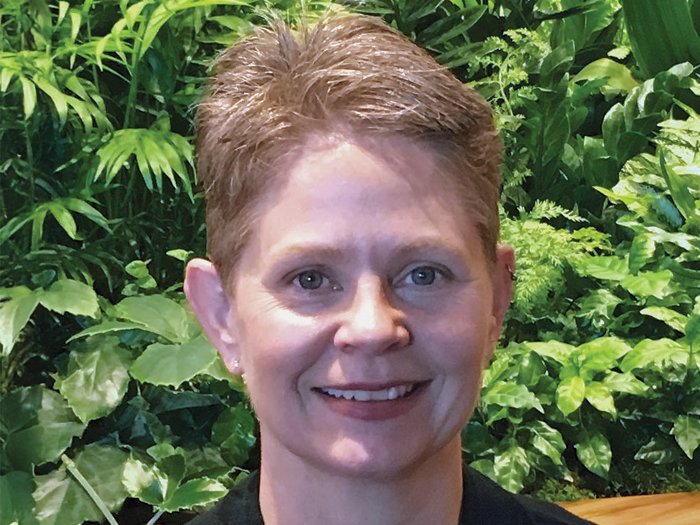
Christine Brown, Deputy Commissioner of Captive Insurance, State of Vermont
Brown’s tenure with the division has spanned three different deputies—Len Crouse, David Provost, and Sandy Bigglestone—each of whom brought their own leadership style to the role. What has remained constant, she said, is the culture.
“The feeling that we are a family has remained constant with every deputy,” Brown said. “I want to continue to foster a commitment to excellence and a culture of being a safe place where the team feels supported and encouraged to share ideas and knowledge openly.” We not only care about the important work we do every day, but we care about each other, which makes all the difference.”
That sense of continuity, she explained, is one of the things that makes Vermont distinct. Many of the division’s staff members came up through the industry together, with backgrounds at captive management companies, audit firms, and other service providers. The result is a team with significant subject matter expertise across multiple disciplines.
“What makes Vermont different is the stability we’ve built and the incredible depth of experience across our team. We have people who can share that experience and teach our newer team members,” Brown said. ” I have a great sense of confidence knowing I’m surrounded by a team I can rely on who are subject matter experts.”
That bench strength extends beyond the captive division itself. Brown noted that Department of Financial Regulation’s Commissioner, Kaj Samsom, has been a steady source of support, holding weekly leadership meetings and biweekly one-on-ones with each of the four deputies in the Department. Brown has worked to emulate that approach, meeting with every member of her staff individually to take the pulse of the division.
She also pointed to Vermont’s broader governmental ecosystem, legislators and the governor’s office included, as a quiet but powerful advantage. Brown transitioned into her position just as the legislative session was beginning, and carrying a bill through to passage gave her a firsthand look at how aligned the state’s leadership is with the captive industry.
“We have a strong team, but we’re also fortunate to have support and stability at the governmental level” Brown said. “That foundation allows us to regulate captives in a meaningful and consistent way. It is something that can be easily taken for granted, but it makes a real difference in the work we’re able to do when we don’t have to worry so much about changing priorities and politics.
Even with that foundation, Brown is clear-eyed about the competitive landscape. With more states and offshore jurisdictions entering the captive space every year, resting on past success is not an option.
“We can’t rest on our laurels. I don’t want us to simply rely on our long history and past success,” Brown said. “Instead, I’m focused on preserving our strengths, while taking an honest look at where we can improve so we continue to evolve.”
That recalibration starts with a proactive look at the value proposition Vermont offers to captive owners and the broader insurance community. Brown said one of her early priorities has been examining where the division spends its time and resources, and whether those investments are still producing the kind of value that sets Vermont apart.
“In a landscape where standards are being loosened to attract business, I think it is important for Vermont to continue to focus on its strong regulatory framework, built over many decades, that has always recognized the special purpose for which captives are formed and flexible enough to pivot and respond to stakeholder needs.” It means finding a balance between following the statutory requirements, while making sure the division is creating value for outside stakeholders – through an active legislative agenda and ongoing engagement with the Vermont Captive Insurance Association. It’s also about working with the commercial marketplace to find solutions together.
“Captives can, when appropriate, fill spaces that the commercial marketplace can’t, they can help round out a program and provide access to reinsurance,” Brown said. “It’s important that we’re talking with carriers and brokers to educate them about captive insurance and to learn from them. They are the boots on the ground, hearing and seeing what’s happening in the market. The strength of Vermont’s regulatory framework is relied upon not just by captive owners, but by fronting carriers, reinsurers, rating agencies and other counterparties.” Brown’s regulatory philosophy reflects that collaborative mindset. She emphasized that competitiveness, in her view, isn’t ultimately about captive formation numbers.
“Strong and consistent regulation is imperative to upholding the reputation of not just Vermont, but the captive industry as a whole. Captive insurance should not be viewed merely as an economic development initiative for states, but as a risk management and financing tool that, when properly structured, managed, and regulated, can provide significant value to captive owners.” Brown said. “Ultimately we want the captive insurance companies licensed in our domicile to succeed. That’s a captive owner’s goal too. We are aligned in that mission—and we work together to ensure mutual success.”
If there’s one theme Brown returns to most often when describing her priorities, it’s responsiveness. Captive owners, she said, consistently cite turnaround time as one of the things they value most—and one of the things they want to see continue to improve.
“We strive to work at the speed of business while utilizing our expertise to give that extra attention to every request, because every captive is different,” Brown said. “The business environment is constantly evolving and we must continue to evolve with it by remaining adaptable and maintaining an innovative mindset.”
Achieving that goal in a world full of distractions and growing workloads requires more than good intentions. Brown said the division is actively redirecting resources toward technology modernization, working with Vermont’s agency of digital services to update IT systems and explore secure, closed-environment artificial intelligence tools that could help staff operate more efficiently.
“Confidential information security is always our number one concern when using technology,” Brown said. “But we now have dedicated staff members whose job responsibilities include working on these initiatives.”
The division is also leaning into communication on multiple fronts—issuing new guidance recently on business plan change submissions and credit for reinsurance – with more to come, fielding complex questions about what captives can and cannot do, and participating regularly in industry conferences and panel discussions to communicate and meet with captives and stakeholders in person in their learning and networking environments.
“Many times, the topics brought to us aren’t straightforward” Brown said. “We’re often evaluating highly innovative products that require careful research to ensure they meet appropriate standards. We view this vetting process as an important part of our role as leaders in this industry. This is especially important as new people enter the space, some of whom may not yet have the same depth of expertise and experience, so we take this responsibility seriously.”
Looking ahead, Brown said her focus will remain on strengthening the partnership between regulator and industry, while continuing to invest in the people, processes, and technology that have made Vermont a trusted home for captive insurance for decades.
“We will continue to direct resources to the areas we know are valuable, not just internally but externally as well,” Brown said. “That’s what’s always set us apart.”
To learn more, visit https://www.vermontcaptive.com/.
This article was produced by the R&I Brand Studio, a unit of the advertising department of Risk & Insurance, in collaboration with State of Vermont. The editorial staff of Risk & Insurance had no role in its preparation.