Newsletters
 Risk Central
 Digital Edition
2026 Theo Award Winner: HEI Civil
 Before Camille Forte arrived at HEI Civil in 2020, the Castle Rock, Colorado-based civil construction company was managing workplace injuries the way most companies do — with safety professionals doing their best in a role that stretches far beyond their training.
The safety department was small: three or four people supporting roughly 550 field employees. When someone got hurt, a safety rep would respond, handle the documentation, and refer the employee to an outside clinic. There was no one on staff with the clinical depth to evaluate an injury, guide treatment, or make the kind of real-time decisions that can mean the difference between a $200 first-aid case and a full-blown workers’ compensation claim.
“They were doing inspections, walkthroughs, taking care of incidents and accidents — and then the injuries on top of all that,” Forte explained. “He was more of a safety professional with a first aid background. He had a lot of field experience, but the medical piece was something he was slowly picking up from just going to the doctor’s clinic.”
The safety team recognized the gap. After several years of making the case to leadership, HEI Civil agreed to invest in something most construction companies have never considered: a licensed Athletic Trainer (ATC) with industrial workers’ comp experience.
The Roving Walgreens
Forte hit the ground running — and rarely stops moving. When an injury is reported, she’s on-site within the hour: evaluating the employee, conducting any required testing, and making an immediate clinical assessment.
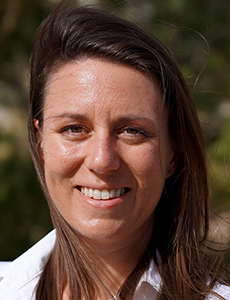
Camille Forte, Athletic Trainer, HEI Civil
Her car, she cheerfully noted, is “like a roving Walgreens” — stocked with braces, bandages, Biofreeze patches, and OSHA-approved over-the-counter medications. If a worker strains his shoulder at 8 a.m. and needs ibuprofen, she’s not sending him to a pharmacy. She hands him a packet on the spot.
“Some of these guys might have a tight budget,” she said. “Why am I going to go have them spend $12 on a bottle of ibuprofen? I’ll give it to them. They have it if they need it.”
That same practical, human-centered philosophy is embedded in the program’s most distinctive innovation: the Two-Week Recovery Program (2WRP). The idea came from observing how hospitals discharge patients — with a packet that tells them what happened, what to do at home, and when to seek further care.
Forte built her own version of that packet, tailored to each injury. A shoulder sprain gets a shoulder-specific guide: what to expect, home care instructions, job-site coaching on overhead lifting, self-massage techniques, and a set of targeted stretching exercises from a digital exercise library she uses carefully within OSHA’s first-aid guidelines. Contact information for both Forte and the safety manager is printed directly on every packet.
“We know that 80% of what we tell people leaves their head,” she said. “They remember the 20% — like, ‘she said ibuprofen, right?’ The packet gives them a guide for what’s next.”
Colorado gives employers roughly ten days before a workplace injury must be reported to workers’ comp insurance. The Two-Week Recovery Program is built around that window — enough time to treat many injuries in-house, track progress through regular follow-ups, and escalate quickly if something isn’t healing the way it should.
“If you’re not really feeling better or progressing well, that’s when we’ll open a claim and take you to see a doctor,” Forte said. “But most of the time, they get better with just those very simple first steps — the same ones a doctor’s going to tell you to do anyway.”
Earning Trust, One Interaction at a Time
Construction workers, Forte has learned, tend to be skeptical of medical professionals — and initially uncertain about what an athletic trainer even is. Her standard explanation: “Do you watch football? You see those people in khaki pants run out when there’s an injury? That’s me.”
Once they understand, most of her guys are on board quickly. They don’t want to see doctors. They want to keep working. And they’ve learned that Forte’s evaluation is something they can trust.
“I proved one guy wrong,” she recalled with a laugh. “He wanted to see a doctor immediately, and I said, ‘The doctor’s going to tell you exactly what I’m telling you.’ And the doctor said the exact same thing. After that, a lot of them end up self-discharging after just one appointment. We call it the ‘peace of mind’ appointment.”
The cultural shift has been equally significant on the reporting side. Foremen who once hesitated to report minor injuries now call quickly — even for something that just needs a bandage.
“These guys like having the interactions,” Forte said. “They seem hard and rough, but they’re surprised at the level of care they get. Having that 15- or 30-minute conversation, even for a minor thing, makes a huge difference. It tells them their company is listening.”
Building Toward the Future
Over five years, the results have been measurable. HEI Civil’s experience modification rate has dropped significantly — a sustained, downward trend that reflects fewer claims, less lost time, and a workforce that is healthier and more engaged in their own recovery.
Now the program is expanding. HEI Civil’s divisions in North Carolina and Texas — smaller operations that can’t yet justify their own full-time athletic trainer — have begun accessing Forte’s expertise through telehealth. When someone gets hurt at one of those sites, they get on a Teams call with Forte. The Two-Week Recovery Program gets emailed or printed on-site. Follow-ups happen one to two times a week, just as they do in Colorado.
“It’s not like you get a one-time evaluation from me and then you’re on your own,” Forte said. “We’re doing follow-ups, we’re having collaborative conversations — and if it looks like a sprain, acts like a sprain, nine times out of 10, it’s a sprain, and we can push them in the right direction.”
The longer-term goal is straightforward: as the Texas and North Carolina operations grow, they’ll eventually have athletic trainers of their own. Until then, Forte is the hub — and the model she’s built in Colorado is the blueprint.
“I know leadership love that I’m around and taking care of our people,” she said. “And I’ve got plenty of stories, plenty of data. Those little interactions — they make a huge difference.” &

 The Theo Award celebrates its sophomore year, honoring 28 workers’ compensation programs for their excellence and service to workers across the nation. To learn more about the award and amazing qualities each winner possesses, visit here.