Newsletters
 Risk Central
 Digital Edition
2026 Theo Award Winner: Verizon
 Managing risk at Verizon is not a small-scale undertaking. With a workforce that spans the country — technicians working in the field, drivers logging miles in company vehicles, crews descending into manholes and hauling equipment up ladders — the company’s exposure across workers’ compensation, auto liability, and general liability is vast and varied.
For years, the program faced familiar pressure: high claim frequency, rising incurred costs, and the ongoing challenge of getting ahead of risks before they became losses.
Alys Onorato, Director of Claims Risk Management at Verizon, came to the role with a background that spans claims adjusting, workers’ compensation, treasury, and corporate finance. Her approach to the challenge was shaped by a single guiding conviction.
“Risk doesn’t live in a silo, so our management shouldn’t either.”
One Program, Three Lines
Rather than treating workers’ compensation, auto liability, and general liability as separate problems with separate solutions, Onorato and her team built a centralized risk quantification model that draws from a unified data source across all three lines.
The logic is straightforward but powerful: patterns that appear in one area often have roots — or solutions — in another. Fleet safety training, for example, doesn’t just reduce auto claims. It reduces workers’ compensation injuries tied to vehicle incidents. Ergonomic improvements that prevent strain injuries on job sites feed multiple lines simultaneously.
“We identified cross-line patterns,” Onorato said, “such as how fleet safety training might actually reduce the company’s liability risk.”
Verizon’s partnership with Aon, Liberty Mutual, and Sedgwick is central to making the model work. Each partner plays a distinct role — Sedgwick provides clinical and administrative backbone, Liberty Mutual brings underwriting depth and loss control expertise, and Aon delivers global brokerage and data benchmarking.
Together, Onorato says, they function as “a strategic extension of the Verizon team,” allowing the company to scale proprietary models and quantify risk with precision.
Getting Ahead of the Loss
On the prevention side, two initiatives stand out.
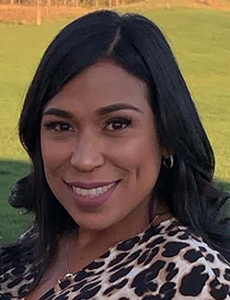
Alys Onorato, Director of Claims Risk Management, Verizon
The first is Decision Driving® — a behavioral safety program that Verizon deployed in partnership with Liberty Mutual, training thousands of employees across its fleet operations. What makes the program distinctive isn’t the curriculum itself, but the infrastructure around it.
“Decision Driving isn’t just a safety course — it’s a behavioral shift,” Onorato said. “By integrating AI-powered telematics, we’ve moved from guessing who our at-risk drivers are to coaching them in real time. Telematics provides the ‘why’ behind the ‘what,’ allowing us to intervene before a near-miss becomes a catastrophic claim.”
The results have been significant: auto liability risk improvement workstreams delivered substantial avoided claim costs and a meaningful reduction in driver- and fleet-related workers’ compensation injuries.
The second focus was ergonomics — specifically the physical demands placed on field technicians handling ladders and manhole covers, a consistent source of back and shoulder injuries.
Targeted ergonomic initiatives generated millions in annual aggregate claim cost avoidance.
And a rigorous, objective study of a proposed new ladder rack system — intended to improve safety — actually demonstrated it was not statistically safer than the existing vehicle design, saving Verizon from a significant unneeded expenditure.
Meanwhile, slip, trip, and fall incidents declined measurably.
Closing the Loop on Claims
Prevention addresses the front end. On the back end, Onorato’s team overhauled claims management with equal rigor.
The biggest shift, she said, was what she calls aggressive early intervention. Verizon streamlined its intake process through automation, dramatically reducing the time between a first report of injury and initial claim action. Automated pathways now handle simpler claims efficiently, freeing adjusters to focus their expertise where it matters most.
“By utilizing automated pathways for simple claims, our adjusters can now focus exclusively on resolving complex, pending inventory cases more efficiently,” she explained.
Accelerated closure initiatives — targeting aging, high-severity cases with focused resolution plans — are projected to generate substantial long-term savings. Sedgwick has consistently met and exceeded its KPIs on claim closure ratios and reductions in pending reserves.
The financial outcomes across the evaluation period reflect the cumulative effect of all these workstreams: significant savings in workers’ compensation and general liability claim settlements, substantial auto liability cost avoidance, and tens of millions in total loss cost avoidance across the full casualty program.
“Verizon has set a new standard for what proactive, data-driven risk management can achieve,” said Jill Rogan, Senior Consultant, Commercial Risk Solutions at Aon.
“Faced with rising workplace injuries, motor vehicle crashes, and general liability claims, Verizon didn’t just react—they partnered with Aon, Liberty Mutual, and Sedgwick to fundamentally rethink how they prevent injuries and manage claims. By integrating injury prevention, fleet and driver safety, ergonomic innovation, and accelerated claim resolution, Verizon has delivered millions of dollars in loss cost avoidance while meaningfully improving employee safety and claim outcomes. Their ability to turn complex risk challenges into measurable, enterprise-wide results makes Verizon a standout example of risk management excellence.”
A Culture of Trust
Of course, numbers tell part of the story. The rest is harder to quantify.
Onorato is clear that the ultimate measure of the program’s success isn’t the savings figure — it’s what those savings represent about how Verizon treats its people.
“Our commitment to safety and immediate medical care has fostered a culture of trust,” she said. “These programs make our operations more resilient by reducing lost work hours and demonstrating that Verizon values its people as its most important asset.”
That culture of trust runs through every element of the program — from the telematics coaching that helps a driver improve before something goes wrong, to the clinical concierge support that ensures an injured worker understands the process and doesn’t feel abandoned. It’s a philosophy that treats safety not as a compliance function, but as an expression of what the organization values.
For a company operating at Verizon’s scale, getting that right requires relentless coordination, data discipline, and partners willing to function as genuine extensions of the team.
Under Onorato’s leadership, all three have come together — and the results speak for themselves. &

 The Theo Award celebrates its sophomore year, honoring 28 workers’ compensation programs for their excellence and service to workers across the nation. To learn more about the award and amazing qualities each winner possesses, visit here.