Newsletters
 Risk Central
 Digital Edition
2026 Theo Award Winner: Marriott International
 Marriott International has been self-insured and self-administered for more than 40 years. It is, in many ways, a point of pride — a philosophy built on the conviction that no outside organization can handle Marriott associate claims the way Marriott can.
“Marriott associates handling Marriott associate claims,” says Justin Romine, Vice President of Global Claims. “And the benchmarking we’ve done has confirmed that we do perform a little bit better than our hospitality peers when it comes to claims performance.”
But when Romine stepped into the role — only the third person to hold it in four decades — he brought a fresh set of eyes to a program that, in some areas, hadn’t been significantly updated since the 1980s. Working with managed care consultants at Epic, he undertook a systematic review of Marriott’s practices, vendors, and workflows.
The verdict, delivered with some humor by Epic’s vice president of managed care optimization, Ken Ferrell: “You guys haven’t changed much in the 40 years since I last looked at this,” he said pointedly. “You’re still doing some of the same things I set you up with back in the 80s.”
It was, Romine says, “a trip down memory lane” for Ferrell — and a clear call to action for Marriott.
Three Problems, Three Solutions
Romine approached the overhaul methodically, identifying three areas where targeted changes would have the most meaningful impact.
The first was nurse triage. With 418,000 associates working across hotels that never close — 365 days a year, around the clock — the absence of 24/7 nurse triage had created a persistent vulnerability. An associate injured on a Friday evening might wait until Wednesday before receiving a voice-to-voice contact from an adjuster.
“When someone is injured, they need immediate care and attention,” Romine explains. “Not doing that makes them feel like they’re not valued, like they’re not cared for — and they may go searching for solutions on their own and derail the claims process.”
The fix was straightforward: embed nurse triage so that any injured associate, at any hour, has immediate access to a medical professional who can assess the situation, give first aid guidance, direct them to the right provider, and start the care process on the right track.
But Romine saw an opportunity to do more than just add a triage line. Risk management leaders had long struggled with injury descriptions that were frustratingly vague — “hurt while lifting,” “hurt while bending” — giving them too little data to identify root causes or implement effective corrective actions. So the nurse triage program was designed to include a structured root cause analysis component, embedding a short series of targeted questions into every triage call.
“Better data leads to better corrective actions, which leads to fewer injuries,” Romine says. It was the feature that got the rest of the organization excited about what had initially seemed like a pure claims initiative.
The second change addressed a problem hiding in Marriott’s three-office structure. With regional claims offices in California, Texas, and Maryland operating independently, different vendors, different contracts, and different processes had proliferated across the country — creating what Romine describes as “leakage” in the program.
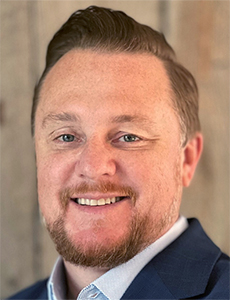
Justin Romine, Vice President of Global Claims, Marriott
Physical medicine was the most acute example. When the team ran the numbers, they found upwards of 40 different physical therapy suppliers operating across the country at varying rates and with inconsistent referral processes.
“40 vendors down to two or three,” Romine says simply. Through an RFP process, Marriott consolidated its physical therapy network and paired it with a centralized referral engine — a single portal where adjusters submit all referrals, and a rules engine on the back end routes each one to the appropriate preferred vendor. Physical therapy, DME, transportation, translation: one portal, consistent routing, no guesswork.
“It takes the guesswork out for the adjusters,” he says. “All they have to do is go in and place the referral, and it’ll route where it’s supposed to.”
“Marriott has long distinguished itself through innovation, thoughtful strategy, and an unwavering commitment to its associates,” said Ferrell.
“As the heart of the business and essential to its success, associates are central to everything Marriott does. Proud of the communities in which it operates, Marriott is committed to expanding access to opportunity for associates of all backgrounds and career stages.
“Rather than treating claims and managed care as transactional functions, Marriott positioned them as strategic drivers of associate well‑being, productivity, and organizational excellence.”
Under their leadership of Justin Romine and his team, added Ferrell, “Marriott continues to set a high standard—bringing its core values to life through a claims strategy that delivers meaningful, sustainable results for both associates and the organization.”
Modernizing from the Ground Up
The third initiative speaks to a subtler but surprisingly costly inefficiency: paper checks.
Marriott issues hundreds of payments every single day — to ancillary vendors, indemnity recipients, defense attorneys. Every one of them, until recently, was a paper check. The cost per check, when you factor in check stock, processing equipment, envelopes, and labor, adds up to real money at Marriott’s scale.
The solution is a migration to digital payments, giving payees the ability to choose from among 17 different payment methods — ACH, debit card, digital wallet, and more — at roughly a third the cost of the paper process. A staff member who currently spends four to five hours a day processing checks will be redeployed to higher-value work.
“If you and I go out to dinner and want to split the check, you don’t want me to write you a personal check,” Romine says. “There are better ways, and we want to offer that same option to our injured workers.”
Leaning Into AI — Without Fear
Looking further ahead, Romine is candid that Marriott is actively exploring artificial intelligence — and equally candid about the anxiety it can create.
“Not everyone is excited about AI, especially adjusters who’ve been at a desk for 20 or 30 years,” he acknowledges. “Will it do as good as me? Will it take my job one day?”
His answer is direct: AI isn’t a replacement — it’s a tool to eliminate the administrative friction that keeps adjusters from doing their most valuable work. Indexing mail, transcribing recorded interviews, summarizing documents, reviewing medical records: all of it can be handled faster and more accurately by AI, freeing adjusters for the conversations and decisions that actually move claims toward resolution.
“Blend the human and the machine together to get the best results,” he says. “You’re going to fall behind as an organization if you’re not leaning in some way to AI.”
Early results across the managed care overhaul are already trending in the right direction, with improved financial performance and early evidence that the new processes are working as designed. As Romine notes, there’s often a tail before changes fully take effect — but the trajectory is clear.
After 40 years of steady stewardship, Marriott’s workers’ compensation program is moving into a new chapter. The philosophy hasn’t changed: Marriott people taking care of Marriott people. The tools, the processes, and the infrastructure around that philosophy finally have. &

 The Theo Award celebrates its sophomore year, honoring 28 workers’ compensation programs for their excellence and service to workers across the nation. To learn more about the award and amazing qualities each winner possesses, visit here.