Newsletters
 Risk Central
 Digital Edition
2026 Theo Award Winner: Dauch Corporation
 Tiara Nelson brings a military veteran’s precision to workers’ compensation. She spent years in the Air Force, where, as she put it, “the Air Force doesn’t leave things to chance.” When she stepped into the workers’ comp leader role at the Detroit-based automotive supplier Dauch Corporation, she carried that same mentality with her — and found a program that needed it badly.
There were no standard processes. No consistent tracking systems. No clear connection between the Security team, EHS department, HR, and workers’ comp — groups that had been operating in isolation, each managing their piece of the puzzle without talking to the others.
“I was inheriting 21 plants across six states and real people behind every single claim number,” she said. “A standardized process isn’t about paperwork. It’s about making sure an associate in Arkansas gets the same level of care and attention as someone working in the same building as me. Nobody falls through the cracks on my watch.”
Building the Bridge
The first thing Nelson did was position herself as the connective tissue between departments that had been working in parallel rather than in unison.
“I had to merge worlds that weren’t used to talking to each other,” she said. “Plant managers, TPA adjusters, attorneys across six different states, occupational health providers. I had to create a space where communication just became the norm. It didn’t happen overnight. You plant the seeds, you show up consistently, you make people feel heard. And slowly, those small conversations grow into something bigger. Before long, it’s not just two people talking, it’s a whole network moving in the same direction.”
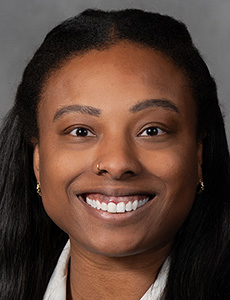
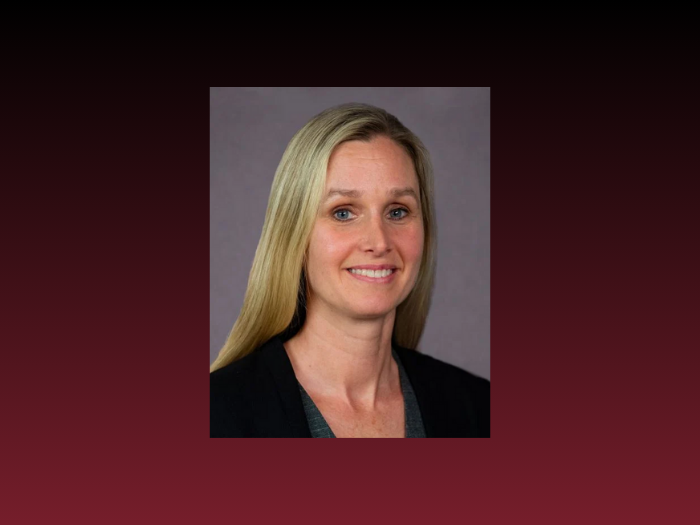
Tiara Nelson, Worker’s Compensation & EHS Leader, Dauch Corporation
Now, when an incident occurs, Security, EHS, HR, and workers’ comp are all in communication from the moment it happens. Everyone can initiate care authorization, speeding up response time. Nothing waits on a single point of contact.
Nelson partnered closely with Sedgwick; its TPA, and Concentra; its occupational health provider, to establish a standardized claim review process. She built training materials for plant managers and site contacts, demystifying who does what, when to report, and how to support injured associates through the process. She developed a KPI dashboard and tracking systems measuring new claims, lost-time injury frequency rates, closure times, and cost trends, so the team could see at any moment what was working and where to focus.
Her military-trained instinct for documentation showed up everywhere. A claim tracker with red-flag scoring. Detailed monthly reports. Systems built not just for today, but for the next person who steps into the role.
“I built this largely from the ground up in under a year,” she said. “But this work is not about claims. It’s not about the cost. It’s about the people. If we remember that, everything else follows.”
Telemedicine and the GeoMatch Tool
One of Nelson’s most innovative contributions was identifying and solving a problem hiding in plain sight: geography.
Dauch Corporation’s U.S. facilities span six states. Some plants sit far from the nearest occupational health clinic, meaning an injured associate might face a long drive to get initial care — adding delay, costs, and stress to an already difficult situation.
Nelson built a GeoMatch tool that mapped each U.S. facility to its nearest Concentra clinic. For sites without convenient access, telemedicine became the answer.
She didn’t just decide to use it; she built a full rollout framework. Authorization workflows. A one-page cheat sheet keeping the process simple for associates and managers alike. She piloted the program in Michigan, where she could monitor it directly, before planning broader expansion.
“I’ve stood on our floors. I’ve watched the people work, and I’ve heard their stories,” said Nelson. “Telemedicine was about removing barriers to care for people who deserve the best system we can provide.”
She also negotiated extended transportation benefits with Concentra — the standard coverage radius of 15 miles was expanded to 25 miles for Dauch as a direct account, further reducing the burden on associates who needed in-person care.
Results Built from Scratch
The transformation has delivered results that are, given the starting point, remarkable.
New workers’ compensation claims dropped dramatically from 2023 to 2025. The lost-time injury frequency rate decreased significantly and has remained consistently below target. Medical bill review has generated millions in annual savings. The telemedicine program is being expanded in 2026.
Nelson simultaneously earned her Certified Workers’ Compensation Professional designation while doing all of this. She achieved a 100% clean audit with Ohio’s Bureau of Workers’ Compensation. And through it all, she kept her attention on what she says matters most.
“What I’m most proud of isn’t a number,” she said. “It’s what I’ve shown up for, for our associates every single day. Through site visits, phone calls, personal follow-ups. I’ve made them feel like they’ve mattered. Because they do.”
That commitment runs through every element of what Nelson has built. Dauch Corporation has a strong organizational commitment to safety and associate wellbeing. The workers’ comp program Nelson built is one expression of that commitment — a program designed not to process claims, but to take care of people.
“We went from a program with no playbook,” she said, “to one built on communication, cross-functional collaboration, and a genuine focus on getting people back to health.” &

 The Theo Award celebrates its sophomore year, honoring 28 workers’ compensation programs for their excellence and service to workers across the nation. To learn more about the award and amazing qualities each winner possesses, visit here.