Newsletters
 Risk Central
 Digital Edition
2026 Theo Award Winner: Larimer County
 When Jeff Green took over as Risk Manager at Larimer County, Colorado, the workers’ compensation program was, in his words, just handling claims. There was no proactive safety culture, no meaningful engagement with the county’s operating departments, and no financial transparency about where costs were coming from or how they could be controlled.
The NCCI experience modification rating — the industry benchmark that measures employer’s claims performance against other organizations — stood at 1.14. That meant Larimer County was nearly 15% worse than average.
It was, Green recognized, a program with a lot of room to grow.
Seventeen years later, the picture looks remarkably different. The county’s experience mod for 2026 came back at 0.59 — meaning Larimer County is now 41% better than the average for comparable public entities. Its 10-year average mod is below 0.70.
“We’ve been remarkably consistent in our claims volume and claims costs over the last 15 years,” Green said — no small feat for a county whose workforce has grown by nearly 30% during that same period, and whose community has seen its population surge past 370,000.
From Black Hole to Business Partner
The first order of business when Green arrived was transparency.
Operating departments had been receiving workers’ compensation charges for years without any clear explanation of how those numbers were calculated or what they could do to influence them. One former department director famously described the risk management cost allocation as a “black hole.”
Green changed the equation. He implemented a new risk management information system and began sharing loss data directly with each of the county’s 26 operating departments. More significantly, he restructured the cost allocation model so that each department’s actual claims experience drove what they paid — rather than a blanket overhead charge spread across the organization.
“Now each department’s losses contribute to how much they have to pay,” he explained. “It gives them a financial incentive to manage their business better from a workers’ comp and safety standpoint — and to partner with risk management, because we can bring resources to help them reduce their losses.”
The shift took time to take hold. But once departments realized that risk management wasn’t just a cost center — it was a resource that could help them save money — the dynamic changed.
Today, Green and his team are out in the field roughly half the time. They frequently get invited to present at department meetings.
They’ve developed an unusual but effective initiative of bringing local medical providers on-site tours of county operations — walking physicians through the jail, taking them out to road and bridge crews — so that doctors issuing work restrictions understand exactly what those restrictions mean in practice.
“We want them to know what our jobs are when they’re looking at restrictions,” Green said. “So they have a sensitivity and knowledge that, yes, this person can do their job with these restrictions. They understand our business.”
Keep People Moving
One of the most tangible early wins came from a simple observation: a lot of people were getting hurt slipping on ice and snow.
Colorado winters are unforgiving, and Larimer County has locations ranging from mountain sites to urban areas.
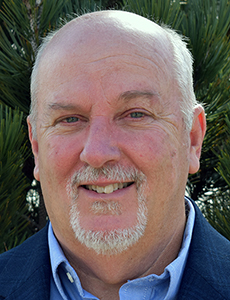
Jeff Green, Risk Manager, Larimer County, Colorado
Green’s solution was straightforward — he sourced traction cleats for employees working in icy conditions. Slip-and-fall injuries that had been occurring multiple times per year dropped to just two over a three-year span.
“Risk will do the initiative, get it started,” he said. “And once people see the benefit of it, it becomes part of their practice.”
The return-to-work philosophy runs even deeper.
Rather than limiting modified duty to an injured employee’s own department, Larimer County developed a cross-departmental model that places workers wherever there’s a suitable role — even if it’s nowhere near their usual job.
A road crew worker who can’t do heavy labor might spend their recovery directing traffic at the county landfill. A sheriff’s deputy with restrictions might find a productive role elsewhere in the sprawling county operation.
“It’s amazing how quickly people get better instead of feeling forgotten,” Green said.
He’s quick to acknowledge there’s more to it than the financial argument — though the financial argument is real.
“The mental health component of return to work is: You’re still part of the team, you’re still providing value to the community. You’re not isolated. You’re back with your co-workers, maybe in a different department — but we’re all the county team. That helps improve outcomes. You don’t wind up with people that are isolated and get into a downward spiral.”
The Long Game
What Green is most proud of isn’t any single initiative. It’s the consistency.
Larimer County is, as he describes it, a senior citizen on a fixed income — a government entity that lives off property tax revenue with little flexibility to absorb unexpected costs. Managing the workers’ comp program well isn’t just a risk management priority; it’s a matter of fiscal responsibility to the community.
Jess Desmarais, director sales & client solutions, TRISTAR Insurance Group, said having worked closely with Larimer County, she’s have seen firsthand how passionate Jeff and his team are about risk management.
“The reduction in their experience mod rate and the decrease in claim frequency are not just statistics to them; they represent thousands of employees returning home safely each day,” Desmarais said.
“This also reflects a hard-won workplace culture in which protecting people and serving the community go hand in hand. In a time when growth often compromises safety, Larimer County demonstrates what is possible when an organization genuinely prioritizes its workforce.”
“Despite the growth in the overall community, about a 30% increase in the number of employees — and despite what medical costs have done over the last 15 years — we have remained really consistent in our numbers,” Green said.
“Fewer of our employees, on a percentage basis, get hurt on the job. That’s what I gauge our program’s success by. We don’t want our fellow employees getting hurt.”
The national Public Risk Management Association agreed, naming Green its Public Risk Manager of the Year in 2025.“We’ve truly become a business partner with operations,” Green said. “We have a seat at the table.” &

 The Theo Award celebrates its sophomore year, honoring 28 workers’ compensation programs for their excellence and service to workers across the nation. To learn more about the award and amazing qualities each winner possesses, visit here.