Newsletters
 Risk Central
 Digital Edition
Sponsored Content: Intact
Building Trust in Uncertain Times: How Strong Relationships Drive Success in Insurance

The insurance industry has always been built on relationships, but in today’s volatile market environment, those connections have evolved from nice-to-have advantages into essential business differentiators. With catastrophic losses, social inflation, and nuclear verdicts contributing to continued uncertainty, carriers and brokers that prioritize authentic partnerships may be better positioned for long-term success across market cycles.
“Relationships are absolutely critical. Insurance is complex and dynamic, and when the market changes, I think relationships become even more important. They’re more of an anchor than anything,” said Tony Beal, Chief Distribution Officer at Intact Insurance Specialty Solutions.
“Relationships create trust, which makes difficult conversations easier during complex times,” said Beal.
As the industry grapples with technological disruption and generational shifts in the workforce, understanding how to build and maintain these critical partnerships has become a defining factor in career advancement and organizational performance.
The Strategic Value of Partnership
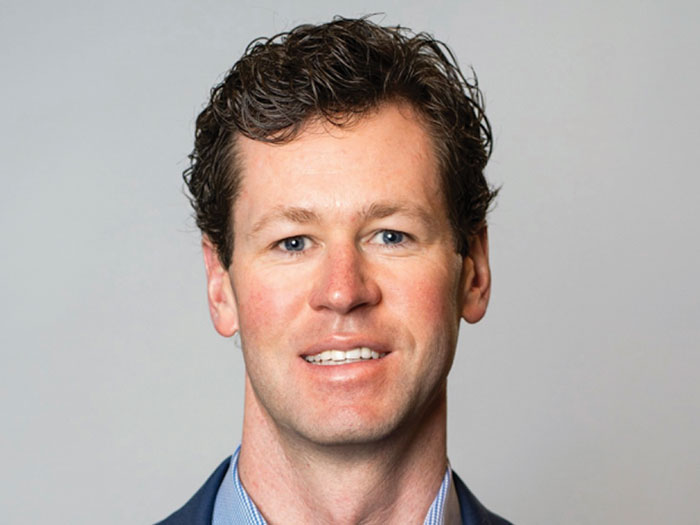
Tony Beal, Chief Distribution Officer, Intact Insurance Specialty Solutions
In an industry that can quickly become commoditized, differentiation increasingly comes down to how carriers and brokers show up for each other. The days of transactional relationships built solely on capacity and pricing are giving way to more strategic partnerships that emphasize consistency, transparency, and mutual success.
“We don’t want our partners to see us as just capacity or a policy. We want to be a strategic partner, differentiated from just another carrier, because as you well know, this business can become very commoditized,” Beal added.
“This means more proactive engagement with brokers in a coordinated, strategic way. We’re not just showing up at people’s offices saying, ‘Hey, what’s on your desk?’ We’re giving them an agenda and being thoughtful of their time.”
This shift toward intentional partnership requires carriers to present a unified front to their broker partners, even as organizations grow and specialize. The challenge lies in maintaining enterprise-level coordination while preserving the deep technical expertise that specialty lines demand.
Underlying these strategic partnerships is a commitment to underwriting discipline that builds trust over time. When brokers know what to expect from a carrier, even when that consistency means difficult conversations, they can better serve their clients, placing the building blocks for future success.
“Trust comes from being consistent in both good and challenging markets,” Beal said. “People know what they’re going to get, and I think they respect that. Because when we win, they win, and vice versa.”
The role of communication in these partnerships cannot be overstated. Technical expertise may earn a carrier the initial opportunity, but relationships determine long-term success.
“Technical expertise proves you deserve the opportunity, but relationships keep you there. I always say that from a broker’s perspective, you will win when they want you to win, and that’s driven by relationships,” Beal said.
“People remember how you show up. Clear communication builds confidence, responsiveness demonstrates commitment, and collaboration leads to better decisions and better outcomes.”
As technology continues to reshape the industry, the question isn’t whether to embrace digital innovation, but how to employ it in ways that enhance rather than replace human connections. Data and analytics enable faster, better-informed decisions, while digital tools create efficiencies that free up time for more meaningful conversations.
“Technology should enhance relationships, not replace them,” Beal said.
“I don’t think the future is digital versus personal. It’s digital enabling better personal connections by combining innovation with service.”
Navigating Economic Headwinds
The challenges facing today’s insurance market are well-documented but no less daunting for their familiarity and continue to create uncertainty around loss development and reserve adequacy.
“The challenges are economic; severe weather, catastrophic losses, social inflation, and increased litigation,” Beal said.
Emerging risks add another layer of complexity. Cyber risk and insurance may present opportunities for growth, while also involving long-term exposures that the industry continues to assess and price.
Another dynamic is that there is a younger generation of risk managers, brokers and underwriters who may have earned their stripes in a hard market and may not be in their comfort zone navigating a soft or transitioning market.
“That’s a challenge because there are a lot of muscles that haven’t been exercised, creating a learning curve,” Beal said.
For carriers, the solution lies in engaging earlier in the risk management process rather than simply responding when problems arise. By putting to work specialized claims and risk control professionals who understand the unique exposures of specific industries, carriers can help clients better prepare for emerging challenges.
“I think how we can help is by engaging earlier in the process. We can help our clients better understand and manage risk, and that’s where we lean into our risk control and claims folks to differentiate outside of just the policy,” Beal said.
“At the end of the day, I see our role as helping clients prepare for what the next situation is, not simply react when it happens.”
For brokers, the educational challenge is equally significant. Risk managers who have only experienced soft market conditions may struggle to understand why pricing is increasing or why coverage terms are tightening. Brokers who have been proactively educating their clients about market cycles position themselves to retain business when competitors attempt to win accounts based solely on price.
“From a broker’s perspective, this marketplace is a struggle. But if you know what you’re doing and you’ve been coaching your client — telling them that when the market does turn, here’s what you’re going to see — you’ve been coaching them up,” Beal said.
“When the market changes, you don’t have to worry about another broker coming in and just offering a less expensive price because you’ve already educated them on what’s forthcoming.”
Understanding underwriting discipline across market cycles provides another competitive advantage. When the market softens and pricing decreases, disciplined underwriters must decide whether business fits their portfolio regardless of price, rather than chasing premium volume that may prove unprofitable when conditions inevitably change.
Building a Career on Fundamentals
For insurance professionals looking to advance their careers in an increasingly complex industry, the path forward combines timeless relationship-building principles with adaptability to technological change.
The foundation starts with choosing the right professional network. Building relationships with colleagues who demonstrate integrity and commitment creates a peer group that will grow together throughout their careers.
“I would say choose your friends wisely,” Beal said.
“In the industry, you can seek people out, and you can tell that they’re committed. They do the right things, they’re honest, and they do business with integrity. Stick with those folks. You’ll grow up in the business together, and that trust you built will yield benefits.”
Curiosity about clients, industries, and emerging risks separates transactional professionals from trusted advisors. Even within specialized practices, understanding broader industry trends and adjacent lines of business demonstrates the kind of comprehensive knowledge that clients value.
“Stay curious about your clients, the industries, and all the emerging risks. It’s not just about the transaction. It’s being in the room and being able to talk about what’s going on in the entire industry,” Beal said.
Investing in relationships creates a foundation for long-term success. Taking care of people, stepping up when asked for favors, and offering help before it’s requested all contribute to building the kind of trust that pays dividends throughout a career.
Perhaps most importantly, listening outweighs talking. Remembering what people say, understanding their concerns, and looking for opportunities to make their lives easier creates value that transcends individual transactions.
“Listening is more important than talking. Really, really listen and remember what they’re saying and what their concerns are. Keep that in the back of your head and be willing to step up to make their lives easier,” Beal said.
“Create value where you can. I would say always make it less transactional. If you create value, the growth will come.”
This approach requires patience and a long-term perspective.
“Don’t chase growth. Growth is the outcome of the appropriate behaviors, and that exists with relationships as well,” Beal said.
Excellence in execution remains the most reliable path to career advancement. The insurance industry has a long memory, and professionals who consistently demonstrate competence and integrity find that their reputations open doors throughout their careers.
“If you think about when we all got into the business and the people we recognized around us, we all knew who was good. If you look them up on LinkedIn right now, they’re successful. In this industry, excellence truly pays dividends,” Beal said.
This excellence requires humility and a commitment to continuous learning. Rather than trying to emulate any single mentor exactly, successful professionals take elements from everyone they encounter, constantly refining their approach based on what they observe working for others.
As the industry becomes more complex and technology introduces new challenges and opportunities, fundamental business principles become even more important as differentiators. Doing the right things consistently, even when results aren’t immediate, builds the kind of reputation that sustains careers across market cycles.
“I think in this industry, we tend to get so focused on, ‘I’ve got to grow X. I’ve got to get this much rate. I’ve got to get this transaction done.’ And it’s actually very simple,” Beal said. “Do the right things, and the results will happen. It might not be on that deal, but ultimately, you’ll win.”
In this environment, the professionals and organizations that prioritize authentic relationships, consistent execution, and fundamental business principles will find opportunities to differentiate themselves.
“This industry is going to get harder to operate in only because of the complexities and all the challenges we’ve discussed. AI is going to make it challenging as well,” Beal said. “I think the things that are fundamental, that’s the opportunity to differentiate who you are. I know it’s cheesy, but people do business with people they like.”
To learn more, visit www.intactspecialty.com.
Intact Insurance Specialty Solutions is a marketing brand for the insurance company subsidiaries of Intact Insurance Group USA LLC, an indirect subsidiary of Intact Financial Corporation (TSX: IFC), the largest provider of property and casualty insurance in Canada that has successfully exported its strengths across North America, the UK, and Europe. Its growing commercial and specialty solutions network now spans over 150 countries. With a customer-driven mindset, Intact has expanded its operations to include insurance distribution, restoration and prevention. IFC’s business has grown organically and through acquisitions to almost $25 billion of total annual operating direct premiums written (DPW). The insurance company subsidiaries of Intact Insurance Group USA LLC include Atlantic Specialty Insurance Company, a New York insurer, which wholly owns Homeland Insurance Company of New York, a New York insurer, Homeland Insurance Company of Delaware, a Delaware insurer, OBI America Insurance Company, a Pennsylvania insurer, and OBI National Insurance Company, a Pennsylvania insurer. Each of these insurers maintains its principal place of business at 605 Highway 169 N, Plymouth, MN 55441. For information about Intact Financial Corporation, visit: intactfc.com.


This article was produced by the R&I Brand Studio, a unit of the advertising department of Risk & Insurance, in collaboration with Intact Insurance Specialty Solutions. The editorial staff of Risk & Insurance had no role in its preparation.