Newsletters
 Risk Central
 Digital Edition
2026 Theo Award Winner: Continental Tire
 When Mark Taylor joined Continental Tire as Workers’ Compensation Manager in 2018, one of his first moves was to do what any experienced risk professional would do in a new role: take a hard look at what he’d inherited. What he found was a program that had grown complicated over time, largely as a byproduct of the company’s growth through acquisitions.
“We wound up with three different TPA relationships with two different TPAs — three different accounts,” Taylor recalled. “I looked at the contracts to see how they were structured, and one of them was a very, very old relationship with some old pricing that was kind of outdated.”
Beyond the administrative burden of managing multiple relationships, Taylor saw something more consequential: missed opportunities to improve outcomes for the Fort Mill, South Carolina-based tire manufacturer’s 16,000 employees.
The fragmented structure made it difficult to achieve consistency across claims, limited the ability to intervene early on complex cases, and left the organization without the transparency it needed to hold vendors accountable.
Leadership understood there were inefficiencies — the full scope of the opportunity, however, wouldn’t become clear until Continental committed to a thorough RFP process.
A Year-Long Reckoning
The RFP was no small undertaking. Seven or eight TPAs participated, alongside multiple medical management vendors. The process took the better part of a year — multiple rounds of interviews, remote and in-person — before Taylor and his team arrived at a recommendation they felt confident bringing to senior leadership.
“It was a pretty big commitment to jump through those hoops,” Taylor said. “But in the long run, well worth it to get exactly what we felt like we needed, and what could support us and our employees best.”
The outcome was a decisive shift: Continental moved from bundled programs to an unbundled workers’ compensation model in partnership with Enlyte. Taylor, who had managed both bundled and unbundled programs over the course of his career, had an informed view on the tradeoffs.
“With the size and the scale, and some of the things we wanted to do, I felt like unbundled might be the right model for us,” he explains. The unbundled approach offered something the prior structure couldn’t: the ability to align incentives, embed specialized resources, and build in the kind of transparency and accountability that drives genuine improvement.
Implementation took nearly another full year — getting every stakeholder clear on the new program’s structure, roles, and handoffs. The patience paid off.

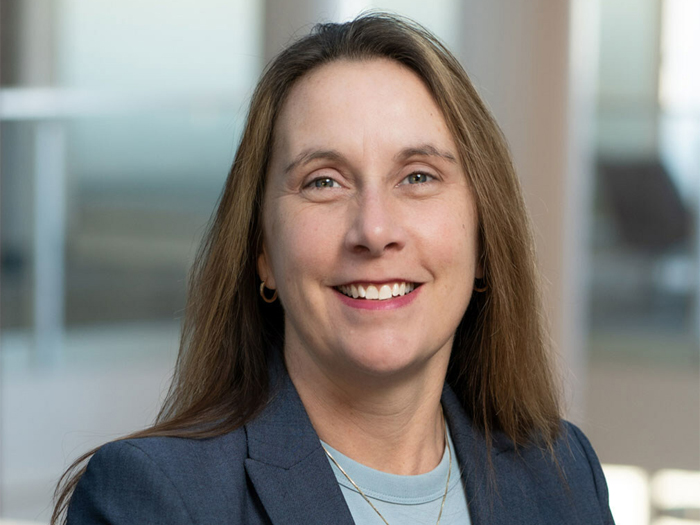
Mark Taylor, Workers’ Compensation Manager, Continental Tire
“Continental Tire’s commitment to rethinking its workers’ compensation program is a powerful example of what’s possible when organizations challenge the status quo,” said Keith Higdon, president of Customer and Market Operations for Enlyte.
“By prioritizing early intervention, dedicated resources, and true collaboration, they’ve created a model that not only drives meaningful cost efficiencies but, more importantly, delivers a better experience for injured employees. We’re proud to partner with Continental on a program that proves better outcomes and better care can go hand in hand.”
The Dedicated Model
The centerpiece of the new program was a shift in how telephonic case management (TCM) worked. Previously, Continental operated on a typical on-demand model — an adjuster or manager would request a case manager and get whoever was next in the queue. There was no continuity, no institutional knowledge, no relationship.
“There wasn’t the knowledge that they would have of us — our culture, how we work, what’s important to us,” Taylor said. “I’m a very strong believer in the dedicated model. It just adds so many more qualities. Where you have the size and the scale for it, it’s hard to not choose to go that way.”
Continental implemented two full-time, dedicated telephonic case managers assigned exclusively to its program. The investment was real and deliberate — but the logic was straightforward: the same case managers, working consistently with the same adjusters and the same site contacts, would build the kind of operational fluency that translates into better outcomes.
There was early resistance to navigate. A few plant nurses at Continental facilities felt threatened by the arrival of outside case management resources. Taylor addressed it directly, reframing the new model not as a replacement but as reinforcement. “I had to say, ‘Hey, nobody is coming to replace you. This is to supplement you. You don’t have to do everything any longer — we’ve got help,’ ” he said. “It took a while for one or two of them to really buy in, but once they did, they became some of the strongest proponents of the program.”
The program also introduced 100% claim triage at the point of injury reporting, ensuring that complex and higher-severity cases were identified immediately and matched with appropriate resources from the start — rather than waiting weeks or months to determine whether intervention was needed.
Flat Spend, Better Outcomes, Happier Employees
The results across a four-year evaluation period have been striking. Despite significant medical and wage inflation during that time, Continental’s annual workers’ compensation spend has remained essentially flat — even after absorbing the cost of the dedicated case management model. Identifiable annual savings on specific cost drivers, including improved PPO penetration and more favorable medical bill review pricing, have been substantial. And the organization achieved a meaningful reduction in outstanding workers’ compensation liabilities over the same period.
For indemnity claims managed within the telephonic case management program, average closed claim duration fell by two weeks — a meaningful improvement in a space where every additional day of lost time carries real human and financial cost.
Perhaps most telling, though, are the employee satisfaction numbers. Post-closure surveys consistently rate the telephonic case managers among the highest-performing elements of the entire claims experience. “It’s clear to us that the employees really appreciate having that resource,” Taylor said.
That appreciation reflects something deeper than operational efficiency. Injured workers who encounter a knowledgeable, consistent point of contact — someone who understands their situation, can navigate the complexity of the claims process with them, and follows through — are workers who feel cared for.
That’s not a soft outcome. It shapes recovery, return-to-work, and the long-term relationship between an employee and an employer.
What began as a methodical audit of a fragmented program has evolved into something Continental didn’t necessarily set out to build: a workers’ compensation model that is as much about people as it is about performance.
“Telephonic case managers are now viewed as core members of Continental’s workers’ compensation team,” Taylor noted — a signal that the program has taken root not just operationally, but culturally.
“It’s something that has returned to us many times over,” he said of the investment. Simple words — but backed by four years of data that tell exactly that story. &

 The Theo Award celebrates its sophomore year, honoring 28 workers’ compensation programs for their excellence and service to workers across the nation. To learn more about the award and amazing qualities each winner possesses, visit here.