Newsletters
 Risk Central
 Digital Edition
2026 Theo Award Winner: Georgia School Boards Association
 Georgia has 180 school districts. They range from Gwinnett County — one of the largest school systems in the country, with close to 200,000 students — to small rural districts where a few hundred students may be the entire community. What they have in common is that running a school involves real physical risk: kitchen workers on wet tile floors, maintenance crews lifting and bending, custodial staff navigating crowded hallways.
Managing workers’ compensation across that landscape — consistently, equitably, and proactively — is no small undertaking.
The Georgia School Boards Association has been doing it since 1992, when the GSBA Workers’ Compensation Fund was established as a self-insured pool serving member school districts statewide. Today, 87 districts participate in the fund, with Charles Taylor serving as TPA since the program’s early days.
“One of our greatest areas of impact has been supporting smaller school districts that often lack the resources to provide this type of training on their own,” says Cliff Cole, GSBA’s Director of Risk Management. “By bringing these opportunities directly to them, we’re able to make a meaningful difference where the need is greatest.”
A Platform Built for Prevention
GSBA’s approach to safety is built around a layered ecosystem of tools, training, and regular communication — designed to reach districts of every size with consistent, high-quality resources.
At the foundation is SchoolDog Solutions, a secure, web-based platform that GSBA provides to all workers’ compensation fund members at no additional cost. The tool is elegantly practical: safety personnel can conduct walkthroughs on their phones, flagging hazards in real time — an uneven curb, an unmarked step, a broken window — and generate an immediate digital record that flows into a data log.
Cole knows from experience why this matters. “I’m a former principal,” he says. “When you walk through a building, you see things over and over — they kind of go to the back of your mind. But if you take a snapshot immediately and get the results, that changes things.” SchoolDog also recently added a maintenance request feature, allowing anyone who spots a hazard — a cracked sidewalk, a damaged door — to report it instantly and get it into the repair queue.
Alongside SchoolDog, GSBA provides member districts with access to Vector Solutions, an online training platform offering more than 350 courses covering slip, trip, and fall prevention, proper lifting techniques, body mechanics, and other high-frequency injury topics. Districts can deploy these courses as mandatory training, elective learning, or post-incident remediation. Completion is tracked and documented — giving administrators visibility into who has and hasn’t completed required training.
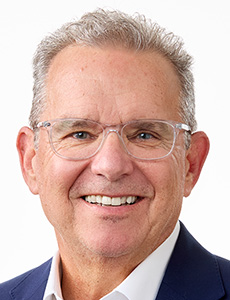
Cliff Cole, Director of Risk Management, GSBA
But technology alone doesn’t reach everyone. GSBA’s safety and risk management team, led by David Colvard, also conducts in-person trainings directly in school districts — arriving early in the school year to work face-to-face with the employee groups at highest risk: custodial and maintenance staff, kitchen workers, and others who do the physical work that keeps schools running.
Communication as a Safety Strategy
Running through all of it is a commitment to regular, structured communication. On the first of every month, GSBA distributes a safety and risk control bulletin to member districts. On the fifteenth, a “Safety Scenarios” publication goes out — practical, situational content designed to keep safety thinking active and relevant in between formal trainings.
The cadence isn’t accidental. It reflects an understanding that safety culture isn’t built in an annual training session — it’s built through consistent reinforcement, regular reminders, and the accumulated habit of paying attention.
Charles Taylor’s claims analytics provide the intelligence that makes all of it more targeted. Trend data, root cause analysis, and emerging risk indicators inform where GSBA’s safety resources get directed — ensuring that prevention efforts go where the data says they’re most needed, not simply where they’re most convenient.
That data-driven approach has fueled a return-to-work program that Cole credits Charles Taylor for significantly strengthening. “So much of it really boils down to the relationship you have with that employee,” he says. “You try to keep things moving along and keep it positive.” When adjusters maintain consistent, human contact with injured workers — keeping the dialogue open, explaining the process, anticipating questions — the outcomes improve.
A Statewide Program, Growing Stronger
The results over the past decade have been meaningful. Loss costs have declined steadily, enabling the fund to lower workers’ compensation rates for member districts. Dividend payments have been issued to participating members every year since 2022. Member satisfaction is at an all-time high. And the fund itself has continued to grow — adding seven new member districts in the past year alone, drawn in part by the quality of the resources and the strength of the program.
For smaller Georgia school districts, that last point may matter most. A rural district with a tight budget and no dedicated risk management staff doesn’t have the capacity to build a safety program from scratch. When they join the GSBA fund, they gain access to SchoolDog, Vector Solutions, monthly communications, in-person training, and the claims expertise of a TPA that has been managing school district workers’ compensation for decades.
Cole is quick to credit his partners. “Charles Taylor should be recognized for much of our success,” he says. “They have quality adjusters, a good network of attorneys and good communication with injured employees. In addition, they keep the dialogue positive and open as much as possible — that’s really the biggest thing.”
“A thoughtful, proactive approach to risk management can make a meaningful difference in the safety and well-being of school communities,” says William Harrell, Client Partnership Executive with Charles Taylor.
“Through a focus on prevention, data-driven insights, member education, and practical safety resources, Georgia School Boards Association has created a program that helps districts identify risks earlier, strengthen safety practices, and deliver value for employees, students, and the communities they serve,” Harrell added.
For a statewide association whose mission is to serve Georgia’s school communities, the workers’ compensation program is ultimately an expression of that mission — making sure that the people who take care of students every day are themselves taken care of when they need it. &

 The Theo Award celebrates its sophomore year, honoring 28 workers’ compensation programs for their excellence and service to workers across the nation. To learn more about the award and amazing qualities each winner possesses, visit here.