Newsletters
 Risk Central
 Digital Edition
2026 Theo Award Winner: State of Nevada, Department of Administration – Risk Management Division
 The opioid crisis didn’t arrive in workers’ compensation quietly. It crept in through prescription pads, routine treatment protocols, and a medical culture that had come to see pain relief as synonymous with narcotics — even for minor workplace injuries.
Mandy Hagler saw it happening from her desk.
Before moving into risk management at the Nevada Department of Administration, Hagler was adjudicating workers’ comp claims for the state. One of those claimants was a state employee she had watched go from a standard injury claim to a full opioid prescription regimen. Years later, when Hagler was working in risk management, the woman’s case was still open.
“She was addicted to opioids,” Hagler recalled. “She lost her job, she lost her family, and ultimately ended up on the news in our local area for soliciting illegal drugs. That profoundly hit me. It was like, we have to do better. We’re ruining our employees.”
That conviction became the foundation of a program that has since made Nevada a national benchmark.
Breaking the Cycle
The pattern Hagler kept seeing was a vicious one: An injured worker comes in with a sprain or strain, gets prescribed an opioid for short-term relief, develops a dependency, and then requires a rehab program to address the addiction. All while the underlying claim drags on unresolved.
“We were taking healthy individuals, sometimes with minor injuries, and applying the most extensive treatment program out there,” she said. “It was going nowhere.”
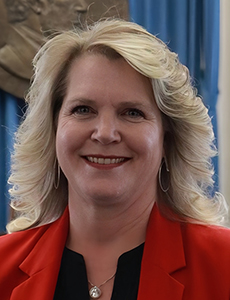
Mandy Hagler, Deputy Director, The Department of Administration, State of Nevada
The program Nevada built in response was designed to interrupt that cycle at every stage, before it could take hold.
It starts at the very first clinical encounter. Nevada’s contracted First Stop clinics — the initial point of care for injured state workers — are trained and contractually bound to follow the state’s drug formulary. For the most common workers’ comp injuries, like sprains, strains, minor fractures, lacerations, an opioid prescription is simply not on the table.
“Employees who work for the State of Nevada, if they go to one of the First Stop clinics, will never be prescribed an opioid,” Hagler said flatly.
For situations where an opioid may be clinically warranted — post-surgery, catastrophic injury — the program allows a first fill with a short-acting opioid. But any subsequent prescription requires a step-down plan signed by both the physician and the employee, along with documented medical rationale. Long-acting opioids require prior authorization from the start.
At the pharmacy counter, Optum’s pharmacy benefit management tools add another layer: custom drug formularies, clinical edits, and real-time alerts that flag higher-risk dispensing patterns before they become problems. When a prescription is flagged, an automated notification goes immediately to the adjuster and nurse case manager so the claim team can respond quickly.
A Village and a Structure
Building the philosophy was the easy part. Making it stick required something harder: getting every vendor, every clinic, and every stakeholder aligned around the same expectations.
“You can always start with a philosophy or a dream of what you want a program to be,” Hagler said. “But if you don’t provide structure with parameters to the vendors, it just stays a pipe dream.”
That meant working directly with physicians; not just sending memos but having real conversations about the goal. In a culture where patients expected a pill and doctors were used to providing one, shifting the norm required persistence.
“It was really hard to break that vicious cycle,” Hagler acknowledged. “It certainly took a village — but it also took a lot of convincing, and more importantly, working with the physicians to give them a holistic overview. We’re looking for a healthy outcome.”
Today, the program runs on a cadence of structured accountability. Monthly meetings bring together the risk management team, claims adjusters, nurse case managers, and Optum to review opioid metrics, flag complex cases, and track action items to completion. Quarterly pharmacist-led clinical roundtables take a deeper look at individual claims, identifying safer pathways for pain management and recovery. Separate monthly reviews focus on high-exposure claims, long-duration disability cases, and any claim where opioid use raises questions.
Annette Teixeira, who now serves as risk manager and has carried the program forward since Hagler moved into a deputy director role, describes it simply: “It takes a village to get an injured worker back. Communication and teamwork — that’s what we teach our managers and supervisors. And that’s what makes this work.”
Numbers That Tell a Story
The data across the program’s evaluation period is striking. Opioids’ share of total pharmacy spend has fallen dramatically. The share of claims involving any opioid has been cut nearly in half. Average morphine equivalent doses — a key measure of opioid potency — have declined meaningfully, both per claim and per prescription.
The state’s performance benchmarks favorably not just against its own prior results, but against Optum’s full book of business nationally and against a cohort of peer state government programs.
“At the end of the year, we would always ask Optum: where do we stand in your book of business?” Hagler said. “Nationally, nobody can touch our opioid program.”
But the number that matters most to Hagler and Teixeira isn’t in any report. On a given month, when the program is working as designed, only a small handful of Nevada’s 900 plus injured employees are on long-term opioid prescriptions — most of them post-surgery cases where narcotics are genuinely necessary and being actively managed toward discontinuation.
That is the measure of success.
“Over six years of working with the State of Nevada’s Department of Administration – Risk Management team, I have consistently seen an unwavering commitment to putting employee health first while managing health care costs responsibly,” said David Johnson Director, National Accounts, Account Management | Optum Workers’ Compensation and Auto No-Fault.
“Their opioid management program is a powerful example of this dedication — grounded in coordinated prevention, education, and early intervention and driven by a compassionate, collaborative approach and a relentless focus on injured employees. The State of Nevada’s opioid management program reflects true, people‑first leadership and demonstrates how thoughtful collaboration can successfully address a complex, high‑impact health challenge,” he said.
“There’s a tangible impact when you can show a cost savings,” Hagler said. “But I always say there’s an impact that can’t be quantified by cost-effective savings or a tangible measurement — our employees are not becoming addicted to opioids anymore.” &

 The Theo Award celebrates its sophomore year, honoring 28 workers’ compensation programs for their excellence and service to workers across the nation. To learn more about the award and amazing qualities each winner possesses, visit here.