Newsletters
 Risk Central
 Digital Edition
2026 Theo Award Winner: George Junior Republic
 George Junior Republic has been caring for at-risk youth since 1909. Nestled on a 500-acre campus in Grove City, Pennsylvania — a sprawling, college-like setting where young people live in small residential buildings and are supported around the clock by dedicated staff — the organization has long understood that its mission is as demanding as it is meaningful.
Working with youth who have experienced trauma, instability, and crisis is not easy work. And for years, that reality showed up in the organization’s workers’ compensation data.
When Susan Boland stepped into her role as Human Resources Officer, the picture was clear: Injury rates were high, and some of those injuries were serious.
The challenge was deeply embedded in the nature of the work itself — particularly when physical intervention is required if a young person in crisis poses a danger to themselves or others. Those moments, however necessary, were a primary driver of staff injuries. Something had to change.
A New Model for Care — and for Safety
The turning point came in July 2020, when George Junior Republic adopted the Children and Residential Experiences Model, or CARE Model®, a framework developed at Cornell University that centers trauma-informed, relationship-based approaches to working with youth. The model is built around de-escalation, consistency, and understanding behavior through a developmental lens rather than reacting to it.
For Boland, the philosophy resonated immediately and personally. “If you read the CARE book — it’s like basic parenting, even though we’re not parents for the children we serve,” she said. “It’s building off of strengths, using de-escalation.”
The investment was substantial: every new employee now completes a five-day, 40-hour CARE training before they begin working with youth, and Cornell’s technical advisors visit campus regularly to support ongoing implementation.
The connection between the CARE Model and worker safety became evident quickly. As Mike Hamilton, Human Resources Coordinator, explained: “The reduction in restraints — when we have to physically intervene with a child in a crisis — those injuries have dramatically gone down, because our number of restraints have gone down. We’re dealing more with de-escalation rather than going with a hands-on approach first. Talking to the youth, finding out what the issue is and what’s going on with that child, rather than using a physical intervention.”
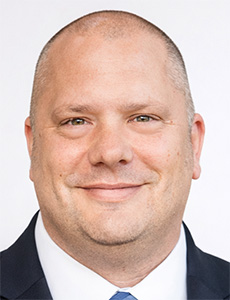
Mike Hamilton, Human Resources Coordinator, GJR
But CARE was only part of the story. Alongside the cultural shift in youth care, George Junior Republic simultaneously strengthened its HR infrastructure. Injury reporting protocols were tightened so that any incident — day or night — triggers immediate notification and prompt medical attention.
Camera footage from incidents is reviewed with staff and supervisors, and retraining is provided where needed. “Reviewing that video with the staff member, with the supervisor, and as needed with HR,” Boland said, “has really paid off for us.”
An emphasis on proactive communication — from salting icy parking lots before someone slips to the organization-wide mantra of “if you see something, say something” — rounded out the approach.
Consistency as a Safety Strategy
On a campus as large and operationally complex as George Junior Republic’s, consistency across buildings, programs, and shifts isn’t just a management ideal — it’s a safety imperative.
The young people in their care come from environments defined by chaos and unpredictability. They thrive, and staff stay safer, when everyone knows the rules and the rules don’t change based on who’s working.
“Consistency is key with these kids across the board,” Hamilton said. “They come from such chaos that they really don’t know what consistency and fairness looks like on a daily basis. To have a unit run smoothly, you’ve got to have that. They have to know where they stand — and they feel safer that way as well.”
That same principle of consistency extends to safety culture at the organizational level. Workers’ comp data is presented regularly to boards of directors, discussed in weekly HR meetings, and reviewed monthly at safety committee meetings that any staff member — including clerical staff — can attend as a guest. “We can’t improve if we don’t have the data,” Boland said.
“Continuing to report out the data and receiving open feedback, not only from staff members but through the safety committee — that’s important.”
Results That Speak for Themselves
The outcomes since implementing these changes have been striking. From 2022 to 2025, George Junior Republic achieved a substantial reduction in total cases resulting in days away from work, a near-elimination of cases requiring job transfer or restriction, and a dramatic decrease in total lost workdays.
Perhaps most tellingly, when injuries do occur, they are far less severe than they once were — a sign that the organization has successfully shifted from a reactive posture to a genuinely preventive one.
The effects extend well beyond the numbers. Employee retention — always a challenge in the demanding nonprofit human services sector — stands at an average of 7.4 years, a figure, Boland noted, compares favorably against industry benchmarks. Perhaps more significantly, the cultural dynamic around injury reporting has shifted. Where employees once feared that reporting an injury would be unwelcome, the organization has cultivated an environment where transparency is encouraged and follow-through is expected.
Hamilton describes the philosophy that guides his follow-up with injured workers: “Following up with staff when they’re injured makes them feel like they’re valued — which they are. We’ve had staff who said, ‘I was injured years ago at another place and they just didn’t care about me.’ Treating them like a human. Just like the CARE Model is for our youth, it’s also for each other. We take care of each other.”
Looking ahead, George Junior Republic is focused on sustaining and deepening these gains — continuing to invest in CARE training, strengthening partnerships with occupational health providers like Allegheny Health Network, and maintaining the data discipline that makes improvement possible. The organization’s story is a reminder that the most powerful workplace safety solutions are often the ones woven into the fabric of an organization’s values.
“It really takes a village,” Boland said. “It’s not one person implementing CARE. So many things have occurred. I think these changes — some big, but in some ways just small changes — have really paid off for us.” &

 The Theo Award celebrates its sophomore year, honoring 28 workers’ compensation programs for their excellence and service to workers across the nation. To learn more about the award and amazing qualities each winner possesses, visit here.