 Newsletters
 Risk Central
 Digital Edition
Energy Insurance Market Splits as Property Softens and Casualty Pricing Flattens
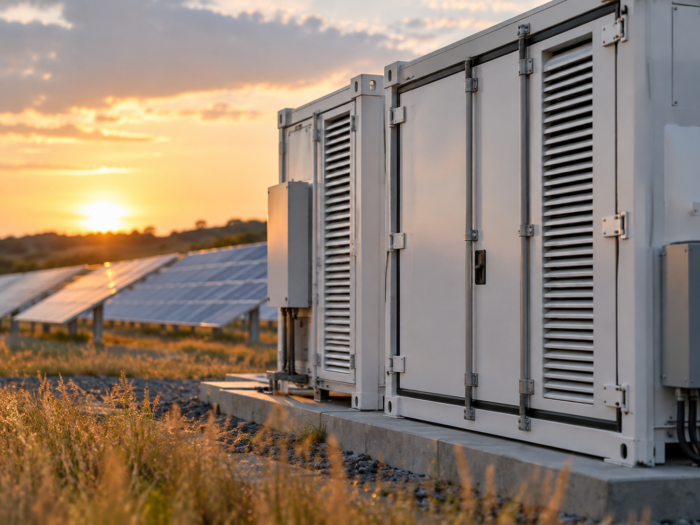
The energy insurance marketplace is showing sharply divergent conditions across property, casualty and the fast-growing power and renewables sectors heading into 2026, according to Amwins.
The downstream energy property market experienced approximately $6.8 billion in gross losses against roughly $3.25 billion to $3.5 billion in collective premiums in 2025, yet rates have continued to soften even as significant losses carried into 2026, including incidents at the Cartagena refinery in Spain, QatarEnergy and U.S. refiners, Amwins said.
Property Softens While Casualty Tightens
Amwins said the market’s willingness to keep cutting property rates remains uncertain, and a significant natural catastrophe affecting multiple occupancies could shift the broader dynamic. Absent such an event, competition is expected to remain significant.
Underwriters are increasingly relying on data and A.I. for proactive loss prediction and prevention, in addition to traditional loss mitigation and fire protection, and accounts that can provide strong engineering information are better positioned, according to Amwins.
Business interruption volatility clauses, which became more prominent during the harder market, are starting to ease for certain accounts through increased margins, longer adjustment periods or outright removal, though refining risks with greater commodity price volatility continue to draw particular scrutiny.
Rate relief varies by complexity: more complex placements with multiple insurers, larger limits and greater catastrophe exposure are seeing the most significant reductions, while less complex, single-carrier placements see more moderate cuts, and loss-affected accounts continue to face greater underwriting attention, Amwins said.
Energy casualty pricing, by contrast, is generally flat for energy accounts, with increases in the low single digits, Amwins said. Direct markets have been slower to push rate even where losses have occurred, while excess markets have pushed harder in response to claims activity. Rather than new capacity entering the market, existing insurers have continued reducing their lines of coverage, meaning a layer once supported by several large markets may now require significantly more participants to complete a tower, according to Amwins.
New MGA capacity entering the broader casualty market remains concentrated in smaller, less complex classes, leaving large energy accounts dependent on a small group of established insurers. PFAS exposure is also drawing casualty underwriter attention, with some markets offering limited carve-backs for firefighting foam use while maintaining broader exclusions elsewhere, Amwins said.
London continues to compete aggressively on both pricing and terms, according to Amwins, including casualty situations where insureds have accepted different coverage terms in exchange for substantial premium savings. On property, London remains highly competitive on coverage enhancements, while U.S. insurers have grown more aggressive in response over the past several years.
Power, Renewables and Data Centers Add Complexity
The scale of power and renewable energy projects continues to expand, Amwins said, with solar developments that once measured in the hundreds of millions of dollars now incorporating battery storage and reaching $1.5 billion or more. Battery energy storage system (BESS) developers are increasingly submitting project portfolios rather than individual locations, and smaller solar and BESS risks in the $25 million to $30 million range are attracting more market interest, including from London insurers historically less active in that segment. Equipment failures, including solar inverter failures and BESS thermal runaways and fires, along with hail-related solar losses, remain significant risk drivers, according to Amwins.
Data centers represent a growing intersection between energy and technology risk, Amwins said. Grid-connected facilities are a more established risk, typically involving contingent business interruption from grid outages, while behind-the-meter data centers with on-site generation and battery storage present more complicated, less mature exposures.
New business is requiring higher limits than ever, and excess contingent business interruption coverage is expanding, with indemnity periods extending beyond the traditional 90 to 120 days and in some cases out to 365 days, according to Amwins.
Valuations and Emerging Risks Draw Scrutiny
Amwins said valuations remain a key underwriting focus, as years of cumulative cost inflation have created potential gaps between insured values and actual replacement costs, even as some clients reduce replacement cost values amid declining component prices.
Cyber risk is also becoming more relevant across the energy value chain, with the market developing coverage for energy-specific exposures such as replacement power costs and relighting costs following a cyber event.
Nuclear is an emerging area of interest, with growing power demand fueling discussion of small modular reactors alongside opportunities in uranium enrichment facilities and research reactors, according to Amwins.
Obtain the report here. &