Newsletters
 Risk Central
 Digital Edition
8 Questions for QBE North America’s Karen London
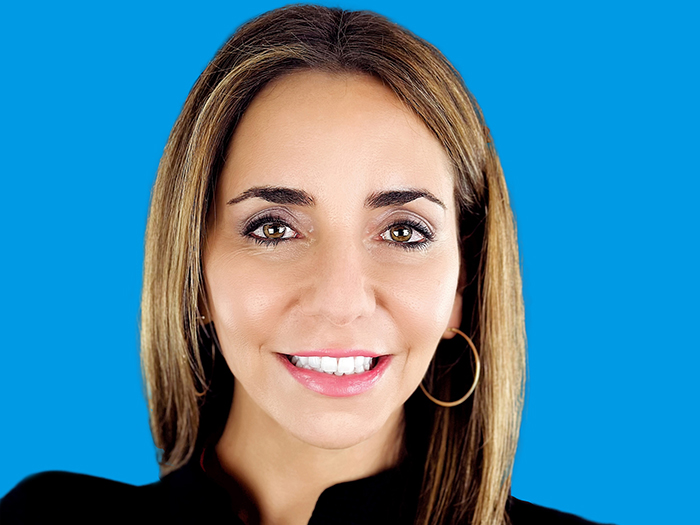
Risk & Insurance recently caught up with Karen London, President, Specialty Casualty, QBE North America to discuss the company’s specialty casualty business. What follows is a transcript of that discussion, edited for length and clarity.
Risk & Insurance: Thanks for meeting with us, Karen. When was QBE North America’s specialty casualty business launched?
Karen London: We launched specialty casualty at QBE North America in June 2022.
R&I: What opportunities did you identify when building QBE’s casualty platform?
KL: If you remember back to 2022, it was within the first few years of significant disruption in casualty. The legal environment had already dramatically shifted, and capacity was constrained with more business flowing into the E&S market. But the opportunity wasn’t simply to deploy capacity and fill a need in the market, although that was a big part of it.
We wanted to build a casualty platform that addressed the underlying issues in the market and would be successful over the long term. At that time, brokers, clients, and underwriters were increasingly frustrated. Decisions were slow, transparency was limited, and outcomes often changed late in the process.
In my opinion, underwriting authority had moved too far from the risk, so it was harder to influence outcomes and deliver a consistent experience. We had the opportunity to bring the broker, client, and underwriter experience back to the center and empower underwriters with meaningful authority, eliminate complex referral structures, and, of course, have a disciplined long term focused underwriting strategy
The opportunity with QBE made it even more compelling because we had the ability to build from the ground up with the financial strength of QBE and strong support from all levels of the organization. I’m pleased to say that four years later, we’ve built an exceptional team, delivered on the experience we wanted to create, and helped fill an important need in the market as many other carriers were pulling back.
R&I: Looking back over the past four years, what decisions did you or your team make that proved most advantageous?
KL: One of the early decisions we made that proved to be successful was to have a very focused distribution strategy. We took a more targeted approach than what you typically see in the market. Rather than appointing entire brokerage firms or offices, we appoint specific teams within select brokerage firms.
We did this to control submission flow, allowing us to provide superior service as a startup. We also wanted to be efficient with clear alignment around our appetite and expectations. The results are better than expected.
Brokers appreciate the differentiated access; we receive higher quality submissions and achieve stronger hit ratios as a result. This approach strengthened our position in the market because access is earned through relationship and performance, which drives deeper engagement on both sides.
R&I: What are the key drivers and concerns impacting the casualty market?
KL: Right now, the topic getting the most attention isn’t new. The legal environment remains the foundational concern in casualty. Nuclear verdicts and settlements aren’t slowing down, and there is no real sign of solving legal system abuse or social inflation.
A more recent concern in the casualty market is the adverse loss development we’re seeing from some carriers. This is causing concern because they are strengthening reserves in more recent accident years than you would typically expect in long-tail casualty. We also would have expected those years to perform better given the significant underwriting actions taken during those years.
I think people are worried that the structural changes and price increases may not have been enough to offset the U.S. legal environment. It’s difficult to draw firm conclusions about early unfavorable development without understanding each company’s portfolio mix and exposure profile. However, this reinforces the importance of discipline in the market around limits management and keeping pace with trend.
R&I: What is your perspective on facilities and alternative capacity in the casualty market?
KL: I think facilities and alternative capacity are addressing needs in the casualty market today. They increase available capacity, improve efficiency, and some create better claims coordination. That said, I don’t think all facilities are being built the same.
We’ve evaluated several of these structures, and the results are mixed. Some appear designed for sustainability, while others seem more transactional and don’t fully reflect the underlying exposures.
So, while there are certainly structures that provide value, I think the key question becomes durability. In casualty, the consistency of capacity is important. When capital enters aggressively and exists quickly, it tends to create more disruption than stability for brokers and insureds.
R&I: What are your priorities as you look ahead to the next phase of growth?
KL: As we look ahead, our focus is the same as when we launched. We want to continue to build a business that can perform consistently over time and in long-tail casualty, that requires a strong level of discipline.
We need to stay committed to our strategy even if the market shifts, which isn’t always easy. As we grow, we also need to keep the client, the broker, and the underwriter at the center of our decisions.
As any organization scales, it naturally requires more process, controls and structure, and the challenge is doing it thoughtfully. We need to ensure every decision supports the experience we are trying to create, and we can’t be afraid to revisit and adjust decisions that are not aligned.
For us, the goal isn’t to become something different as we grow. We want to scale the business while staying true to the goals we started with.
R&I: What emerging casualty risks are you monitoring that risk managers should be aware of?
KL: One area that I’m watching is the growing litigation around ultra-processed foods. What makes this interesting is that it’s another example of how emerging casualty risks develop. It often starts as a new theory of liability that attracts significant media, regulatory, and legal attention.
It can take years to know whether the new theory of legal liability will gain traction in court, but the defense costs begin immediately. As a result, companies can face years of litigation expense before there’s any clarity around ultimate liability.
For me, the lesson is usually broader than any single new exposure, and it’s why we need to understand emerging trends along with historical data when underwriting.
R&I: Is there anything else about the business that’s important for our readers to understand?
KL: What differentiates our business is that we brought together talented people with diverse backgrounds and experiences and created an environment where they can genuinely help shape our strategy. It’s one of the things that stands out to new team members when they join, and ultimately it is reflected in the experience we deliver to brokers and clients every day. &