 Newsletters
 Risk Central
 Digital Edition
Risk Scenario
The Underinsured American
Disclaimer: The events depicted in this scenario are fictitious. Any similarity to any corporation or person, living or dead, is merely coincidental.
PART ONE: FORGED IN FIRE
You could say Alex Montour has steel making and metal fabrication in his veins.
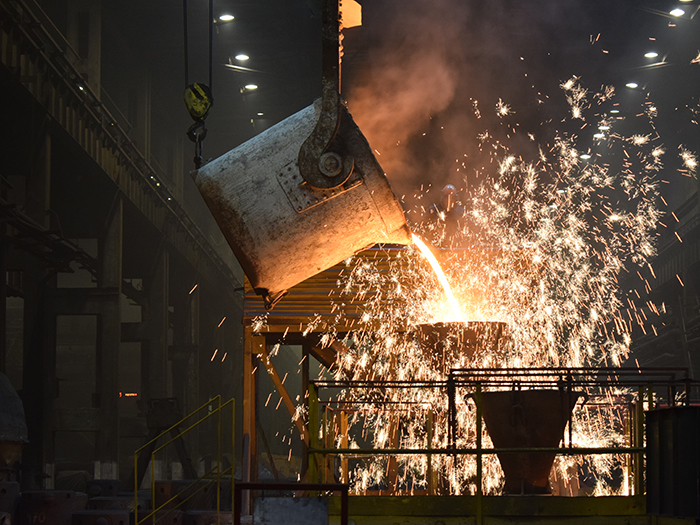
A native of Western Pennsylvania, he grew up at the feet of the rugged members of his family and community who worked in the mills and mines of places like Clairton, Braddock, Donora and Greensburg.
As a child, at family picnics, he marveled at their strength, as they drove softballs distances that he could only dream of.
In the backyard of his grandmother’s house in the hills above the Monongahela River, the scent of the local coke works was perceived by him not as some kind of pollution, but as the smell of home and community.
To him, it was the earth’s elements set on fire by magic, and he found it enticing.
Driven by genetics and environment, Montour’s ambition is to be not simply a cog in the wheel of U.S. Steel or some other giant entity. He wants to own and operate mills and factories, even if they aren’t household names.
And so he does.
What was to become Montour Steel started out as a metal framing and flooring fabrication factory that Montour, at the tender of age of 25, took over in Pittsburgh’s Lawrenceville section in 1988.
By 2008, aided by a sharp business sense, an eye to the workings of the global economy and no small amount of drive, Montour owned small steel mills and fabrication facilities in several European manufacturing hubs, including Romania, Germany, Serbia and Bulgaria.
Handling primary metals is an inherently risky business, and Montour is no stranger to risk and insurance.
His love of the European people that formed the core of his home state’s manufacturing labor force for generations resulted in solid relationships with insurers and brokers in Europe. His approach to risk management was well considered and legitimate, and his European risk transfer partners appreciated him for it.
In addition to his local policies, Montour carried a global master policy issued by a major U.S. insurer with a top-notch credit rating and a $20 million limit. As Montour’s international operations expanded along waterways, its insurance program evolved to reflect its changing risk profile, including coverage limitations for certain flood and other natural catastrophe perils.
One day in 2020, his hair more grey than black, Montour stands outside of his factory in Belgrade and watches the seemingly docile Danube flow by. The river, so vital to commercial development and the cultures of Romania, Serbia, Bulgaria and so many other cultures, is like a talisman to him.
“The river flows, it flows to the sea, and wherever that river flows, that’s where I want to be,” Montour sings to himself sotto voce, echoing a song recorded by The Byrds so many years ago.
“Rivers are forever,” he thinks fondly.
But what’s about to happen to these rivers will turn out to be anything but a fond memory.
PART TWO: THE FOOTPRINT OF CLIMATE CHANGE
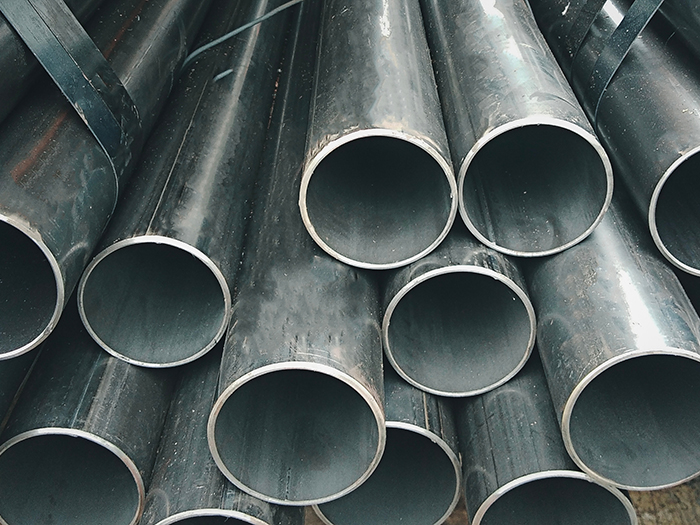
As 2023 dawns, Alex Montour is doing what he loves: growing his business and employing good workers. In addition to his company’s holdings in Romania, Serbia, Bulgaria and Germany, Montour is within weeks of taking ownership of a steel tubing maker in Belgium, along the Vesdre.
In terms of its business environment, Belgium is a different animal than the other countries Montour does business in. But Montour remains confident in himself and his team.
The opportunity to sell tubing to energy producers and consumers across the Atlantic is money he does not want to leave on the table.
“We can do this,” he says to himself and others, despite the germination of anxiety this new acquisition is producing, as it would with any aware business leader.
Something else began to gnaw on Montour’s nerves.
No businessperson could ignore the climate changes that are beginning to bedevil the American West. Major reservoirs like Lake Meade and Lake Powell are approaching all-time lows, and the Colorado River is becoming a shadow of itself. The implications for downstream businesses and communities are all too obvious.
Europe is not immune. Water levels in the Rhine, the Rhone and the Danube are becoming increasingly unpredictable, and scientists warn that drought and extreme flooding events may become more frequent and more intense.
Steel and aluminum operations are massive consumers of water, which is why we find so many of them by rivers. The water is needed to cool down both the product and the equipment, as a steelmaking furnace can run as hot as 3,000 degrees Fahrenheit.
As 2024 turns to 2025, all of Montour’s European operations are drawing water as needed, and still not missing a beat. But Alex Montour is now on high alert, as scientists project no end to the warming and erratic weather behavior.
PART THREE: FLOOD
And then it happens.
In February 2026, exceptionally wet weather conditions due to a series of storms and atmospheric rivers results in flooding across Europe.
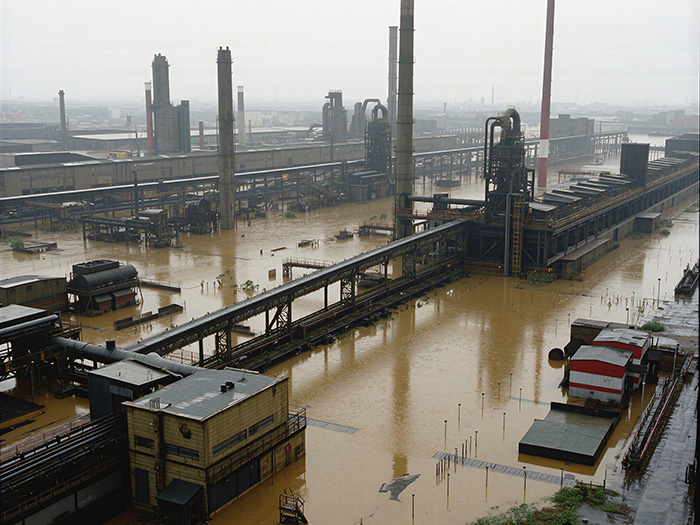
And the Vesdre River, adjacent to the newly acquired tube making operation in Belgium, experiences flooding that has a rapid and devastating impact on Alex Montour’s business.
Standing on a nearby factory wall, looking down from a hillside on the flooded works, Montour can hardly believe his eyes.
“What?!” he says to no one in particular, as an investment he had studied and prepared for meticulously is practically washing away in front of his eyes.
Due to the flooding damage, the factory’s production in Belgium is cut by 50 percent.
With production of steel tubing materially reduced in Belgium, downstream operations in Serbia and Romania face supply shortages and production delays, leading to missed contractual commitments, business interruption losses and mounting lost sales across multiple countries. Montour turns to his insurance program, anticipating support from both local policies and the global master policy.
That’s where reality hits him like a tsunami, and the flood loss evolves into a multinational insurance crisis. Although Montour’s local policies in Romania, Serbia, Bulgaria, and Germany provided him $2 million apiece for losses, including those arising from flood, the Belgian tubemaking operation, through an oversight, carries no coverage for flood at all.
With his losses approaching $15 million in the aggregate and climbing, Montour seeks relief through his global master policy.
The conversation with his broker is rocky.
“Although the local policies are expected to respond up to their applicable limits, we have reviewed the master policy, and unfortunately, flood losses of this nature are excluded. As a result, the Difference in Limits (DIL) provisions cannot provide any additional recovery above the local policy limits for the impacted European operations. I’m sorry,” his broker says.
“What about the Verviers plant?” Montour asks his broker. “Can the master policy respond to any of those losses?”
“Ah, no,” the broker replies. “That acquisition rolled out so quickly that we never completed the work necessary to fully integrate the Verviers operation into the multinational program,” he continues. “While the master policy includes a newly acquired company provision, the required reporting was never completed, and the operation in Belgium was never fully integrated into the multinational program so the master policy cannot respond as we would have expected,” he says.
A cold sinking feeling hits the pit of Montour’s stomach. Adding to Montour’s woes is the fact that a strong union in Belgium, foreseeing massive job losses, has inflamed regulators to pursue civil actions against Montour.
“Imposteur American!” (Phony American!) blares the headline in a local newspaper. The editor lambasts Montour for fumbling jobs he said his acquisition of the plant would secure.
Pursued by regulators in connection with the painful local job losses and facing current uninsured losses in the millions, Alex Montour has hit the breaking point.
What looms? Bankruptcy? At minimum, the loss of at least 75 percent of his business, if he is forced to sell.
In the fall of 2026, Montour sits on a stone wall above the Danube in the Romanian city of Braila. Instead of the comforting river flow, his ears are attuned to the sound of a Romanian barge captain berating his crew as their vessel, laden with a doomed shipment of Montour steel decking, sits hapless on a sand bar.
With the barge captain’s booming voice echoing in his ears, Montour hops off the wall and turns to the city, seeking the now familiar refuge of a local pub, and hoping no steelworkers will be there. &

Risk & Insurance® partnered with Berkshire Hathaway Specialty Insurance (BHSI) to produce this scenario. Below are BHSI’s recommendations on how to help mitigate the losses presented in the scenario. This perspective is not an editorial opinion of Risk & Insurance®.
While the flooding of the Vesdre River triggered the loss, the ultimate impact on Montour was amplified by the absence of a fully coordinated multinational insurance program designed to account for business acquisitions, changing risk exposures and the interdependencies of its cross-border operations.
Importantly:
- Difference in Limit (DIL) provisions could not fill gaps in local coverage because the underlying peril was excluded under the master policy.
- When the Belgian operation was acquired, gaps in flood insurance coverage and the lack of its integration into the multinational program went unnoticed, leaving the organization with a significant uninsured exposure.
- The expansion of operations along major waterways combined with increasing weather volatility should have prompted a review of flood risk, business interruption exposures and overall multinational program limits.
- The reliance on the Belgium operation to supply facilities across multiple countries should have prompted a review of potential supply chain disruptions and related business interruption exposures.
- A coordinated approach to multinational program design and governance, supported by regular reviews of coverage, limits, exclusions and local policy requirements, can help ensure the program evolves alongside the company’s global operations and exposures.
The information contained in this article is for general informational purposes only and does not constitute an offer to sell, or a solicitation of an offer to buy, any product or service. The advice of a professional insurance broker and counsel should always be obtained before purchasing any insurance product, any surety bond, or any other service.