The 2021 Workers’ Compensation Power Brokers

The complete list of Power Broker® winners can be found here.

Finalists:

Tina Schmitz, AIC
Senior Claims Advisor
Marsh, Chicago

Anthony Walker, AIC
SVP – Claims
Marsh, Chicago

The complete list of Power Broker® winners can be found here.
Finalists:

Tina Schmitz, AIC
Senior Claims Advisor
Marsh, Chicago

Anthony Walker, AIC
SVP – Claims
Marsh, Chicago

Life science companies operate in an environment where billion-dollar valuations can shift dramatically on a single data readout or regulatory decision. For shareholders, these inflection points create opportunities — but also grounds for litigation when expectations don’t align with outcomes.
The result is a sector where directors and officers face heightened exposure at nearly every stage of development. Whether a company is advancing a novel therapeutic through clinical trials or transitioning from R&D to commercialization, the potential for securities claims and derivative suits remains ever-present.
“Uncertainty generally leads to volatility in stock prices, and stock volatility is the number one driver of D&O litigation,” said Catherine Marincel, Senior Vice President, Executive & Professional Lines at Berkshire Hathaway Specialty Insurance (BHSI). “For these companies, the regulatory changes are directly impacting their uncertainty and potential liability.”
Understanding where litigation risk originates — and how to address it proactively — has become essential for life science executives navigating an increasingly complex landscape.

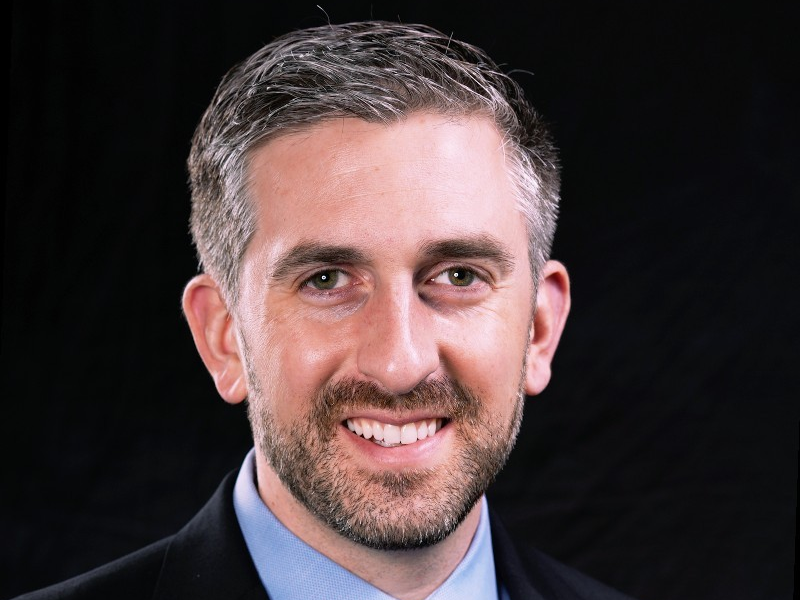
Catherine Marincel, Senior Vice President, Executive & Professional Lines, Berkshire Hathaway Specialty Insurance (BHSI)
Shareholder litigation in the life sciences sector often traces back to a fundamental disconnect: the gap between what investors expected and what actually occurred. This gap can emerge from clinical trial results, regulatory decisions, or disclosure practices that fail to prepare the market for adverse outcomes.
One increasingly common precursor to litigation is a books and records demand. These requests allow shareholders to access internal company documents — board minutes, communications, and decision-making records — to determine whether public statements aligned with what was actually happening inside the organization.
“Books and records requests are tools that investors use as a low-friction method to gather information,” Marincel said. “The courts have validated this shareholder right, making it an accessible way for investors considering litigation to investigate beyond publicly available information.”
These demands typically follow stock drops or negative news events. Once investors gain access to internal records, they can evaluate whether management knew something before disclosing it — or omitted it intentionally. For companies unfamiliar with the process, treating such demands as routine administrative matters can significantly increase downstream legal expenses.
Perhaps counterintuitively, even positive clinical data can trigger securities class actions. When results fall short of prior guidance, expressed optimism, or implied milestones, the market often reacts negatively — regardless of the scientific merit of the findings.
Marincel illustrated this dynamic with the hypothetical example of an oncology drug. Say a client took such a drug with an expectation of 12 months of progression-free survival (PFS) but use of the drug resulted in only 9.6 months of progression-free survival.
Companies frequently compound this risk by emphasizing favorable endpoints while minimizing secondary misses or safety signals. When the full picture emerges, stock corrections can follow — along with allegations that investors were misled.
Regulatory uncertainty adds another layer of exposure. Recent shifts in FDA guidance, leadership, and enforcement priorities have made approval timelines harder to forecast. While the agency has largely maintained its Prescription Drug User Fee Act (PDUFA) date commitments despite significant workforce reductions, the standards and data required for approval have become less predictable.
“As guidance, leadership, and priorities have shifted, it’s become more difficult to forecast whether drugs will be approved, whether approvals will happen on time, or whether there will be complications,” Marincel said.
The most pronounced litigation risk emerges at major inflection points: pivotal trial readouts, New Drug Application (NDA) or Biologics License Application (BLA) submissions, and FDA decision dates. But exposure isn’t limited to late-stage companies. Any transition — from phase one to phase two, from development to commercialization — creates potential for claims when expectations shift.
“The shift from a development-stage company to a commercial-stage company can be a particularly delicate period for many biotech firms,” Marincel said. “After spending a decade focused almost exclusively on research and development, they suddenly must build capabilities in sales and marketing, bring products to market, and engage insurers to secure reimbursement.”
While litigation risk cannot be eliminated entirely in the life sciences sector, companies can take meaningful steps to reduce their exposure. The foundation of this effort lies in disciplined disclosure practices and proactive governance.
When a books and records demand arrives, companies should treat it as an early warning signal rather than a routine request. Engaging the broker, carrier, and outside counsel immediately can help manage costs and establish appropriate protections from the outset.
“You want to get in touch with your broker, have conversations with the carrier, and probably engage outside counsel to get guidance on what information you might need to divulge,” Marincel said. “Getting these three constituents involved early on can help save a lot of money down the line.”
Beyond responding to demands, life science companies benefit from maintaining consistent, balanced communications across all channels. A common pitfall occurs when press releases, earnings calls, investor presentations, and regulatory filings tell slightly different stories —giving plaintiffs room to argue that investors were misled.
“For any public company, but especially in the biotech space where disclosures are critical, having disciplined disclosure practices is essential,” Marincel said. “This means ensuring strong board-level oversight and making sure all channels of communication within the organization are aligned and saying the same things.”
Risk factor disclosures deserve particular attention. Many companies maintain static language that fails to evolve with trial results, regulatory feedback, or operational changes. Updating these disclosures to reflect current uncertainties can provide meaningful protection if adverse events occur.
“Companies should avoid using risk factors that everyone else uses in their public filings,” Marincel said. “Instead, they should update those risk factors to truly describe what’s happening at the organization and the potential pitfalls and uncertainties the company faces.”
When something does go wrong, companies with robust disclosure practices can point to their filings and demonstrate that risks were clearly communicated. This approach shifts the narrative from alleged fraud to acknowledged uncertainty—a meaningful distinction in securities litigation.
For life science companies, D&O insurance represents a critical risk transfer mechanism — but not all coverage is created equal. Carriers with deep expertise in the sector can provide value that extends well beyond the policy document.
BHSI has invested significantly in building specialized capabilities for life sciences. The company maintains dedicated professionals on both the underwriting and claims sides who focus exclusively on the sector’s unique dynamics.
“At Berkshire, our value proposition is: ‘Claims is our product.’,” Marincel said. “Having somebody on the underwriting team focused on life sciences — keeping track of what’s happening on a regulatory basis, an approval basis, and an M&A basis within the industry — is invaluable. Mirrored with someone on the claims team also focused on life sciences, who can see how those industry events may or may not translate into claims is indispensable.”
This specialization enables more nuanced underwriting decisions. Rather than applying generic biotech pricing, BHSI evaluates companies based on their specific risk profiles: development phase, therapeutic indication, investor backing, and management experience.
“We’re thinking about the specific details,” Marincel said. “Broad-brushing companies by industry can lead to incomplete analysis. The real insight comes from understanding firm-specific risks and drivers, which often outweigh sector-wide narratives.”
That deeper industry understanding does more than refine underwriting decisions – it also creates space for more innovative solutions tailored specifically to the life sciences sector, such as BHSI’s Preferred Counsel Program, crisis fund-style coverage, and longer policy terms that reflect the realities of lengthy research and development cycles.
Looking ahead, the life sciences sector faces a complex environment marked by regulatory uncertainty, challenging capital markets, and persistent litigation risk. For companies navigating these dynamics, the combination of disciplined disclosure practices, proactive governance, and specialized insurance partnerships offers the most robust protection available.
To learn more, visit https://www.bhspecialty.com.
The information contained in this article is for general informational purposes only and does not constitute an offer to sell, or a solicitation of an offer to buy, any product or service. The advice of a professional insurance broker and counsel should always be obtained before purchasing any insurance product or any other service. The information contained in this article has been compiled from sources believed to be reliable. No warranty, guarantee, or representation, either expressed or implied, is made as to the correctness or sufficiency of any representation contained herein.
This article was produced by the R&I Brand Studio, a unit of the advertising department of Risk & Insurance, in collaboration with Berkshire Hathaway Specialty Insurance. The editorial staff of Risk & Insurance had no role in its preparation.