 Newsletters
 Risk Central
 Digital Edition
Severe Space Weather Could Cost Trillions and Challenges Traditional Insurance
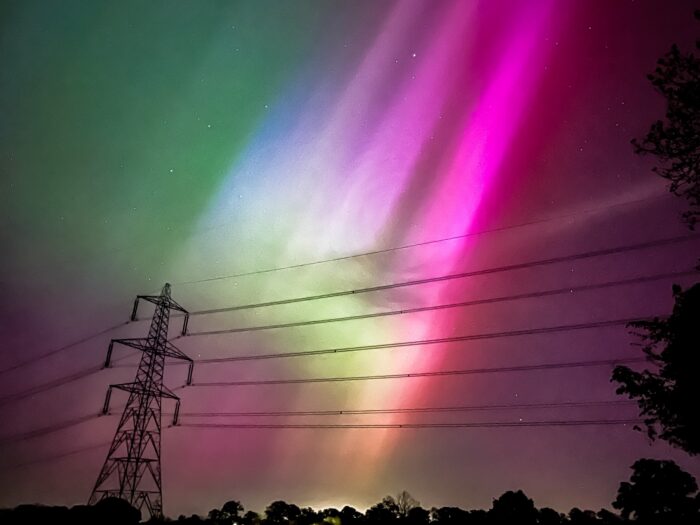
Severe space weather is an emerging systemic risk to modern society, according to Acrisure Re and ETH Zurich.
Earth-directed coronal mass ejections can induce currents that damage power grids and disrupt satellites, GPS and communications, as demonstrated by the 1989 Quebec blackout and the May 2024 Gannon storm, the paper said.
Estimates cited in the report put the recurrence of a Carrington-class storm — an 1859 event regarded as one of the most intense geomagnetic storms in recorded history — at roughly 80 to 420 years, and the paper said a repeat event today could cause global losses of hundreds of billions to several trillion dollars, driven mainly by prolonged grid outages. The report said the peril is highly accumulative and can cause losses without physical damage, making it poorly suited to traditional cover, while its objective, publicly measured triggers make it a good fit for parametric solutions.
The paper recommends that insurers monitor the peril and test a 1-in-200-year scenario, and that at least a Quebec-scale event be built into national resilience planning.
Grids Remain the Core Vulnerability
The 1989 Quebec event, triggered by a coronal mass ejection that struck Earth’s magnetic field on March 13, 1989, knocked the James Bay power network offline in under 90 seconds, leaving 6 million people without power for nine hours, the paper said. That Quebec storm caused significant damage at a magnetic field intensity of “only” approximately -589 nT, according to the report, far below the roughly -900 nT disturbance reconstructed for the 1859 Carrington event. (Note: nT, or nanoteslas, are a unit of magnetic field strength, here used to depict the degree of disturbance in the field.)
A study released by the European Space Agency in June 2026 found that a once-in-a-century geomagnetic storm could induce currents of hundreds to thousands of amps in European transmission cables, tripping thousands of transformers and causing permanent damage to several hundred, with blackouts lasting at least 72 hours in three large and six medium-sized European Union cities. That study estimated total EU losses in 2026 at 13.2 billion euros ($14.8 billion), the paper said.
Published economic estimates for a repeat of the 1989 Quebec event range widely: research by J.P. Eastwood and others put global losses at $2.4 trillion to $3.4 trillion, equivalent to a 3.9% to 5.6% hit to global GDP, while a 2016 University of Cambridge Centre for Risk Studies analysis estimated global economic damage of $140 billion to $1.1 trillion and insured losses of $55 billion to $333 billion, according to the paper.
By comparison, insured losses from Hurricane Katrina totaled an estimated $45 billion, the report noted. For a Carrington-scale event, Lloyd’s of London estimated U.S.-only economic losses of $600 billion to $2.6 trillion from power outages lasting 16 days to two years, the paper said.
Satellites and GPS Face Growing Exposure
The orbital economy’s exposure has expanded sharply alongside the growth of satellite infrastructure, according to the report. There were 16,393 active satellites in orbit as of August 2026, up from 1,980 in 2018, the paper said, citing Mission Space research.
During the May 2024 Gannon storm, roughly half of the approximately 10,000 active low Earth orbit payloads had to maneuver, GPS errors reached 70 meters for about six hours, and satellite decay rates reached 180 meters per day, making conjunction assessment impossible, the report said.
That GPS disruption cost U.S. Midwest farmers more than $500 million during the planting window, according to the paper, which cited an analysis estimating that a complete U.S. GPS outage would cost approximately $1 billion per day across 10 materially GPS-dependent sectors including precision agriculture, financial services and electricity grid management.
Insurability Challenges Point Toward Parametric Solutions
The paper said space weather has properties that make it difficult to insure: the frequency of extreme events remains disputed, the risk is highly systemic because a single large event could trigger simultaneous losses across property, energy, aviation, marine, agriculture and space lines on every continent, and the peril can generate economic losses without prior physical damage.
An April 2026 Space Weather Exclusion clause issued by Insurance Services Office Inc. addressed commercial property policies, though IRMI noted the exception “applies only to direct damage by fire, not to any time element loss, such as business income or extra expense,” adding that for many commercial insureds, “these indirect losses are likely to cause more financial harm than that caused by fire damage resulting from space weather.”
Because the triggers for space weather are objective and public, measured by government agencies and in most cases published in real time and archived, the paper said the peril suits parametric cover better than most risks for which that trigger mechanism already exists. &