Newsletters
 Risk Central
 Digital Edition
Managing Construction Risk in the Age of Data Center Mega-Projects

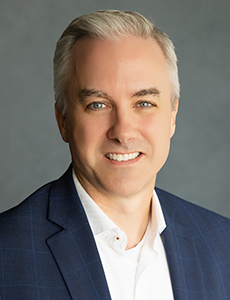
Tyler Ahrenhold is Head of Construction and Inland Marine at MSIG USA, where he leads strategy and portfolio development for complex construction and inland marine risks. He brings deep underwriting expertise and a strong track record of discipline growth across builders risk and related specialty lines.
The insatiable demand for computing power, driven by artificial intelligence and expanding digital infrastructure, is fueling a significant surge in data center construction across the United States. Approximately $6.7 trillion in global investment may be required by 2030 to meet projected data center demand, underscoring both the scale and complexity of the projects entering the market. These megaprojects often require substantial layered insurance programs across multiple carriers, particularly as power requirements escalate and construction advances through multiple phases.
Project exposures evolve dynamically throughout the build. Many contracts are facilitated in phases starting as core-and-shell, with specialized equipment, servers, power generation systems, and other high-value components included thereafter. This progression not only increases total insured values but also shifts the technical risk profile substantially.
Key Areas of Focus for Underwriting Data Center Mega-build Risks
From an underwriter’s perspective, high-quality submissions and early transparency greatly influence how these complex risks are evaluated and structured. For brokers and project owners, understanding these considerations can improve market positioning and outcomes.
1. Understanding Project Scope, Timeline, and the Data Center Lifecycle
A thorough review of the project Gantt chart is essential to identify critical milestones and potential periods of elevated exposure. Importantly, many projects involve phased timelines where certain facility areas become operational with live servers or systems before full project completion. This introduces operational risks during the construction phase itself.
Thereafter, Underwriters need clarity on whether the project is core-and-shell driven or whether the risk includes on-site power generation, GPU installations, or other advanced infrastructure. Such details allow for accurate PML/EML assessment of all exposures carried during the build. As data center campuses expand and evolve, insurance programs must adapt accordingly. Early understanding of the full coverage intent helps align protection with the true risk landscape.
Insight: Analyzing the full lifecycle enables precise modeling of both frequency and severity scenarios and helps identify opportunities for phased coverage adjustments as portions of a facility become operational. At MSIG USA, underwriters closely evaluate project schedules, construction sequencing, and occupancy plans to understand how risk will change throughout the build. This tailored approach supports coverage structures that help minimize potential gaps between construction and operational insurance while avoiding under- or over-insuring during transitional phases.
2. Equipment Cost Breakdown, Manufacturing Details, Lead Times, and Availability of Spares on Site for Critical Components
Detailed equipment cost breakdowns, combined with manufacturing origins, lead times, and supply chain information, are critical. Every added component raises both project value and technical complexity.
The rapid deployment of AI infrastructure has heightened these considerations. High-value components such as GPUs, transformers, switchgear, backup generation systems, and advanced cooling equipment often represent some of the longest-lead and most difficult-to-replace assets within a project. Delays associated with a single critical component can affect both construction schedules and overall project economics.
Key questions include: What high-value equipment will be installed (servers, power generation, cooling systems)? Where and by whom is it manufactured? What are the associated lead times, and how might geopolitical or logistical disruptions affect them? How will defects or transit damage impact timelines?
The availability and storage of on-site spares for critical components also significantly influence risk. Redundancy strategies can mitigate delay-in-start-up exposures.
Insight: Comprehensive data supports precise valuation and identification of choke points in the supply chain. Our underwriters place particular emphasis on critical equipment dependencies, including lead times, supplier concentration, replacement strategies, and the availability of spare components that may reduce the severity of a loss or project delay. In an era of global volatility, projects with robust contingency plans (including diversified suppliers or strategic spare parts inventories) are often better positioned to mitigate disruption and improve overall insurability.
3. Project Locations and Growing Exposures to Severe Convective Storms
Project site selection plays a major role, particularly in regions like Texas where many large-scale developments are concentrated. Expansive campuses with large surface-area roofs heighten exposure to hail, high winds, and tornadoes under severe convective storm (SCS) scenarios.
As climate patterns shift, historical weather data may not fully capture future risks in these locations. Underwriters evaluate not only current site conditions but also storage and protection measures for materials and equipment during construction and early occupancy.
Insight: With SCS activity intensifying in certain corridors, mitigation becomes a key differentiator. MSIG USA takes the evaluation of weather-related exposures beyond geographic location to include project-specific controls such as material storage practices, temporary protections, construction methods, and severe weather response planning. Features such as impact-resistant roofing, wind-bracing, elevated storage, and comprehensive loss-control protocols can materially improve risk quality and insurability.
4. Early Collaboration Between Clients, Brokers, and Carriers
Early engagement through market calls and pre-submission discussions allows all parties to align on risk characteristics and underwriting questions. Involving key stakeholders (including architects, engineers, and contractors) early on provides underwriters with deeper visibility into design, mitigation strategies, and project execution plans.
This collaboration often leads to more supportive market responses and tailored coverage solutions. This is particularly important for data center projects, where evolving power requirements, equipment procurement strategies, and phased occupancy plans can materially alter the risk profile throughout construction.
Insight: Proactive dialogue reduces information asymmetry, enabling carriers to offer more competitive terms and value-added services such as pre-construction risk engineering reviews. Our team prioritizes early engagement with brokers, clients, contractors, and project teams which provide visibility into mitigation strategies and operational plans that might not be fully reflected in a submission. It sets the foundation for a smoother placement process and stronger ongoing relationships while allowing carriers to provide targeted guidance on emerging risk factors.
5. Long-Term Partnerships and Adaptive Coverage
Data center developments rarely remain static. Expansion phases, design modifications, changes in power infrastructure, and evolving tenant requirements can significantly alter exposures over the life of a project. They involve multi-year timelines and commitments from carriers. Long-term partnerships between clients, brokers, and carriers are paramount to ensuring adequate coverage throughout.
Carriers committed to these accounts provide essential servicing, including midterm adjustments, policy extensions, and responsive handling of change orders as the project scales. This is where trust is built.
Insight: In dynamic megaprojects, long-term stability combined and flexibility are equally important. Data center developments often span multiple years, with project values, constructions schedules, and operational exposures evolving throughout the lifecycle. Trusted carriers that demonstrate both the financial strength and the willingness to evolve coverage (through endorsements, policy extensions, or creative solutions) can help prevent protection gaps and support clients’ growth strategies. MSIG USA’s long-term partnership model transforms insurance from a transactional cost into a strategic enabler, fostering data sharing that improves future underwriting accuracy and overall program performance.
6. Power Structure and Grid Dependencies
Beyond the building itself, underwriters are increasingly evaluating the resilience and availability of supporting power infrastructure. Turbines, utility interconnection timelines, substation construction, backup generation strategies, and electrical redundancy can all influence project schedules and operational readiness.
Insight: As AI-driven demand accelerates, power infrastructure is becoming a critical component of data center risk assessment. Understanding these dependencies helps underwriters evaluate both construction exposures and the transition to operations.
Successful insurance of data center megaprojects hinges on detailed risk insights, early stakeholder alignment, and adaptive long-term collaboration. As demand for these critical facilities continues to grow, MSIG USA remains focused on helping brokers and insureds navigate evolving construction risks by aligning underwriting strategies and coverage solutions with the changing exposures that define large-scale projects. &