Newsletters
 Risk Central
 Digital Edition
Four Converging Threats Are Making Critical Infrastructure Increasingly Fragile
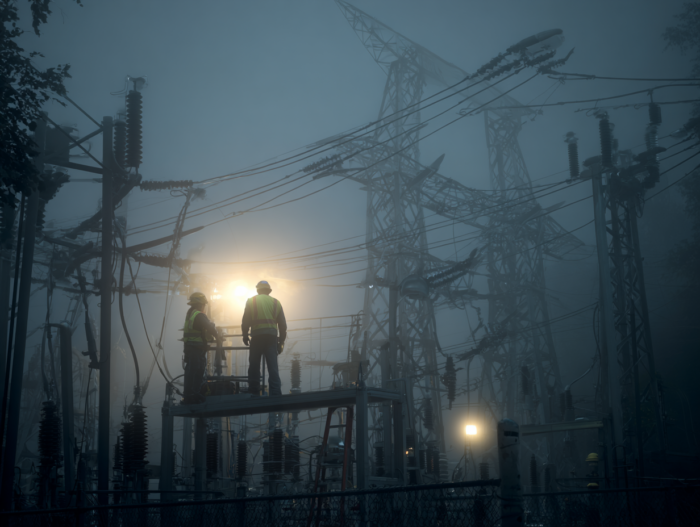
Disruptions to critical infrastructure have climbed four positions in the two-year risk outlook of the World Economic Forum’s Global Risks Report, rising from 26th to 22nd in 2026 , an increase that reflects growing global concern over the resilience of essential systems, according to a new Gallagher report.
The report identifies four converging pressures destabilizing the infrastructure that underpins energy, water, transportation and communications networks:
- Geopolitical risk.
- Natural catastrophes and extreme climate.
- Cyber threats.
- Aging assets.
Gallagher’s report warns that a single failure can now cascade into economic disruption, public safety crises and geopolitical consequences.
Geopolitical Tensions and Physical Vulnerabilities
Geopolitical risk is amplifying threats across physical, cyber and cyber-physical systems, the report said. Trade disruptions driven by sanctions, tariffs and embargoes can make infrastructure vulnerable to sudden supply chain failures, while targeting energy infrastructure has become a defining tactic of modern conflict. The 2026 Middle East conflicts caused international shipping to stall at the Strait of Hormuz, through which about 20% of the world’s oil and gas is shipped, the report noted.
The Baltic Sea region offers another example. Since 2023, at least 11 underwater cables have been damaged, with seven incidents concentrated between November 2024 and January 2025. One passage by a tanker linked to sanctions-evading networks cut five submarine cables, leaving the Estlink 2 electricity cable between Finland and Estonia out of service for more than seven months at repair costs reaching $70 million. Internet latency increased 20% to 30% across affected countries as traffic was forced onto alternative routes.
“A major concern is that we’re lagging behind when it comes to infrastructure resilience between countries, and a lot of that is under sea,” said Adam Carrier, head of consulting at AnotherDay, a Gallagher company.
Cyberattacks and the Ransomware Threat
Cyberattacks targeting critical infrastructure continue to escalate, with state-sponsored actors moving beyond data theft to pre-position capabilities inside essential systems, the report said. During the first half of 2025, there were 3,018 cyber attacks predominantly targeting critical infrastructure, including energy and government institutions. In the U.S., approximately 70% of all recorded cyber attacks in 2024 successfully compromised infrastructure within the private sector.
Ransomware remains the top concern among chief information security officers globally, according to the World Economic Forum’s Global Cybersecurity Outlook 2026. Attacks on the U.S. telecommunications sector have increased fourfold since 2021. AI is compounding the threat — a February 2026 campaign against the United Arab Emirates’ digital infrastructure combined ransomware deployment with AI-powered phishing operations, demonstrating that advanced offensive tools are now accessible to organizations operating below the threshold of state-sponsored programs.
Data centers face growing exposure as well. With more than $500 billion flowing into data center construction in 2026, the report noted that commercial data centers belonging to major cloud providers suffered extensive damage during the 2026 Middle East conflict amid intensified military action.
Climate Disasters and Aging Systems
Extreme weather is inflicting growing damage on essential systems. The January 2025 Los Angeles wildfires surpassed $60 billion in damage, with approximately 400 additional deaths attributed to secondary consequences including degraded air quality and disrupted health care access. Super Typhoon Yagi struck Northern Vietnam in September 2024 as the strongest storm in 30 years, causing economic losses exceeding $16 billion across the wider region.
The May 2024 Gannon geomagnetic storm — the first G5-classified event in over two decades — caused a transformer failure at a New Jersey nuclear generating station and power flow disruptions along a Sweden-Poland interconnection, exposing the vulnerability of modern digitized grids to solar-induced currents.
Aging infrastructure compounds these risks. On Dec. 30, 2025, a single pipe supplying around 60% of treated water to Calgary’s 1.6 million residents ruptured for the second time in 18 months, forcing the city onto a smaller secondary treatment facility. An independent review panel found the failures were tied to aging infrastructure and systemic issues in governance, asset integrity and risk management, the report said.
“The problem of aging infrastructure is more pronounced in the West,” Carrier said. “We’re seeing companies move from China to Mexico because supply chains are diverging from a geopolitical point of view. But then, when they get to Mexico, there’s not enough electricity for them to operate because the grids are aging and there hasn’t been enough investment.”
Obtain the full report here. &