Newsletters
 Risk Central
 Digital Edition
Data Center Growth Outpaces Resilience Planning, Global Survey Finds
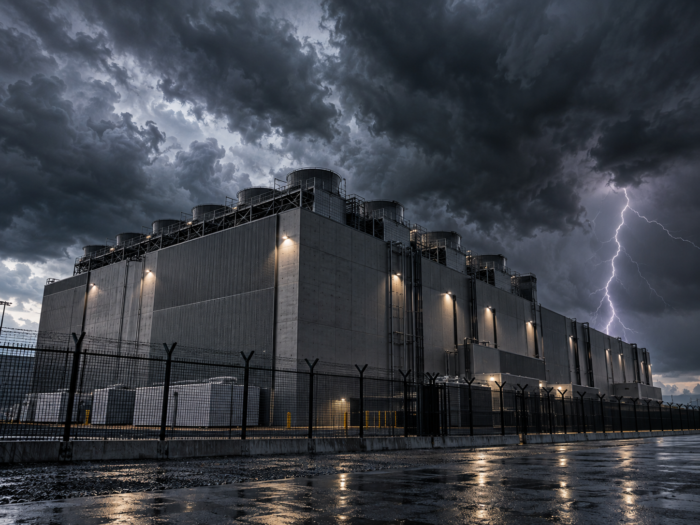
Global compute capacity is expected to nearly triple to about 220 gigawatts by 2030, backed by roughly $6.7 trillion in infrastructure spending, with $5.2 trillion of that earmarked for A.I. workloads alone, according to a report sponsored by FM.
The findings come from a survey conducted by Economist Enterprise of 1,800 leaders across the data center value chain in 21 countries, conducted in March and April 2026. The research found that more than 90% of respondents experienced a material disruption to their digital infrastructure in the past five years, and more than 80% said that when forced to make trade-offs, they prioritize growth, efficiency and A.I. deployment over long-term resilience.
About two-thirds of respondents report board or governing-body oversight of digital infrastructure resilience, and three-quarters said their organizations are investing in resilience initiatives, but that investment does not necessarily prepare them for every type of disruption, the report said.
Growth Pressures Widen Gaps in Systemic Risk Management
Seven in 10 respondents identified short-term financial and growth targets as a barrier to strengthening digital infrastructure resilience, according to the report. As a result, organizations tend to favor resilience measures with immediate operational payoffs: cyber-security was the most widely adopted measure, cited by 91% of respondents, followed by physical protection of control systems at 88%, peak-demand optimization at 87% and diversified energy supplies at 85%.
Measures aimed at longer-term, systemic threats lagged well behind. Compound-shock simulation was adopted by just 30% of respondents, climate-informed site selection by 26%, asset obsolescence stress testing by 22% and geographic diversification by only 12%, the report found.
More than two-thirds of respondents ranked supply-chain disruption among their top five systemic risks, yet only about half expressed confidence in their ability to manage it, according to the report. Cyber-attacks, grid constraints and extreme weather dominated perceptions of systemic risk, with more than 75% of every stakeholder group placing all three among their top five concerns.
For investors surveyed, the withdrawal of investment or insurance coverage ranked as the second-most important systemic risk, behind only cyber-attacks. By contrast, fewer than 5% of respondents ranked community opposition among their top five systemic risks, and barely a 10th cited technological obsolescence, despite growing evidence of both trends.
A Gallup poll cited in the report found that seven in 10 Americans oppose data centers in their area, with nearly half strongly opposed, citing concerns about resource strain and higher energy prices. Data Center Watch, an advocacy group tracking U.S. opposition, found that local resistance contributed to delays or cancellations affecting more than 75 data center projects worth around $130 billion in early 2026 alone, the report said.
Coordination and Talent Gaps Persist Across the Value Chain
Just 10% of those surveyed maintain structured crisis plans involving all critical external partners, while almost two-thirds engage with only a select few and a quarter rely solely on internal planning until disaster strikes, according to the report.
Only a third of respondents have cross-functional crisis teams, and just 30% run compound-shock simulations, limiting visibility into how broader networks would respond to cascading disruptions. About one in four developers cited complex multi-party coordination as a main obstacle to building new data centres, the report found.
Workforce capacity emerged as a related vulnerability. Fewer than half of respondents maintain dedicated talent pipelines or training programs, and about 60% of data center operators reported difficulty recruiting qualified staff, according to a World Economic Forum analysis cited in the report. Around 35% of operators, the highest share of any stakeholder group, expect skills shortages to contribute to resilience failures, compared with roughly one in six investors who view workforce capability as a systemic risk, the report said. As specialist engineers become scarce, the report noted, incidents take longer to diagnose and resolve, and new capacity takes longer to bring online.
Obtain the full report here. &