Newsletters
 Risk Central
 Digital Edition
Rethinking Campus Risk: How Financial Pressure Drives Holistic University Planning
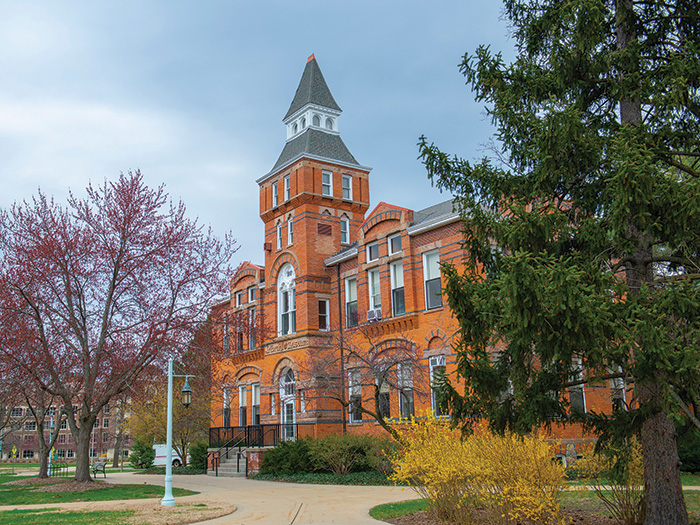
Declining enrollment and other headwinds faced by colleges and universities are straining finances, leaving institutions with fewer dollars to manage risks that could lead to an increase in claims, experts contend.
Enthusiasm for post-secondary education has waned in recent years, partly as cultural attitudes have shifted among students who may no longer view university degrees as valuable as they once were. Also, a growing number of campus protests, occasional violence, and legal issues over anti-trust and sexual misconduct issues have combined to tarnish the image of higher education.
Schools are facing hard decisions on where to trim costs as revenues fall and costs rise. In some cases, cuts have opened vulnerabilities that could lead to claims.
“They’re feeling it not just in the decline in enrollment, but their expenses are going up considerably at the same time,” said Stacie Kroll, managing director, higher education at Gallagher. “It’s pretty serious.”
“Insurers are watching,” Kroll said. “And they’re anticipating more claims,” particularly on the liability side where there have been “thermonuclear verdicts,” she added.
Christine West, vice president and chief underwriting officer of education at CM Regent, a subsidiary of Church Mutual that specializes in insurance for educational institutions, said most of the enrollment pressure is on private colleges and universities.
Findings by the National Student Clearinghouse Research Center bear that out. The group found that in fall 2025, there were 19.4 million post-secondary enrollments, a 1 percent increase from the year before. That growth, however, was driven by community college enrollment that was more than double the increase at public four-year colleges. Private four-year institutions saw declines of 1.6 percent at nonprofits and 2 percent at for-profit institutions.
Stagnant enrollment numbers are signs that students and families are much more focused on value than they were even a few years ago, West said. “They’re asking harder questions about cost and the return on investment as it relates to career outcomes,” she said.
“We’re starting to see early signals that some institutions are being forced to make tougher decisions around maintenance schedules, staffing levels and long-term capital improvements as financial pressure increases,” West said.
Deferred maintenance can quickly become a safety issue as well as competitive disadvantage, West said. “If facilities begin to show wear or if repairs are delayed, it can affect everything from the overall student experience to risk exposure across the property…It can create a difficult cycle.”
“We’re definitely seeing more deferred maintenance than I think the schools or insurance carriers would like to see,” said Kevin Beer, president of Wright Specialty Insurance. It’s happening at a time when property claims are rising, particularly from changing weather patterns, he added.
Still, institutions looking for property coverage are generally finding prices softening after years of tight market conditions, Beer said. “Most insureds are getting a flat renewal or something significantly less than that,” depending on where their property is located, he noted.
The liability market for higher education institutions is another story.
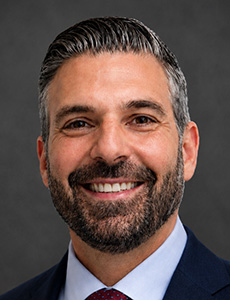
Kevin Beer, president, Wright Specialty Insurance
Sources point out that liability exposures are expansive at institutions of higher education. Among them are risks tied to traumatic brain injuries of college athletes, as well as those related to vehicle fleets, anti-trust practices, sexual molestation, campus violence and others.
West pointed to a mix of “social, legal and political dynamics that have all intensified over the past several years” and combined to create liability concerns for the institutions. And, litigants are no longer as hesitant to file actions against the schools as they might have been in the past, she noted.
“High-profile events on campuses, whether it’s protests, allegations of employee misconduct or disputes tied to diversity or admissions policies, all tend to play out very publicly now and very quickly in the legal system.”
Insurers have taken notice of large verdicts in sexual assault cases and rulings against schools accused of anti-competitive behavior, Kroll said. All of this, along with the shifting societal attitude about the value of higher education has created a “perfect storm” for insurers, she added.
Ben Accardo, underwriting manager at US Safeguard, a unit of Beazley, said the trend towards more frequent and severe claims in sexual misconduct cases is intensifying. A greater public willingness to litigate is one reason why, he pointed out, along with the removal of statutes of limitations in some cases, and the erosion of sovereign immunity protections for schools.
“The financial scale is substantial,” Accardo said, with settlements well above $10 million in some cases.
Artificial intelligence has made sexual abuse material easier to create, Accardo said.
“Beyond physical conduct, risk now extends to digital grooming, image manipulation, and harassment off-campus and online,” problems that have increased in step with the rapid growth of remote and online education, he added.
An increase in campus violence has also rattled schools, universities and their insurers. From 2000 thru 2025, 370 people were killed in 280 incidents at higher education institutions, according to the Violence Prevention Project, a research center at Hamline University. In 2025 alone, there were 19 incidents that left 23 dead.
Preparedness across institutions varies a great deal, according to Lucy Straker, Beazley’s Focus Group Leader – US Political Violence and Deadly Weapons Protection. While many will make large investments in areas such as physical security, threat assessment and emergency communications, there often is a gap between “a written plan and being operationally prepared for the actual event,” she said.
The best-prepared institutions will take a holistic approach to managing the risk of campus violence, taking it well beyond campus law enforcement and security departments, Straker said. “It has to be institution-wide and cover multiple departments, including risk management, student affairs, behavioral health, human resources, communications, executive leadership, and others.”
Insurers want to know what measures are in place to prevent violence, but the absence of comprehensive plans isn’t necessarily a deal-breaker when it comes to insurance coverage, Straker said.
“We can work with institutions to help give them advice and guidance in terms of how to become better prepared. It comes back to those holistic measures — putting the communications in place, making sure you’re identifying the warning signs, etcetera.”
If an event occurs, it won’t be just the insurer who will want to know if plans were in place, Straker pointed out. “It’s going to be every single individual outside of the institution — when you are under the microscope — wanting to understand what measures you had in place, whether you had any, or, if you didn’t, why not?” &