Newsletters
 Risk Central
 Digital Edition
Vermont Captives Help Put Patient Safety First

When it comes to managing risks, hospitals and health care systems are no strangers to responsibility. From general liability, commercial property and casualty, workers’ compensation, and the like, these institutions have a lot on their plate.
And then some.
That’s because these entities aren’t just protecting operations; decisions around risk management protocols can directly impact patient safety and well-being. And when the entire modus operandi is patient health, it’s important to get risk strategies right.
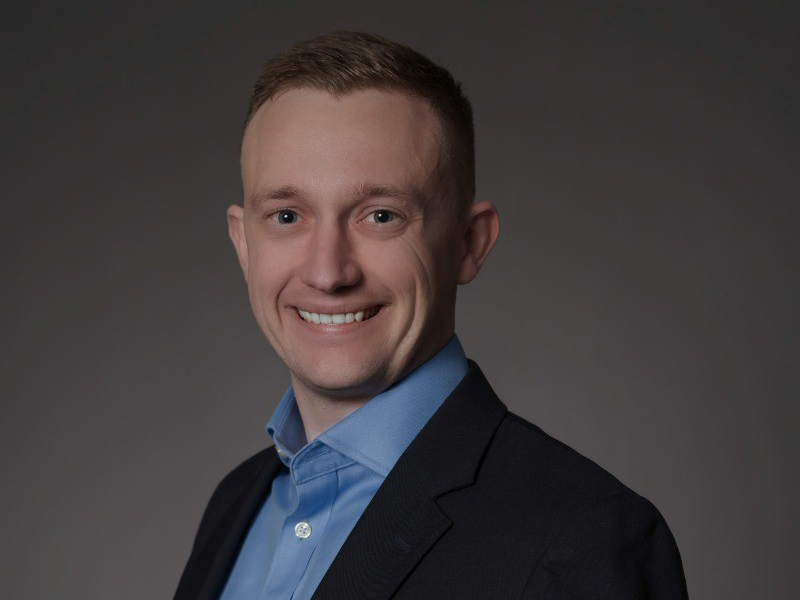
“Hospital networks are patient-safety focused,” agreed Richard Wells, assistant chief examiner, Vermont Department of Financial Regulation – Captive Insurance Division.
And one way these entities gain control over the claim process and incentivize patient safety efforts has been through captives.
“The great thing about a captive is you have control over your claims and your ability to manage those claims,” Wells said. “What is great about health care systems being in any captive is … it incentivizes patient safety, because if you are successful with your risk management, you get to retain more funds.” And more funds mean more patient-focused programs and other similar initiatives.
Captives provide stability in an otherwise tumultuous commercial market. With a captive, health care systems can get granular on spend and risk management efforts, no longer beholden to rate increases driven by other systems’ losses.
“You also tend to see faster resolutions in a captive,” Wells added.
The Big Risk Plaguing Health Systems
This localized efficiency is becoming increasingly critical as hospitals face an escalating liability landscape. In fact, one specific line of risk is driving the mindset toward alternative risk transfer.
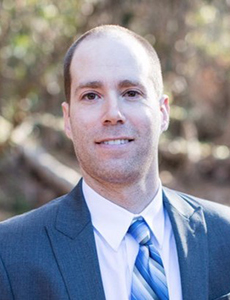
“The biggest cost driver is medical malpractice claims, and those claims are increasing in severity across the country—not by frequency but by severity,” said Tom Hayden, vice president of risk and insurance services at Children’s Hospital of Philadelphia (CHOP).
Hayden’s thinking isn’t unfounded: Health care systems and hospitals are often at the unfortunate receiving end of high-level legal disputes and medical malpractice claims, which, according to a Commonwealth Fund report costs U.S. health care systems more than $55 billion annually. That’s a number that includes both defensive medicine cost and direct liability expenses. And while the average medical malpractice settlement is an estimated $430,000, this industry is not shy to the nuclear — and even thermonuclear — verdict exceeding $10 million.

Tom Hayden, vice president of risk and insurance services at Children’s Hospital of Philadelphia (CHOP)
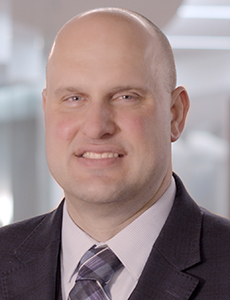
“In the medical malpractice arena, the commercial insurance is just not available, and if it is, it comes with such a high self-insured retention,” said Clare Bello, Enterprise Director, Claims & Insurance, Jefferson Health. “Putting that into a captive helps the health system plan for the money they may need and helps to avoid using funds from their operating funds when they have to pay for claims.”
Melissa Sowinski, client service leader at Marsh Captive Solutions, echoed this reality, noting that health care systems frequently leverage alternative structures for these exact heavy-hitting lines: “Hospitals and the health systems are commonly using captives for medical professional liability … but captives are useful for high severity, low frequency risks, and for any specialty coverages that can be difficult, or costly to place in the marketplace,” Sowinski said. “Ultimately, clients want to look for controlled and predictable risks.”
Both CHOP and Jefferson Health are located in the birthplace of modern medicine: the City of Philadelphia. But that also places these entities in one of the largest judicial hellholes in the country—meaning, they are likely to be buffeted by nuclear verdicts in court.
Captives Change the Narrative
Jefferson Health has been a part of its Vermont-domiciled risk retention group, the Mountain Laurel Risk Retention Group, for more than 20 years. The captive acts as an integral part of the risk management strategy for Jefferson Health and fellow member organization Main Line Health, handling professional and general liability and overseeing medical malpractice issues that may arise. Likewise, CHOP’s single-system captive has been in operation for over two decades, designed to tackle medical malpractice and professional liability risks.
“The captive allows us to take a longer view of our claims experience. Children’s hospitals, in general, have fewer claims than adult hospitals, but they’re potentially more significant in value,” Hayden said.
Because of this prolonged timeline, a captive cannot be viewed as a quick fix. “A captive is a long-term investment because of the capital that it requires upfront, and then the multi-year commitment to finally realize those returns,” Sowinski said.
To survive that long horizon, she emphasized that guesswork isn’t an option: “Accurate data is critical for success… investing in data and analytics can definitely improve decision making and benefit the captive’s long-term financial performance.”
For Jefferson Health, the captive has “enabled us to share information from a risk perspective with another health system within the captive itself. We have joint risk meetings and claims committee meetings, so we get perspectives outside of Jefferson about risk and claims, which I think is huge,” said Bello.
She added that it also provides a financial benefit, because Jefferson Health can use risk retention resources to improve the risk team internally at both health systems.
Captives are a key for health care systems in that it enables them to create custom-tailored coverage to meet their needs. Entities gain better access to claims data and additional savings can be rerouted to patient safety and employee wellbeing.
“Health care systems can customize their policy and their premiums to their needs, versus being in the commercial market, where it might be a more standard approach,” Wells said.
Additionally, captives allow for access to the reinsurance market—something Wells sees as a boon for health care systems and hospitals looking to have a better grasp on their own risk management efforts.
“They can specialize the policies and their risk to their liking. And then, they retain access to the global reinsurance market. Just because you have a captive and you’re writing a certain line doesn’t mean you have to retain all that risk,” he noted. “You still have a source to reinsure those risks with the global reinsurance market.”
According to Sowinski, that handoff to the reinsurance market is exactly what gives individual health systems their scaling power.
“Using reinsurance through your captive lets the captive increase limits and write larger exposures than it would normally support on its own,” she said. “And this smooths volatility and can free up capital for other uses.” Furthermore, she points out that a smoothly running captive unlocks a secondary revenue stream: “Investment gains can be used to manage liquidity for claims and offset any operating expenses … overall improving the return on capital.”
Placing Trust in Vermont
In Vermont, health care is tied as the largest industry utilizing captives, along with manufacturing, with 114 captives domiciled in the state in each industry. That accounts for approximately 16% of all active captive insurance companies in Vermont. Over 45 years of experience and a huge network of support have made the state a key player for health care operations looking to bolster their risk mitigation strategies.

Clare Bello, Enterprise Director, Claims & Insurance, Jefferson Health
“One of the main ways, especially for a new or growing captive, is that we have a large infrastructure in the department, where we have 30-plus staff dedicated to captives,” Wells said. He added that this is the place where work is done at the speed of business, meaning when things shift or change and ideas grow, the Vermont team is ready to talk through the changes, utilizing deep industry knowledge on how any change can impact business.
Vermont’s reputation, coupled with its robust infrastructure of regulators, captive managers, attorneys and accountants has also made it an easy decision for CHOP and Jefferson Health to place their business here.
“Interacting in Vermont gives us both stability and predictability because of the state’s familiarity with the regulatory landscape,” Hayden said.
“It’s an extraordinarily strong domicile for health care captives … the regulations in Vermont are really fair to the risk retention groups and the team in Vermont understands health care better than some of the other domiciles,” said Bello.
Not to mention, the ability to network with other hospitals and health care systems, as well as captives in other industries, enables sharing of ideas and ways to improve upon existing protocols. For example, the Vermont Captive Insurance Association (VCIA) held its Philadelphia chapter launch this year, where both Bello and Hayden attended and praised the networking opportunities and expertise offered.
“There is a lot of guidance on how to do it right within the regulatory structure and within the VCIA,” Bello said. “There’s an incredible network of resources from brokers to captive managers to regulators and back again, and so I think if you are contemplating a captive for the first time, it’s definitely worth working with the Vermont team, because I think they get you off on the right foot.” &