Newsletters
 Risk Central
 Digital Edition
Data Center Boom Creates Complex, High-Stakes Insurance Challenges
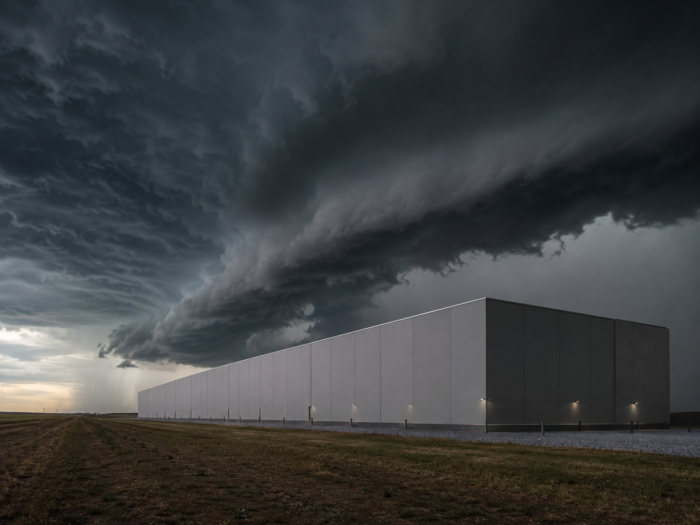
The U.S. is home to 4,287 data centers as of May 2026, with the top 10 states accounting for 59% of that total, and the pace of construction shows no signs of slowing, according to analysis by AM Best.
The report identified the data center buildout as a coverage challenge requiring insurer innovation, driven by the scale of AI workloads, the concentration of high-value equipment, and the interconnected nature of modern computing infrastructure.
“As data center development and construction spreads, the required insurance coverage is evolving, as it is currently beyond what the traditional property/casualty industry has previously experienced,” said David Blades, associate director, Industry Research and Analytics, AM Best.
Virginia leads all states with 603 data centers, or 14.1% of the national total, followed by Texas with 461, or 10.7%. A study from the Lawrence Berkeley National Laboratory cited in the report estimated that data centers could account for as much as 12% of all U.S. electricity consumption by 2028. A single modern AI data center can consume as much power as approximately 100,000 homes, according to estimates referenced in the report.
Business Interruption Poses the Greatest Financial Risk
Among the many coverage lines relevant to data center owners, AM Best identified business interruption as potentially the most consequential exposure. Unlike a conventional commercial property loss, where damage is contained within a single facility, a disruption at one data center can instantly cascade across interconnected networks, affecting multiple clients and services simultaneously. That interconnected exposure complicates claims, and the report noted that disputes are likely to arise over when a project is considered complete.
Replacing the highly specialized, custom-fabricated equipment housed in data centers, including servers, precision cooling systems, and power infrastructure, can take an extended period, prolonging the interruption period and amplifying financial losses. The report also noted that construction timelines are often compressed because completed data centers can begin generating revenue quickly, meaning even modest delays carry significant cost.
Builders risk coverage addresses the construction phase and may be extended to include delay in start-up or advance loss of profits provisions. Once operational, facilities face commercial property exposures that are more severe than those of traditional large commercial buildings: the density of heat-generating servers raises ignition risk, and the rush to complete construction can lead to shortcuts in geotechnical work such as soil testing, foundation pouring, and waterproofing, all of which the report described as critical to facilities housing sensitive equipment.
AM Best also flagged cyber as a medium-to-high hazard, noting that a single attack could simultaneously trigger a first-party property claim, a business interruption claim, and a third-party data breach claim. The report highlighted “silent cyber” — the gap between property and dedicated cyber coverage — as an acute concern for data center owners.
Environmental and Macroeconomic Pressures Add to Risk Complexity
Beyond physical and financial exposures, data centers face significant environmental liability. Their heavy water consumption for cooling and their demand on local electrical grids can constrain resource availability for surrounding communities, potentially giving rise to third-party property damage lawsuits from residents or other businesses affected by those constraints. Pollution liability from generators and power sources represents an additional exposure, the report noted.
A March 2026 Swiss Re Institute report cited by AM Best found that newer data centers are increasingly being sited in areas with significant natural hazard exposure, including regions prone to hail and tornado activity. That trend points toward the need for very high total property program limits, and AM Best noted that the largest global insurers with the most substantial balance sheets will be essential to meeting that demand.
On the investment side, the report noted that insurers with private credit or other financing exposure to data center infrastructure projects face asset-side risks as well. Investment managers were urged to monitor technological, regulatory, and legislative developments that could affect the long-term viability of those positions.
Internationally, the UK and Germany rank as the second and third largest hosts of data centers outside the U.S. The European Commission in June 2026 presented its European Technological Sovereignty Package, which includes the Cloud and AI Development Act, targeting a tripling of data center capacity across the region while addressing climate commitments and reducing dependence on non-EU suppliers.
Obtain the full report here. &