 Newsletters
 Risk Central
 Digital Edition
Climate Adaptation Projects Deliver $2 for Every $1 Spent, Swiss Re Institute Finds
Climate adaptation projects in emerging markets generated projected benefits of roughly $2.10 for every dollar spent, with some interventions delivering returns approaching 10 times their cost, according to analysis by the Swiss Re Institute.
The finding is based on a review of 42 World Bank and Asian Development Bank project completion reports that directly addressed physical natural catastrophe hazards and quantified adaptation benefits.
The analysis comes as insured natural catastrophe losses continue to climb. If the long-term annual growth trend of 5% to 7% persists, insured losses could rise from $107 billion in 2025 to $186 billion by 2030, the Swiss Re Institute said.
Europe’s experience with flood risk shows adaptation can help contain losses even as exposure increases: insured flood losses there are growing at a compound annual rate of about 5%, driven by rising insurance penetration and more exposed assets, but after accounting for those factors the institute’s analysis found no residual upward trend in insured flood losses. Separate research cited by the institute found adaptation has reduced Europe’s economic flood losses by about 63% since 1950, while Fathom, a Swiss Re-owned water risk specialist, estimated that annual household flood losses in the UK would be about 2.8 times higher without existing flood protection.
A measurement gap obscures adaptation’s value
Despite the apparent returns, adaptation’s economic benefits are rarely isolated in project appraisals, the Swiss Re Institute found. Of 651 World Bank and Asian Development Bank project completion reports from 2015 to 2025 that identified adaptation as a core benefit or co-benefit, about half reported overall project-level measures such as net present value or economic internal rate of return. Only 23% quantified avoided losses, and just 19% attempted to calculate an adaptation-specific benefit-cost ratio.
The institute said a missing adaptation-specific estimate should not be mistaken for an absence of adaptation benefits. Many projects already demonstrated sufficient returns through more easily measured benefits, such as employment, health outcomes, transport connectivity and farm revenues, reducing the incentive to separately model avoided catastrophe losses.
The institute attributed the measurement gap to three factors: adaptation is often embedded within larger infrastructure projects, benefits are counterfactual and require estimating losses that would have occurred without intervention, and there has historically been little requirement to isolate adaptation benefits once a project already met return thresholds.
Returns vary sharply by intervention type
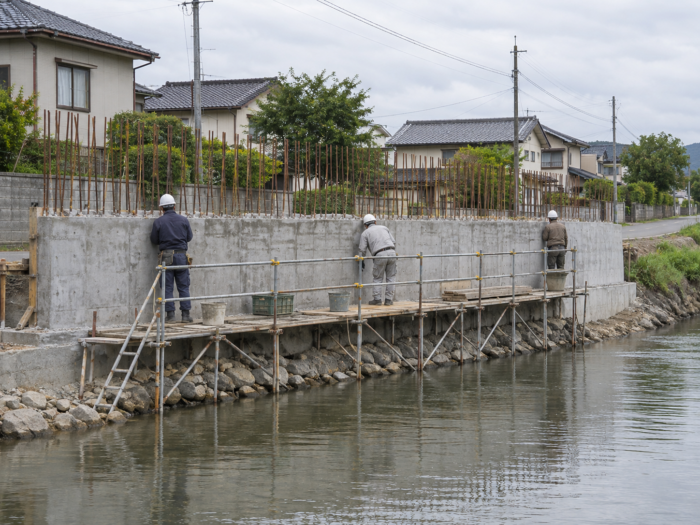
Among the 42 projects reviewed, representing a combined $7.9 billion in value, structural flood protection and resilient housing reconstruction each showed a median benefit-cost ratio of 2.5, the highest in the sample. Structural flood protection, including embankments, dikes, retention areas and drainage systems, can protect a large concentration of homes, businesses and infrastructure over many years, the institute said.
Hydrometeorological observation and forecasting projects had a median ratio of 2.4 but showed the widest range in the sample, from 0.3 to 9.6, reflecting how much value depends on whether warnings reach exposed populations in time.
Resilient transport infrastructure and resilient social infrastructure each showed lower median ratios of 1.7, which the institute said may partly reflect that avoided physical damage from natural catastrophes is not always separately quantified in transport-project appraisals. Mangrove and coastal ecosystem restoration had a median ratio of 1.9 across two projects.
The institute noted the variation reflects both how risk is reduced and who benefits. Hardening an individual asset mainly benefits its owner, while flood defenses, resilient infrastructure and forecasting systems tend to generate broader public-good benefits across many users, which can limit incentives for private investment and make public funding more important. The sample draws primarily from publicly financed infrastructure and development programs, the institute said, and findings should be considered directionally relevant rather than representative of private-sector adaptation investment.
Adaptation cannot eliminate all losses, particularly from low-frequency, high-severity events, the institute said. It described insurance as an important complement, noting that adaptation reduces expected losses and can support insurability, while risk transfer provides financial protection against the residual risk that remains.
Obtain the full report here. &