Newsletters
 Risk Central
 Digital Edition
Property Claims Are Fewer but Costlier as Labor Costs Keep Climbing
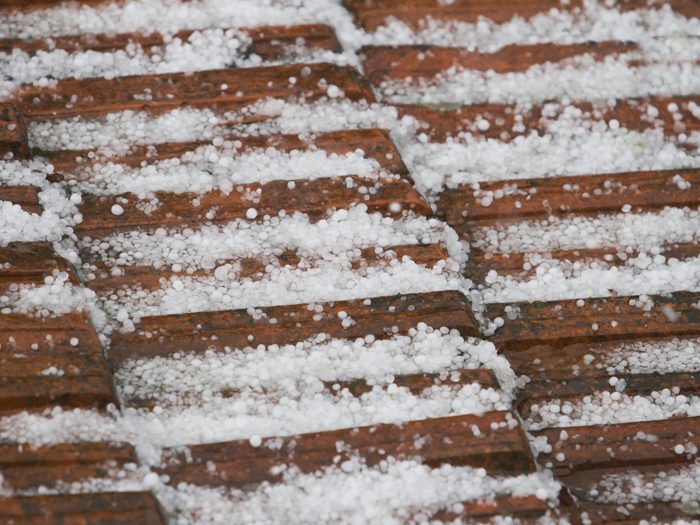
U.S. property claim assignment volume dropped to approximately 1.24 million in the second quarter of 2026, the lowest second-quarter total in recent years, according to Verisk’s Quarterly Property Report covering April through June 2026.
The figure fell 12.21% from Q2 2025 and sat 13.05% below the five-year average, extending a four-year decline, the report found. The drop was concentrated in routine claims rather than catastrophe activity: non-catastrophe assignments were down 18.65% against the five-year average, while catastrophe assignments slipped just 4.29%.
As a result, catastrophe property claims now make up 43% of Q2 volume, up from 34% five years ago, even though the number of PCS-designated catastrophe events has stayed relatively steady, the report said. In Canada, Q2 volume declined 7.7% from Q2 2025, though 2026 volume still ran 14.31% above Canada’s five-year average.
Severity is moving in the opposite direction. Average U.S. claim severity currently stands at $17,085, down 10.77% from Q2 2025 but only 2.88% below the five-year average, according to the report. Verisk noted that severity figures are provisional and rise as larger, more complex claims close, citing Q1 2026 as precedent: initially reported at $16,079, it has since matured 13.1% to $18,185.
Applying a maturation rate drawn from historical data, Verisk projects Q2 2026 will mature to roughly $18,794, or as high as $19,323 if it follows Q1’s stronger maturation pattern, which would make it the highest quarterly average in recent years. In Canada, average severity currently sits at $13,488 CAD, down 10.65% year over year, with a projected maturation range of $14,837 to $15,241 CAD.
Storm Activity Reshapes The Regional Map
Texas again led the nation in total Q2 property claims assignment volume but fell 27.3% from Q2 2025, a decline the report attributed almost entirely to catastrophe activity, including a 90% drop in hurricane claims and a 48% drop in wind claims. Verisk linked much of that swing to Hurricane Beryl claims filed near their one-year deadline in 2025, which inflated that year’s volume without a comparable event in 2026.
The Midwest saw the opposite trend: Illinois and Ohio posted the second- and third-largest assignment volumes in the country, driven by convective storm systems and severe hail up 73% in Illinois and 41% in Ohio through the first half of the year, according to Verisk Respond data cited in the report. Kansas and Iowa each climbed 14 places in state rankings, with assignment volume rising 73% and 95%, respectively. In Canada, Ontario accounted for 41% of national claim volume despite a 27.9% decline, while Manitoba assignments rose 80.5%, including a more than 200% jump in water claims tied to catastrophe activity.
Labor Costs Drive Reconstruction Pricing Higher
Combined labor and material costs rose 4.0% in the U.S. and 3.2% in Canada from June 2025 to June 2026, with monthly gains accelerating through the quarter, the report found. The labor composite index rose 3.9% in the U.S. and 4.1% in Canada annually, with concrete mason labor leading both markets at roughly 15.6%. Material-only costs rose just 2.1% in the U.S. and 0.2% in Canada, with lumber down 2.8% and 11.5%, respectively.
Total reconstruction costs, combining residential and commercial, rose 3.8% year over year in the U.S. and 3.0% in Canada, though quarterly growth accelerated to 1.3% and 1.2%. Fuel costs remained elevated at 21.1% above June 2025 levels in the U.S. and 18.1% in Canada, despite easing roughly 7% late in the quarter.
Verisk projects U.S. residential reconstruction costs will rise approximately 1.8% between July 2026 and January 2027, a pace the report characterized as consistent with a mature expansion rather than the sharper inflation seen from 2021 through 2024.
Obtain the full report here. &