 Newsletters
 Risk Central
 Digital Edition
Secondary Perils Now Drive Catastrophe Losses, Squeezing Earnings and Capital
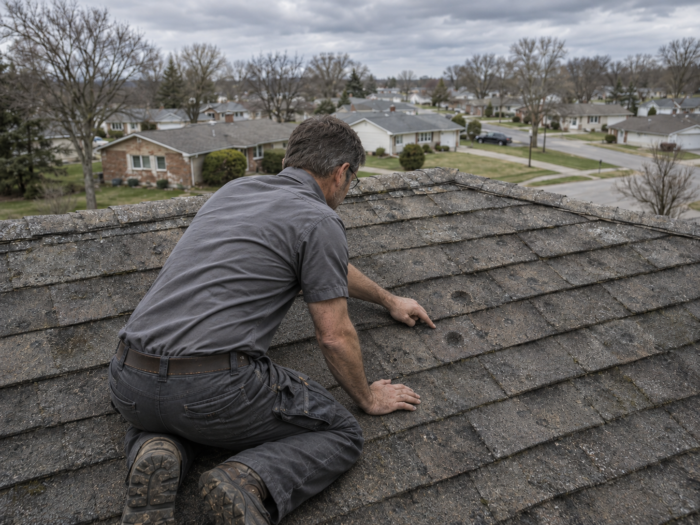
Perils once labeled secondary, including hail, wildfire, winter storm and inland flood, now drive the majority of North American insured catastrophe losses in most years, according to a report from Marsh Re.
Marsh Re said that U.S.-insured severe convective storm (SCS) losses have exceeded $30 billion annually since 2020, with four of those years topping $40 billion. Insured severe thunderstorm losses, inflation-adjusted to 2025, have grown at a compound annual rate of 4.1%, reaching $46.3 billion in one recent year, with about $26 billion in losses recorded through August 2026.
While a major hurricane or earthquake still typically sets the 1-in-100 and 1-in-250 capital outcomes for diversified portfolios, Marsh Re said that is “less true than it was,” noting that a single urban wildfire can produce a tail event for a concentrated portfolio and that SCS is already the tail risk for some regional carriers in the central Plains.
Vulnerability, Not Just Weather, Is Driving Losses
Marsh Re said the hazard signal behind rising SCS losses is real but difficult to isolate, pointing to research showing more frequent storm-favorable environments across parts of the central and eastern U.S. and an eastward shift in tornado activity toward the Mississippi and Tennessee valleys. Long-term hail trends are harder to establish because the historical reporting record has been shaped by changes in population, observation networks and reporting practices, according to the report.
Marsh Re said much of the loss trend instead stems from vulnerability: aging housing stock in hail country, replacement costs that remain well above pre-2021 levels, and, in some states, contractor solicitation and litigation that push claims beyond what the storm itself caused.
Building-science research from the Insurance Institute for Business & Home Safety and others shows roof construction materially changes hail and wind outcomes, the report said, making roof age and roof type among the most valuable fields in exposure data. Marsh Re also cautioned that in its own testing, vendor SCS model loss estimates have increased substantially from one version to the next, a pattern the firm said requires validation against hazard science and carriers’ own claims experience before influencing pricing, capital or reinsurance decisions.
Wildfire, Winter Storm and Flood Are Reshaping the Risk Map
Wildfire has moved beyond a rural, California-specific peril, according to Marsh Re, with the most destructive recent fires sharing a common signature of extreme downslope winds over critically dry fuels. The Marshall Fire in December 2021 destroyed more than 1,000 homes near Denver in an afternoon amid gusts nearing 100 mph, and the January 2025 Los Angeles fires, following two wet winters and an exceptionally dry autumn, produced the largest insured wildfire loss on record, the report said.
In both events, embers carried by wind ignited homes that then fueled further spread, a dynamic Marsh Re said current models have the least validated experience capturing. Winter Storm Uri in 2021 similarly evolved from a weather event into an infrastructure event, the report said, as Texas power, gas and water systems failed together during a prolonged Arctic cold snap, spreading losses across personal, commercial and energy lines at a pace and scale not previously experienced.
Models capture freeze losses well but capture multi-day grid failure and its claims cascade far less well, according to Marsh Re.
Flood risk is also shifting, the report said, because a warmer atmosphere holds roughly 7% more moisture per degree Celsius, pointing to Hurricane Helene’s 2024 damage from mountain-enhanced rainfall in western North Carolina, hundreds of miles from the coast, in counties where only about 2% of properties sit inside FEMA’s mapped flood zones.
Reinsurers’ Catastrophe Share Has Fallen as Retentions Rose
The 2023 reset of reinsurance retentions pushed many frequency perils beneath those thresholds, Marsh Re said, shifting losses onto ceding insurers’ net results rather than reinsurance programs.
The reinsurance segment’s reported catastrophe losses equaled 11% of total industry catastrophe losses through the first nine months of 2025, according to Marsh Re calculations, down from 21% in both 2017 and 2021 and from 24% in 2019. Most programs remain designed around a single large occurrence, the report said, even though a season of 15 midsize hail events can do more damage to an income statement than one hurricane reaching the first catastrophe reinsurance layer.
Obtain the full report here. &