Newsletters
 Risk Central
 Digital Edition
Nick Abraham of Amwins Global Risks Talks to Risk & Insurance
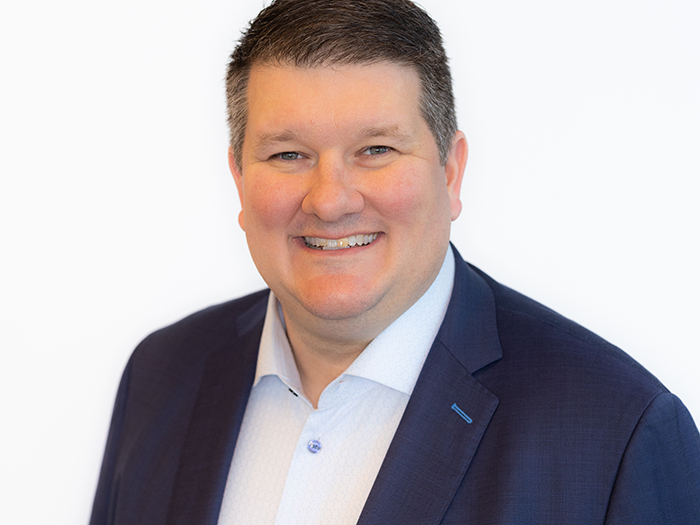
In late March, Dan Reynolds, the editor in chief of Risk & Insurance, caught up with Nick Abraham, the London-based CEO of Amwins Global Risks. What follows is a transcript of that discussion, edited for length and clarity.
Risk & Insurance: Thanks for meeting with us Nick. Which lines are seeing the most significant rate softening right now, and how is Amwins working with clients to help them lower their total cost of risk?
Nick Abraham: This shouldn’t be a surprising one. We’re seeing the property marketplace, particularly North American property, fall off relatively precipitously after five years of pretty substantial rate gains — last year was probably the beginning of the tipping point. We’re seeing anywhere from 15% to 20% rate decreases for good-quality, loss-free deals.
Our advice to our clients is straightforward. Many of them, as pricing was going up, were cutting their limits. So we’re encouraging them to reevaluate that, look for opportunities to make sure their limit profile is adequately addressed, and in many instances, take advantage of the cost savings that are out there.
R&I: When comparing the London market to domestic options, where does it offer a better deal for clients?
NA: The syndication of the marketplace as a whole offers the opportunity to buy big limits of insurance and blocks very efficiently. The marketplace as a whole works very well whenever there tends to be a shift in the overall macro environment, and we’re definitely seeing that right now. There’s capacity and the belief is that the rate is still adequate; carriers are looking to deploy it.
That’s where I think the value of London comes together. The aggregation of capacity that’s here, ready to be utilized, is giving our clients some really good tools right now.
R&I: Should buyers of insurance always be thinking of London as a viable option, and is there always a dynamic where it can be helpful?
NA: I think so. That’s why it’s here and why it’s been here for three hundred years. Historically, London has been about addressing the bizarre and the unknown, but it has evolved into a very capital-efficient marketplace. There will always be a spot for London, in addition to its roots of handling unique, distressed types of risks. The vehicle itself — the marketplace — is efficient.
I think that particularly for sophisticated, larger purchasers of insurance, Lloyd’s should always be a part of that program and that schematic.
R&I: Looking ahead to 2026 and beyond, what emerging risks might not yet be on the radar of some risk managers?
NA: To be candid, I get surprised when there are still massive cyber intrusions and no insurance mechanism in place for big organizations. That surprises me.
As the world continues to get more and more interconnected — and as AI begins to take prevalence in our systems and processes— I think continual review of cyber and network infrastructure has to be a priority.
It’d be tough to call it an emerging exposure because it’s been here, but I think we’re going through iterative stages of more and more connectivity, which is going to require at least annual examination, if not more frequent than that.
R&I: What stands out as a key trend in the new and emerging risk space right now?
NA: It is funny, new and emerging is also the same old thing we’ve been trying to do for the history of Lloyd’s—get ships through certain places safely.
I don’t know if there’s always a reversion to the mean or not, but that’s the topical trend right now. And the irony of that is very rich.
R&I: With so much happening in the AI space, how is your group approaching technological advancements in underwriting, particularly around artificial intelligence?
NA: AI is something everybody could spend their entire tech budget on — vendors, implementations, all of it — and I think we all realize that. Our general thought pattern is that it’s here to stay. If you look at it on a one-year horizon — what will AI be doing on March 30, 2027, that it’s not doing today — we think there’ll be incremental change. If you look out to 2036, it’s going to be massive. So we’re taking a very pragmatic approach.
Technically speaking, we’re using it just like many others to review data, particularly for syndicated placements where there’s any potential clash in terms, making sure that everything flows. Those are table stakes. I assume most people are using it for data mining and conflict resolution.
Where we think there’s a real opportunity is in the identification process down the road. We’ll look across our portfolio, particularly in our underwriting divisions, and see where there’s product that’s better aligned to be placed on various programs. Then hopefully we can utilize it as a tool to flag our teams, give us some serious credence, and have a discussion around it.
Again, we think the broker knows their client the best and will be able to ultimately decide what the program looks like. But giving them heightened awareness of products that are available — particularly proprietary products — will be really helpful.
R&I: There are so many stories about a disappointed graduating class of college students who can’t find jobs and don’t like the labor market. Are you seeing evidence that more graduates are recognizing the opportunities in insurance?
NA: It’s interesting. As a graduated risk management and insurance major myself, I think if you look at the hiring velocity over the last four or five years—and I came from a small program at Troy University where we still tell a 100% job placement story—the need for talent was so rich as the market hardened that what we’re seeing now is really more of a reversion back to a normal hiring process for entry-level jobs versus just the overwhelming need for talent overall.
Because of that need and a relatively static supply, students were able to get multiple job offers coming out of school. I think we’re seeing a slowing of that. But I do think the general interest in the insurance business is at its all-time high. I’m on the board of Gamma Iota Sigma, the insurance fraternity, and we’re getting close to over 120 chapters—it wasn’t that long ago we went over 100 chapters.
That interest in the insurance business is continuing to increase. The programs that are offering studies and curriculum continue to grow, and candidly, they’re really impressive in what they’re doing.
R&I: What is your outlook on growth opportunities as market conditions shift?
NA: I think you covered most of it. The thing I tell the team here — and this is London-specific, but I think it’s applicable to the whole industry — is that there are opportunities to grow in every market cycle.
Coming off of what we call “headbutt the monitor” territory, where you could walk in, headbutt the monitor and grow 15%, we’re getting to a point now where precision is more important. The ability to run a business, the ability to use data to make proposals and decisions — that’s more important than it was when rates were just going up 15% and your buying choices were limited.
So we’re staying motivated. We’re looking to use the tools that we’ve got, looking to use technology to drive results, and we’re still optimistic that there’s opportunity to grow, even as market pricing comes down.
R&I: What are the differences in insurance culture between the London market and the U.S. marketplace?
NA: There is a difference, and it’s interesting. New York might have a similar vein, but the concentration of insurance professionals here in London is remarkable. We laugh and say 90% of the market is in 12 buildings. I don’t know if that’s statistically accurate, but the point is that if you need something done, you ping your underwriter, go grab coffee, and do it in person. That face-to-face interaction is invaluable.
In the U.S., the likelihood of seeing your underwriter in person to discuss something is low. So communication tends to happen via text, via brief email — whatever is quickest. It tends to move a little more quickly because of the electronic media we use versus face-to-face conversation.
I don’t know if either approach is good or bad. It’s just that sometimes when I see points of friction, it tends to be based on one of the brokers here saying, “Oh, well, I’m going to see the underwriter for breakfast tomorrow,” and someone in the U.S. is like, “Well, email now and give me an answer in five minutes.” It’s an interesting dynamic. &