Newsletters
 Risk Central
 Digital Edition
National Comp 2026: Predicting and Preventing Workplace Violence

Workplace violence has moved from an occasional headline to a persistent operational concern for employers in nearly every industry. The problem has grown so pronounced that 22 states now have some form of regulatory framework governing workplace violence reporting in healthcare settings, with California and Nevada leading the way in stringency.
Yet legislation alone is not solving the problem. At the recent National Comp conference in Las Vegas, a panel of experts on Sept.29 explored why workplace violence incidents are climbing, what employers are missing in their prevention efforts, and how organizations can build the systems necessary to protect their people before a crisis occurs.
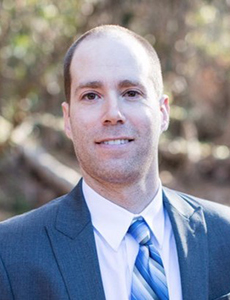
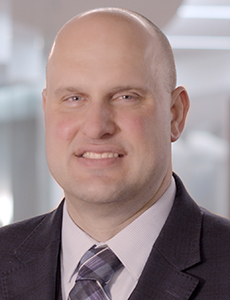
The session, “Before the Breaking Point: An Integrated Framework for Workplace Violence Prevention and Response,” was moderated by Mark Pew of WorkersCompCollege and featured Dan Hanlon of the Noble Group and Auretta Stowell of HCA Healthcare.
A Post-COVID Surge With No Sign of Slowing
The pandemic represented an inflection point for workplace violence, particularly in health care, where frontline workers faced an unprecedented combination of stress, patient acuity, and social volatility.
“During COVID, we saw a significant transition in the outlook of workplace violence,” said Auretta Stowell, who leads workforce health and safety initiatives at HCA Healthcare. “We have seen a dramatic increase in workplace violence since the pandemic. That trajectory has not slowed down.”
The complexity of patient behavior has shifted dramatically, Stowell said, with the emergency department seeing the highest volume of incidents. Even pediatric cases have grown more volatile, with behavioral health events and workplace violence incidents involving children rising nearly threefold during COVID.
Beyond health care, broader societal pressures are spilling into every type of workplace. Dan Hanlon, who spent 30 years in law enforcement before joining the Noble Group, said employees routinely arrive at work carrying unseen burdens.
“We’re in a mental health minefield in the United States,” Hanlon said. “People bring all their personal problems to work — the fights with their spouse, the road rage on the way in. They’re a powder keg already, and you don’t always know it.”
That volatility, combined with a tendency among employers to under-report or informally resolve concerning behavior, has created the conditions for tragedy. Hanlon pointed to the 2022 Chesapeake Walmart shooting, where a supervisor with documented behavioral issues killed six coworkers. “They knew those reports were there. They didn’t act on them,” he said. “Was it foreseeable? Absolutely.”
Best Practices: Reporting, Documentation, and Culture
Both panelists emphasized that effective workplace violence prevention is less about reacting to incidents and more about building systems that catch warning signs early. Hanlon outlined four legal questions every employer should be able to answer: What did you know? When did you know it? What did you document? And what did you do about it?
“If the documentation went to just one person — if it just went to HR — why?” Hanlon said. “It should be the whole organization receiving that information, within limits. You need to pick up all the pieces: the behavioral concerns, the absences, the reasonable suspicion incidents. You should have an overall picture of what that person is doing within your organization.”
Reporting systems, he added, must be easy to use, support anonymous or confidential submissions, and be backed by visible leadership engagement. Without executive buy-in, prevention programs fail.
At HCA Healthcare, which operates more than 190 hospitals and 2,200 sites of care with over 320,000 employees, scaling a prevention program required building around three pillars: people, process, and technology. Stowell said five focus areas drive the work — standardization, visibility, accountability, culture, and ownership — but culture sits at the center.
“In the health care system across all of history, we’ve created and adapted to this acceptance that workplace violence is an acceptable or tolerable component of the workforce,” Stowell said. “We hear things like, ‘Well, they’re sick, they’re medicated, maybe they’re just coming out of anesthesia.’ That really leads to a significant negative culture.”
To counter that, HCA requires every facility to maintain a multidisciplinary workplace violence committee, with the facility CEO responsible for submitting quarterly plans. The organization also ties program performance to a financial incentive through its Employee Safety and Incentive Program, which can result in credits or debits back to each facility based on measurable outcomes.
Stowell also stressed the importance of making reporting frictionless. HCA deployed a single event-reporting tool that interfaces directly with its employee health EMR and third-party claims administrators, reducing administrative burden and increasing report volume — which the organization views as a positive sign that previously hidden incidents are now surfacing.
Another initiative, a geo-mapped safety duress button attached to employee badges, allows nurses and providers to summon security or local law enforcement with the press of a button. “They can deploy with intent,” Stowell said, noting the technology is now live in five of HCA’s 15 divisions.
Perhaps most importantly, HCA holds “safe tables” — anonymous listening sessions with frontline workers. “We hear from them exactly what it is like in the trenches,” Stowell said. “Those improvement measures have been dramatic.”
Marshalling the Resources to Keep People Safe
Both experts agreed that prevention programs require sustained investment — in technology, training, personnel, and leadership attention. The cost of inaction, they noted, is far higher.
“The lawsuits are now in the billions, with a B, for corporations in the United States that have neglected to handle workplace violence,” Hanlon said, citing a Texas case where a company paid $1.1 billion following a single death. “Worry about your financial future.”
Stowell pointed out that catastrophic workers’ compensation claims stemming from workplace violence are among the most expensive payouts an organization can face — lifetime benefits that extend to family members. “Those payouts should be incredibly rare. They should not happen,” she said.
But resources aren’t just financial. Hanlon urged employers to test their systems regularly — communications, duress technology, response protocols — so they function when needed. He also recommended behavioral training alongside situational awareness training, so employees know how to recognize and escalate concerning statements, not just physical threats.
Stowell added that reinforcement cuts both ways. HCA incentivizes positive safety behavior through a colleague recognition program that converts points into gift cards, helping build the kind of culture where employees feel empowered to speak up.
“While the colleague is ultimately responsible for reporting, I truly do not think it is the colleague’s responsibility to be the one ultimately responsible for the workplace violence program,” Stowell said. “It is leadership. It is accountability. And it is culture that we create — a culture of safety reporting for our colleagues.”
For employers still treating workplace violence as a rare or remote concern, Hanlon offered a direct warning: “A lot of employers just don’t document it. They don’t call the police. They think they can handle this internally — until they can’t. And then it’s a little late.”
Looking ahead, both panelists expect regulatory requirements to expand beyond healthcare, with retail, manufacturing, and other industries soon facing similar mandates. The organizations best positioned to adapt will be those that have already built the culture, systems, and leadership commitment to prevent incidents before they occur.
“Every incident starts somewhere,” Hanlon said. “We always hear after the fact that we should have seen the signs. The opportunity is to see them before.” &
If you attended National Comp but missed this session, you can still catch the audio and slides on NoteAffect in the conference app. Log in with your conference registration number.