Newsletters
 Risk Central
 Digital Edition
MGA Deals Surge as Scale and Specialization Drive Growth

Mergers and acquisitions of and among managing general agencies (MGAs) have been increasing in number and size since last year. Carriers and private equity have long been active, and that participation has accelerated, especially as U.S. firms have extended their reach internationally.
A quest for market share is mostly driving M&A in MGAs. Acquirers seek economies of scale and technology. If they have a tech advantage, they’re seeking new markets in which to apply it.
Accelerating M&A has raised concerns that insureds could shoulder some of the cost through higher premiums, but Robert Kimmel, CEO of K2 Insurance Services, said, “You have to charge the same premium, or even less. The customer has to benefit in any case. It is the shareholders of the acquiring company, or the limited partners in the case of private equity, that are ‘paying,’ but in the sense of having to live with lower returns.”
K2, backed by Warburg Pincus, is a holding company with about 40 MGAs. Of those, 15 were acquired; the rest were incubated from inception. K2 wrote premiums of $1.9 billion in 2025 and expects to write $2.3 billion this year. “We are growing at a 20% clip,” Kimmel said, “in contrast to the public companies growing in the single digits.”
In terms of M&A targets K2 is seeking MGAs with larger operations because that is what is necessary to move the needle for its carriers. Larger acquisitions would probably be acquired as standalone operations. Smaller ones — MGAs with roughly $1 million to $5 million of EBITDA, translating to a transaction price of $10 million to $50 million — would be folded into existing operations.
Perspective on MGA M&As
Early in February, K2 bought the management liability underwriting business of specialty insurer Rising Edge, which is based in London but writes directors and officers coverage in the U.S.
In January, K2 International established a new credit division in London that will write comprehensive non-payment insurance across single risk and portfolios for businesses other than banks.
In November, 2025 K2 and Dale Underwriting Partners established Lloyd’s Syndicate 1954, a special purpose arrangement with property, casualty and specialty programs. The SPA, which will be managed by Dale through its Syndicate 1729, is expected to write £80 million of gross written premium in 2026, with Dale retaining 40%.
In December, Blackstone Credit & Insurance and AmTrust Financial Services, completed a transaction under which they formed a partnership that acquired seven of AmTrust’s MGAs and fee-based businesses in the U.S., United Kingdom, and continental Europe, into a new independent company, ANV Group Holdings.
Both Backstone and AmTrust are shareholders in ANV, which operates as a standalone platform. It is focused on building and growing specialist insurance businesses in partnership with carriers, brokers and distribution partners globally. As of March, ANV comprises nine MGAs and employs more than 600 people worldwide.
What Makes an Attractive Deal
“In 2025, the industry saw targeted consolidation among MGAs,” said Claudia Carnevale, president of North America Programs for Munich Re Specialty. “Those moves enabled deeper expertise in specific niches like professional liability or cyber. I’d also say that largely speaking, underwriters looked to refine their portfolios rather than simply expand them.”

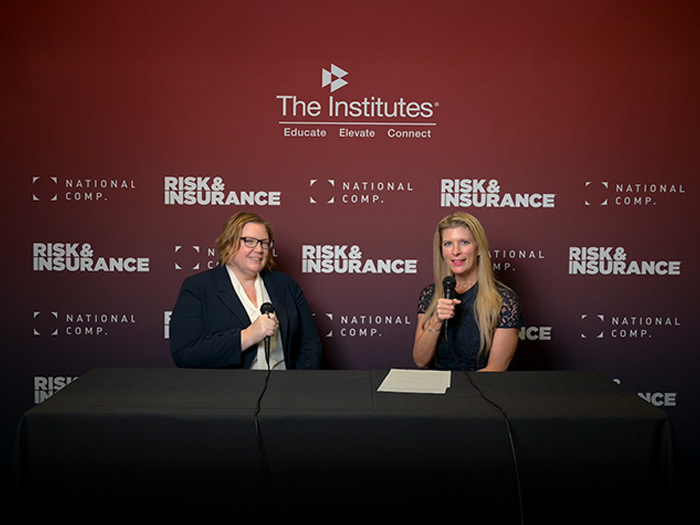
Claudia Carnevale, president of North America Programs, Munich Re Specialty
There are certain qualities of MGAs that make them attractive partners for underwriters, Carnevale explained. Those include technology and analytics capabilities; underwriting rigor and demonstrated governance in their operations; and specialized expertise and talent. “We lean into our MGA platform by aligning internal underwriting acumen with market-facing distribution partners.”
The best outcomes result from deals that strengthen underwriting discipline and product design. “Insureds benefit from more stable capacity, clearer coverage intent and solutions tailored for complex or underserved risks,” said Carnevale. “Regarding pricing, that is still driven primarily by loss trends, inflation, catastrophe exposure and litigation.”
If the ongoing M&A trend continues, “we’re likely to see strategic consolidation that is fueled by capital partners seeking immediate market impact,” she added. “It’s not just about scale anymore, it’s about precision scaling — acquiring not just books of business but expertise and embedded distribution to ensure meaningful market impact.
Growth Beyond Measure
The MGA sector is growing faster than the broader P&C market, driven by technology adoption and specialized expertise, said Mario Vitale, president of Resilience, an MGA that specializes in cyber risk.
“MGAs continue to attract investors, especially MGAs with disciplined underwriting, specialized understanding of the risks they write and platforms designed for growth. Strategic buyers’ appetite for MGAs remains strong,” he said. “Additional acquisitions or equity investments are likely to continue in this space, especially as interest rates come down.”
MGAs have evolved to be much more than a sales front-end for carriers, Vitale added. “With the power of a carrier’s balance sheet and solvency behind them, the most valuable MGAs offer specialty lines of business like cyber or are specialists in unique markets like trucking, and are able to offer a full suite of services. No longer viewed as program managers, MGAs are offering more full service, including underwriting, claims and loss prevention.”
Vitale used the term “super MGAs” for those full-service firms, adding that Resilience is one of those in cyber — one sector in which MGAs are particularly active. In the cyber market, several big carriers have acquired or made big investments in cyber MGAs in the past year or two, including Travelers and Zurich.
Partnerships that Aim to Last
In choosing partnerships with MGAs Allianz is seeking sophistication, said Julie Gibbs, regional head of [portfolio solutions and delegated authority] for Allianz Commercial. “Those MGAs are getting better data, better technology, and can find more niche business. We prefer close partnerships with sophisticated MGAs, so the M&A activity in that segment is not disruptive, it shows strength.”
Criteria for selecting partners include historical performance, ownership and leadership, as well as experience on the underwriting team. “We look for strong discipline and experience with data,” said Gibbs. “We prefer long-term partners. We want to grow with them, especially through M&A.”
Acquisition of MGAs by carriers remains part of the conversation, even as carriers grow and expand their collaborations with MGAs as stand-alone operations. “There comes a moment when the carrier that has been providing capacity wants to bring that MGA in-house,” said Jonathan Clarke, partner with global law firm DLA Piper. &