Newsletters
 Risk Central
 Digital Edition
How Combined Environmental and Professional Liability Coverage is Reshaping Construction Insurance

The construction industry is in the midst of a building boom unlike any in recent memory. Multi-billion-dollar data center projects, sprawling tunnel infrastructure builds, and massive site development efforts are pushing the boundaries of what insurance markets are accustomed to underwriting. With this growth comes a tangled web of contractual requirements that contractors, owners, and design professionals must navigate.
Increasingly, owners require general contractors — and general contractors require their subcontractors — to carry both pollution and professional liability coverage. For many contractors, these are unfamiliar lines of coverage that fall outside their traditional general liability comfort zone. Helping them meet these obligations has become a critical priority for the insurance market.
“The demand for a combined pollution and professional product has been driven largely by contractual requirements on both sides,” said Dennis Willette, Senior Vice President, Head of Environmental at Westfield Specialty. “Owners require contractors to carry both lines, and general contractors require their subcontractors to do the same.”
Traditionally, the market looked at the pollution and professional liability coverages separately, but with the increase in demand, Westfield Specialty looked to combine contractors’ pollution and professional liability (CPPL) coverages into a single, comprehensive policy.
Why Combining Coverages Makes Sense for Contractors
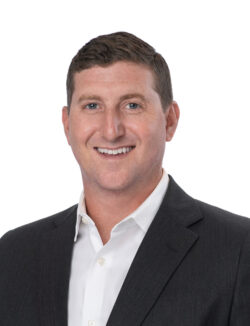
Dennis Willette, Senior Vice President, Head of Environmental, Westfield Specialty
For most contractors, professional and pollution exposures aren’t always front and center in their day-to-day operations. While general liability coverage is widely understood, the more specialized risks associated with professional services or environmental incidents can be less familiar within the broader contracting community.
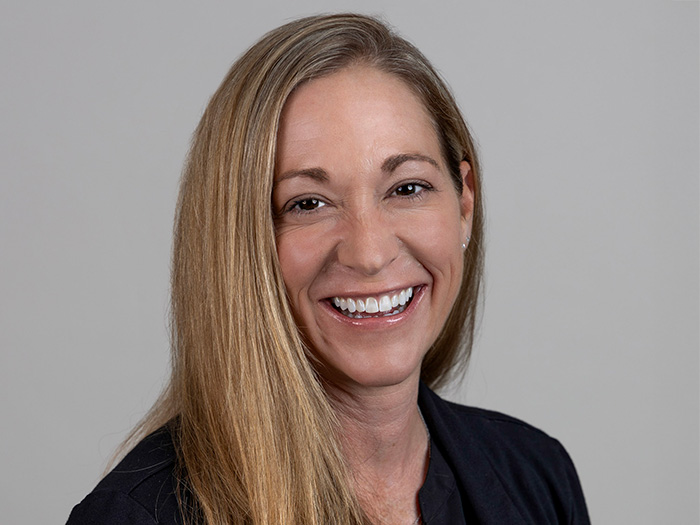
“The reason professional and pollution coverages are combined is that contractors generally aren’t as familiar with those exposures or the protections available to address them,” said Kaitlyn Dudzinski, Vice President – Design & Construction Professionals at Westfield Specialty.
“They know they need general liability insurance, but professional and pollution coverages often require additional education around how those risks can impact their business.”
By bundling what are often viewed as supplemental coverages, the combined product provides a practical and cost-effective way for contractors to satisfy contractual requirements while broadening their overall risk management strategy. More sophisticated or highly specialized buyers may still choose to purchase the policies separately, but the combined approach aligns with the needs of a large portion of the market.
Willette noted that many eligible buyers first encounter these coverages through contractual requirements, which creates an important opportunity for brokers and carriers to help educate clients on the value of the protection beyond simple compliance.
That gap between evolving exposures and broader coverage adoption underscores the importance of education, and the trusted relationships that help contractors better understand and manage emerging risks.
The Distribution Network as an Educational Bridge
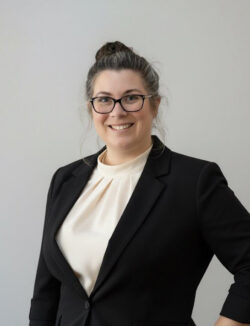
Kaitlyn Dudzinski, Vice President – Design & Construction Professionals, Westfield Specialty
Brokers play an essential role in helping contractors, owners, and design professionals understand not just what coverages they need, but why those coverages matter. Because demand for CPPL, owner’s protective professional indemnity (OPPI), and architects and engineers (A&E) coverage is so heavily contract-driven, agents and brokers are often the first to identify exposures their clients may not even realize they have.
For Westfield Specialty, supporting brokers means more than just quoting policies. It means providing them a sustainable carrier who can speak fluently across the entire construction professional landscape.
“One of the most important things we offer brokers is collaboration with a sustainable carrier,” Willette said. “We operate in a way that allows us to be here for the long term, and that manifests itself in many different ways.”
That long-term view is increasingly important as projects stretch over multi-year horizons. Data center builds in particular can take five, six, or even seven years and are often broken into phases — site work, power supply, critical infrastructure, and the data center itself — each representing its own substantial project.
“When the project is done in seven years, or when the second phase starts in two to three years, the client wants continuity in carriers,” Willette said. “Our goal is to provide that continuity for them.”
Capacity is another conversation brokers and insureds are increasingly having. Dudzinski noted that with the increase in mega projects, the limits being purchased now would have been unheard of in years past.
“Owners, contractors and design professionals are buying in excess of $100 million in professional liability, which in years past would never have happened,” she said. “There’s plenty of need for capacity in the marketplace on the professional liability side.”
Westfield Specialty’s environmental group underwrites all the product lines associated with the construction professional arena — A&E, CPPL, and OPPI — under a single team. That structure gives the team clear visibility into aggregation and risk appetite, which in turn allows them to give brokers consistent answers.
“What we never want to do is back out of something at a late stage in the process of pursuing an opportunity because we discover an aggregation concern,” Willette said. “We want to make sure we’re being clear, consistent, and reliable for our brokers.”
That visibility also helps Westfield Specialty avoid representing both sides of a potential dispute. As Dudzinski explained, large design firms often ask their primary carriers not to write primary OPPI for the same project, since doing so would put the carrier on both sides of a claim.
“By having us all together in one group underwriting all of these products, we’re able to pre-emptively avoid adverse situations where we’re on both sides of a claim,” she said.
Better Claims Outcomes Through Continuity
The benefits of combining coverages — and underwriting them under one roof — become especially clear when something goes wrong. Claims involving construction projects are rarely simple, and overlapping coverage scenarios can quickly become disputes between carriers about who pays what.
When environmental and professional liability coverages sit on a single policy, that confusion largely disappears.
“When environmental and professional coverages are combined on one policy, it’s one claims handler managing that claim, not two different companies’ claims handlers fighting about who should be paying,” Dudzinski said.
“I have had specific examples where the claim initially appeared to arise out of significant mold issues, which is generally considered a pollution exposure. However, upon investigation we were able to determine that claim actually arose out of a professional liability error. We, as the carrier, were then able to assign the claim to the appropriate coverage instead of fighting with another carrier’s claims team about who should be paying this claim.”
That single-policy approach is reinforced by tight coordination between underwriting and claims teams within Westfield Specialty. Because underwriters know exactly which projects, contractors, and design firms they’re supporting across the program, claims handlers walk into every situation with full information.
“The last thing claims handlers want are surprises,” Willette said. “Having clarity and connectivity between underwriting and claims across Westfield Specialty is fundamental.”
Speed matters, too. Westfield Specialty’s coverage forms are built around tools designed to help keep small problems from becoming large ones — emergency response costs for pollution events, contracting and professional services coverage for third-party claims, mitigation and rectification expense and protective coverages for first-party claims.
“We’re equipping clients with all the tools possible to help resolve situations expediently and cost-effectively, ensuring limited delays and impact on their business,” Willette said. “At the same time, we’re preserving their policy limits in case something else goes wrong.”
Willette compared the experience to peeling back layers of an onion: underwriting alignment on the outside, claims coordination at the next layer, and proactive broker communication tying it all together. The unifying theme, he said, is continuity.
“The only time insureds talk to us directly is usually when something goes wrong and they’re dealing with one of the most challenging situations they’ll ever come across,” he said.
“When this happens, continuity across the program helps us be better organized and provides the best possible experience for the insured.” &