Newsletters
 Risk Central
 Digital Edition
Travelers Brian Gerritsen on Manufacturing Risk
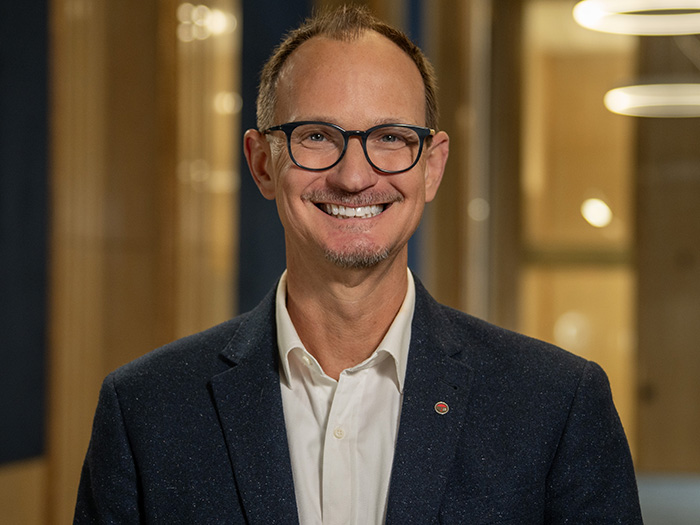
As part of our expanded coverage of our 2026 Manufacturing Power Broker® winners and finalists, Risk & Insurance® recently spoke with Brian Gerritsen, AVP and manufacturing lead for Travelers. What follows is a transcript of that discussion, edited for length and clarity.
Risk & Insurance: Thanks for joining us today Brian. Let’s dive right in. While U.S. manufacturing contracted overall in 2025, according to the Institute of Supply Management, there are several projected growth sectors. Where are the opportunities for brokers?
Brian Gerritsen: There are many opportunities for brokers in segments that are growing or may be about to expand. The Institute of Supply Management recently named 12 industries, including professional services, wholesale, and transportation and warehousing. According to the Manufacturing Alliance and Oxford Economics, sectors such as aerospace, pharmaceuticals, agriculture chemicals and electrical equipment are starting to grow. And over the last few years, we’ve witnessed some remarkable manufacturing construction spending, which increased from $96b across 2005-2023 to $222b last year (U.S. Census Bureau). You’ve got this perfect storm of technological advances, massive government investment through the CHIPS Act, the Inflation Reduction Act and the Big Beautiful Bill…plus many companies bringing operations closer to home.
For brokers, this is where you can separate yourself from the pack. You need to be that broker who’s not just reading about these legislative changes but understanding what they mean for insurance. When your client lands a tax incentive deal, you should already be thinking about how that changes their risk profile.
R&I: That’s a great point about staying ahead of the curve. Now, M&A activity has been intense – over $200 billion recently according to the 2025 Travelers Special Report on M & A in Manufacturing. How should brokers be thinking about these deals?
BG: Here’s what’s interesting – everyone assumes financial risk is the biggest concern, but its actually operational disruption followed by cultural and financial risks that equally keeps executives up at night. Strategic buyers are dominating, and private equity (PE) firms are getting much more sophisticated about portfolio-wide risk management, according to our research.
The winning brokers are the ones who walk into these conversations with integrated risk mapping already in hand. They’re asking about cybersecurity from new vendors, supply chain vetting and cultural integration challenges. They’re not waiting for the deal to close to start thinking about potential coverage gaps.
R&I: Speaking of things that keep manufacturing executives up at night – workplace safety seems to be getting worse, not better. What are you seeing?
BG: The numbers are sobering. According to our most recent Injury Impact Report, manufacturing workers are now missing an average of 74 days due to workplace injuries – that’s seven more days than we saw in the five years before the pandemic. And it creates this vicious cycle where remaining workers get fatigued, which can lead to more incidents.
But here’s the opportunity – position yourself as the safety expert, not just the insurance professional. Develop workers’ compensation programs that include real safety consulting, especially around onboarding and training. When you can show a client how proactive risk management can help potentially reduce both their premiums and operational disruptions, you become indispensable.
R&I: Let’s talk global exposures. How complex is this getting for manufacturers?
BG: More complex than most people realize. About 25-30% of manufacturers have global exposures, according to Travelers data, but many don’t even know it. They think they’re purely domestic, but then their U.S.-made products end up overseas through distribution channels – boom, hidden exposure.
The smart brokers are leveraging their carrier relationships to map out all these global touchpoints. They’re negotiating to place both domestic and global coverages with the same carrier, eliminating gaps while showing they truly understand the complexity of modern manufacturing.
R&I: Product liability seems to be heating up too. What should brokers be watching?
BG: Legal advertising is everywhere, and verdicts are getting larger. The real challenge is helping clients understand that product design, fabrication and labelling decisions today become insurance implications tomorrow. Should safety features be optional add-ons or built into the core product? These aren’t just engineering decisions – they’re risk management decisions.
Stay current on court decisions in your clients’ sectors. When you can walk into a meeting and explain how a recent verdict might impact their design choices, you’re not just placing coverage – you’re providing strategic counsel.
R&I: Technology is transforming manufacturing. How does this change the broker’s role?
BG: Many manufacturers are investing in advanced technologies, certainly taking advantage of the tax benefits is one of many contributing factors, but every IoT device, every AI system, every automation upgrade introduces new cyber risks.
The brokers who win are developing deep expertise in these technology risks. They’re creating integrated risk maps that show how a cyber incident doesn’t just affect IT – it can shut down entire manufacturing operations. When you can explain complex technology risks in plain business terms, you become the trusted advisor, not just the insurance vendor.
R&I: As operations get more optimized and concentrated, how does this affect coverage strategies?
BG: Many manufacturers are analyzing their footprint – fewer locations but more sophisticated operations. This requires more nuanced coverage approaches.
The key is showing how proper coverage structure supports their operational flexibility while maintaining comprehensive protection. You’re not just covering what they have today – you’re covering their strategic vision for tomorrow.
R&I: Within the broader manufacturing landscape, we’ve been discussing, which specific segments are most vulnerable to significant losses, and what drives that vulnerability?
BG: There are several angles to consider across the manufacturing sector, and vulnerability really depends on the type of losses we’re examining. From a property perspective, manufacturers with uncontrolled fire exposures face the greatest vulnerability to both direct damage and resulting business interruption. This cuts across multiple segments – whether you’re looking at a large commercial bakery generating combustible dust, a metals casting operation using high-temperature furnaces, or a plastics injection molding company storing substantial quantities of flammable resins and finished inventory.
The key differentiator isn’t the industry segment itself, but rather the controls in place: appropriate equipment maintenance and housekeeping protocols, emergency shutdown systems, and sprinkler protection specifically designed for the occupancy and storage characteristics.
From a products liability standpoint, consumer goods manufacturers – particularly in food production, personal care products, and sporting goods – tend to experience higher claim frequency due to the nature of their products and market reach. The potential settlement values in these sectors often attract significant legal attention and class action activity.
The potential legal payouts make these sectors especially attractive to class action firms.
Workers Compensation vulnerability correlates most strongly with workforce dynamics rather than manufacturing type. Any manufacturer experiencing high turnover or rapid growth faces elevated risk from new employee injuries. This is particularly relevant given that our data shows 30% of all manufacturing workers compensation claims come from first-year employees, alongside that average of 74 missed workdays we mentioned earlier. This puts critical focus on onboarding, training, and supervision practices for new hires across all manufacturing segments.
R&I: Final question — in this evolving landscape, how do brokers become truly indispensable to manufacturing clients?
Brian: It comes down to adopting a customer-first mindset and becoming the manufacturing risk expert in your market. The sector faces incredibly complex challenges, including M&A integration, supply chain vulnerabilities, evolving product liability, global regulatory complexity.
The brokers who thrive are the ones who translate these complex risks into clear business language and create insurance programs that evolve with their clients’ needs and the growth of the business. They’re not just meeting minimum requirements. When you can do that consistently, you’re not just a broker anymore — you’re a strategic partner. &