Newsletters
 Risk Central
 Digital Edition
Confidence In Risk Control Slides As Food Sector Confronts Litigation, Cyber And Supply Chain Threats
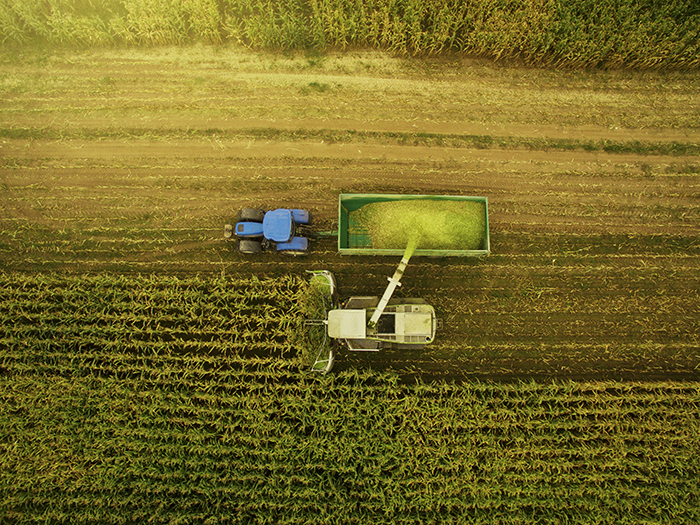
Just 62% of companies say they feel somewhat or completely in control of the root causes of their risks, down from 75% in 2024 and 89% in 2022, according to WTW’s Global Food, Beverage & Agriculture Risk Report 2026.
WTW, which surveyed 450 senior decision makers in food, beverage and agriculture businesses worldwide, found that health-related litigation, supply chain vulnerabilities and cyber threats have all intensified over the past two years. The report surveyed executives across North America, Europe, Asia Pacific, the Middle East and Latin America at companies with average annual revenue of $4 billion.
Health Litigation And Cyber Threats Climb The Risk Agenda
Food safety and health emerged as the top internal risk factor, cited by 45% of respondents compared with 29% in 2024, a jump WTW attributed to a surge of class actions likening the harms of ultra-processed foods to tobacco.
Cyber risk also rose sharply, with 40% naming it a top internal threat, up from 32%, as operational technology adoption expands the industry’s attack surface. Product contamination concerns climbed to 38% from 31%, driven by employee turnover, malicious contamination, labeling errors and cost pressures that have thinned quality controls, the report said.
Externally, cost and availability of inputs — such as energy and fertilizer — topped the list of risks at 36%, up from 26% two years earlier, while 44% cited supply chain vulnerabilities, up from 40%, and 40% flagged labor shortages, up from 30%. WTW linked these pressures to conflicts, tariff tensions and immigration restrictions that have disrupted shipping, energy and raw material availability.
Despite the mounting risks, 53% of respondents said they expect to be more profitable in two years, the report noted.
Internal Gaps Compound External Volatility
While much of the volatility originates outside companies’ control, WTW found a notable rise in internally cited obstacles to managing risk. Some 56% of respondents said they lacked the internal tools and insight they needed, up from 33% in 2024; 51% cited insufficient budget, up from 28%; and 45% pointed to a lack of buy-in at board level, up from 28%.
“These results suggest that the industry is still waking up to the scale of the potential challenges it faces and taking a more realistic view of what is needed to manage them effectively,” said Simon Lusher, Global Food & Beverage Leader at Willis Direct & Facultative.
The survey also identified a disconnect between perceived and actual insurance coverage. Half of respondents said they had specific insurance for supply chain risks and 45% said the same for reputational risks, figures WTW called surprising given that no single policy typically covers supply chain disruption with a broad, non-damage business interruption trigger, and that reputational risk insurance remains a recent, still-developing product.
Separately, 51% of companies said they had no specific insurance for product recall, even though Willis data shows business interruption is by far the largest component of recall-related losses.
ESG Remains A Priority Despite Political Row Back
Even as some companies dilute commitments on net zero and plastic waste, 84% of respondents globally said managing ESG risks would remain a priority over the next two years, including 82% in North America, where policymakers have retreated furthest from ESG requirements, WTW found.
Concern over natural resource availability, such as water, rose to 71% from 56% in 2024. Energy was cited as a top environmental risk by 74% of respondents, up from 68%, while 70% cited climate change, up slightly from 68% in 2024. Food standards and public health topped social concerns at 76%, up from 62%, reflecting the broader movement against ultra-processed foods.
Business continuity planning has also strengthened, with 83% of respondents reporting a formal process, up from 78% in 2024, and 50% saying that process is tied to board-level oversight and business KPIs, up from 44%. Still, WTW noted gaps in preparedness: 51% of companies said they had some coverage for extreme weather’s impact on supply chains but were unsure if it was sufficient, while 14% said they had no such cover at all.
Obtain the full report here. &