Newsletters
 Risk Central
 Digital Edition
Building the AI-Augmented Claims Workforce

For most of the last 40 years, we’ve known exactly what made a good claim professional. Read the policy. Establish coverage. Assess liability. Value damages. Those four competencies defined the craft, and the professionals who mastered them built careers on it. Our industry’s leaders have hired, trained, and promoted against that profile for years.
That profile is not wrong. It is just no longer sufficient.
The work of evaluating coverage, liability, and damages is not disappearing, but its routine forms of practice are being absorbed by technology faster than most claims organizations have planned for. What separates strong claim practitioners from average ones is migrating to a different layer of the job. Over the next five years, the competitive question will not be whether your people can evaluate a claim. It will be whether they can do the things software cannot.
The Foundation Becomes Table Stakes

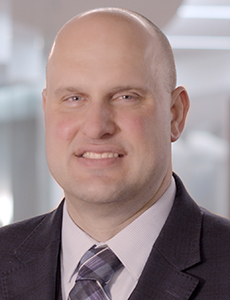
Taylor Smith, founder and president, Suite 200 Solutions
Coverage analyses, liability assessments, and damages evaluations are not going away. They remain the substance of the work. But increasingly, the first pass at each of them will be machine-assisted. Documents will be summarized, medical specials extracted, prior claims surfaced, jurisdictional patterns flagged, all before a human opens the file.
When properly understood, this is good news. It will not make claim professionals obsolete. But it will change where their judgment brings value.
When the mechanical parts of evaluation are handled in minutes, the claim professional’s contribution will shift from information assembly to showing information validation and deployment. Is the model’s damages range defensible? Did it miss a fact pattern that makes this venue dangerous? The skill is no longer doing the calculation. It is knowing when the calculation is wrong.
That is a higher-order skill, not a lower one. And it is the first of four that will define the workforce we need to build.
Four Skills That Will Separate the Leaders
AI literacy and judgement will be defined not by the ability to build AI models, but by the ability to use them well and distrust them intelligently. The claim professionals who will thrive will treat AI output the way a high-performing claims professional already treats a defense counsel’s status report: useful, informative, and never accepted without scrutiny.
The danger is not that professionals will refuse to use these tools. It is that they will use them uncritically, accepting a number because the system produced it. Fluency will mean knowing what the tool is good at, where it fails, and how to tell the difference.
Fluency will also mean nurturing the judgement required to use AI tools. AI can lay out a full tray of instruments for a claim professional, each precise and each useless in the wrong hands. Fluency is the developed sense of which to pick up for this claim and which to leave on the tray, and that judgement is earned through practice.
Negotiation science. Roughly 98 to 99 percent of litigated files resolve through negotiation, not trial. That figure should govern how we think about skill development, and for the most part it has not. We have treated negotiation as a talent some people happen to have, learned informally on the job, and measured almost never. Negotiation is not improvisation. Negotiation is not manipulation. Negotiation is a disciplined science informed by strategy, behavioral psychology, communications and influence.
Meanwhile the plaintiff bar has been systematizing negotiation skills, using technology to test, refine, and scale written, evidence-based demands. The claim professional of the next five years must understand anchoring, offer architecture, concessions management, persuasion, why written rationales outperform verbal ones, and much, much more. In a word, they must be elite negotiators.
This is learnable, but it is also, right now, the industry’s most significant area of weakness.

Steve Ellis, VP, liability practice, Sedgwick
Data interpretation. Claims organizations are not short on data. The real gap is in interpreting it with discipline and critical thinking. The future professional needs to look at a comparative dashboard and understand what the variation across files, venues, and outcomes is actually telling them, rather than treating every number as either gospel or noise. This is the connective skill between AI literacy and negotiation: the tools generate the data, and their interpretation turns it into a decision.
Influence. As routine procedural steps become automated, the irreducibly human part of the job will become more important than ever before, not less. Building trust with a claimant; managing the emotional temperature of a mediation; persuading defense counsel, a supervisor, or an opposing party to take action; these are skills that cannot be replaced.
Behind each of them is the same underlying capability: emotional intelligence – the ability to read what a person actually needs in a moment of stress and to meet them there. A claimant who feels heard settles differently than one who feels processed, and no model has yet learned to make someone feel heard. These skills have always mattered, but in a world where the analytical floor is increasingly machine-generated and roughly equal across competitors, the ability to influence people becomes a competitive differentiator that technology cannot replicate.
This is a leadership challenge, not a hiring problem
The temptation will be to solve this by recruiting for it, hiring a generation of “AI-native” professionals and waiting for the old profile to retire out. That is too slow and it misreads the problem. The professionals already in our buildings have the hardest attribute — the domain judgment that takes years to build. What they often lack is structured development in the four areas above, because the industry has never systematically taught them.
That is fixable, and it is a leadership responsibility rather than an individual one. It means defining what good looks like in negotiation and data interpretation, measuring it, and building it into how teams operate every day. It means treating these as core competencies subject to the same rigor we apply to reserving and coverage, not as soft skills people either have or don’t.
The plaintiff bar has already made this shift. They are not waiting for talent to emerge. They are building systems that make their people more effective regardless of individual ability. The defense side can do the same, and the organizations that start now will spend the next five years pulling ahead of the ones that wait.
The Question to Take Back to Your Team
The claim professional of 2031 will not look like the claim professional of 2021, but not because the fundamentals stopped mattering. They will look different because the bar will be higher and more complex: judgment about what the machine produced, skill in the negotiation that determines almost every outcome, fluency in the data, and the human influence no AI can manufacture.
For every leader reading this, the question is a simple one. Of the people on your team today, how many are being developed for the job as it will exist in five years, rather than the job as it existed when they were hired? If you do not have a good answer, you have just identified your most urgent workforce priority. &