The 2023 Cyber Power Brokers
View All 2023 Power Broker Winners
Finalists:

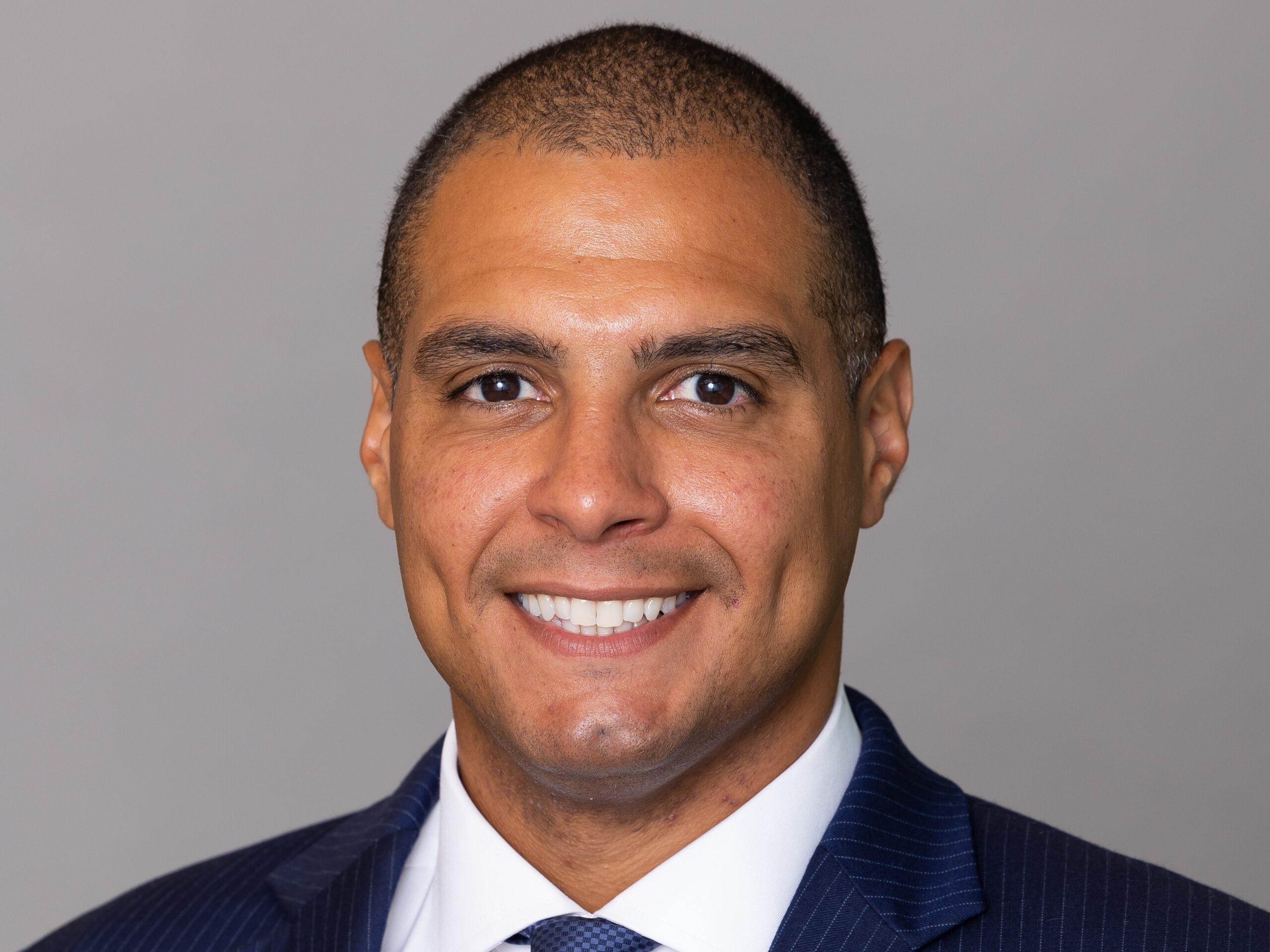
Thompson Mackey, CCIC, CRM, ARM, CIC
Vice President, Risk Management
EPIC Insurance Brokers, Duluth, Ga.

View All 2023 Power Broker Winners
Finalists:

Thompson Mackey, CCIC, CRM, ARM, CIC
Vice President, Risk Management
EPIC Insurance Brokers, Duluth, Ga.

Workers’ compensation claim frequency has trended downward over the years, but ask any claims professional whether their job has gotten easier, and the answer is likely to be a firm “no.” The volume of claims may be lower, but the complexity of each individual claim continues to climb.
Today’s claims professionals are expected to manage more information from more sources than ever before. More specialized medical care, evolving regulations, expanded provider networks, behavioral health considerations, and increasing documentation requirements all contribute to a claims environment where decisions must be made quickly, accurately, and consistently.” Claim professionals are expected to manage more and more information quicker and make decisions on the spot,” said Ryan Murphy, Vice President, Product, Enterprise Claims at CorVel.
“Claims today involve more and more parties, and they’re significantly more complex to manage in terms of the information load than they were five or ten years ago.”
Every delay, handoff, duplicate task, or missed opportunity for intervention creates unnecessary complexity in the claims process. That complexity doesn’t just make the job harder for claim professionals. It can delay recovery, prolong claim duration, and contribute to unnecessary claim costs.

Ryan Murphy, Vice President, Product, Enterprise Claims, CorVel
The complexity confronting claims professionals stems from multiple sources. More providers and specialists are involved in the average claim than in years past. Behavioral health issues are being incorporated into claim management more frequently — an important area of focus, since these factors can meaningfully impact recovery.
“The challenge isn’t necessarily simply managing the claims, but also the complexity of the information being thrown at us,” Murphy said. “Complexity isn’t just about severe claims. It’s the number of decisions, interactions, data sources, and stakeholders involved in managing every claim. While volume may be down, complexity has certainly increased on the information side.”
In response, many organizations have layered on new vendors, tools, and technology solutions. But adding technology without a clear purpose can compound the problem rather than solve it.
“Technology can certainly help, but technology for technology’s sake doesn’t really make sense,” Murphy said. “You want to make sure that it’s strategic. Whenever you implement something on the technology side, make sure that it actually solves a problem and doesn’t just add another layer of information or complexity to things.”
The goal, Murphy noted, is not simply faster processing.
“The greatest value isn’t just faster management or processing of claims,” he said. “It’s giving claims professionals more time to focus on the work that requires their expertise, whether that’s communicating with injured workers, collaborating with providers, investigating claims, or making informed decisions that keep claims moving in the right direction. When claims are managed more proactively and consistently, injured workers receive better support and employers benefit from stronger claim outcomes.”
If added complexity is the problem, integration and thoughtful automation are central to the solution. Rather than requiring claims professionals to toggle between disparate systems for bill review, case management, provider information, communications, and claim notes, connected workflows bring the information needed to manage a claim into a single, streamlined experience.
“One of the biggest challenges we see is that organizations have adopted technology over time to solve specific business needs,” Murphy said. “Those solutions often work well individually, but when they aren’t connected, claims professionals spend valuable time searching for information instead of managing the claim.”
Murphy believes the future of claims management isn’t about adding more technology. It’s about making the technology claims professionals already use work better together. Connected workflows put the right information in front of claims professionals when they need it, helping them make informed decisions without wasting time navigating multiple systems.
At CorVel, that philosophy is reflected in CareMC, where claims management, bill review, clinical services, and embedded intelligence work together in a single workflow, giving claims professionals a more complete view of the claim. Rather than switching between multiple applications, they can access the information they need within their normal workflow, helping them stay focused on the claim instead of the technology.
“This is becoming more and more of a differentiator within the claim management spectrum,” Murphy said. “It really helps claim professionals avoid needing to go to multiple different systems in order to manage the claim.”
The result is total visibility into the claim file, enabling faster, better-informed decisions. “The goal is to create a system that reduces the complexity and ease of claim management, while also being easy to navigate,” Murphy said. “We don’t want to add to the complexity or make things more challenging.”
Automation and AI, applied strategically, can also lift a meaningful portion of the administrative load. Claims specialists spend significant time each day approving routine bills that require little review. Automating routine, low-complexity administrative work — something CorVel is beginning to roll out at low levels with promising early results — frees professionals to focus their attention where it matters most.
AI tools can also make sense of the large volumes of medical records, legal analysis, and other documentation that flow into a claim file. “These tools can put information in an order that makes sense, organize it effectively, and surface insights that we might otherwise miss,” Murphy said.
Importantly, technology is used to support decisions, not make them. “At CorVel, we’re using technology not to make decisions for us, but to surface information where a decision needs to be made at that critical point,” Murphy said. “The claim specialist or whoever’s managing the file then makes the decision based upon the information that’s been presented to them.”
Better tools also mean better experiences for injured workers. Through a claimant portal, injured workers can look up their own claim information — when their last check went out, when their next appointment is scheduled — without needing to call their claims specialist. They can also upload documents and updates directly.
“Ultimately, we’re looking for technology to create more opportunities for meaningful interaction as opposed to increased interaction for interaction’s sake,” Murphy said. “Let’s make sure that the interactions we do have are intentional and provide value to both the injured worker and the claims specialist.”
When these approaches come together, everyone benefits. Claims professionals have more time to focus on higher-value work, injured workers receive more timely communication and coordinated support, and organizations see stronger claim outcomes, more consistent claim handling, and fewer unnecessary costs over the life of a claim.
Looking ahead, Murphy sees continued complexity as a given. More information, more specialists, and more sophisticated technology will all continue to shape the claims environment.
“Claims aren’t going to become easier to manage,” Murphy said. “They’re becoming more difficult because the environment has become more complex. More information is available, medical care continues to evolve, and more specialists are involved throughout the life of a claim.”
To keep pace, organizations should prioritize a few key strategies. Integration will remain critical, consolidating services and information into unified platforms. Technology should be embedded into everyday workflows so seamlessly that it becomes second nature. And investments should be made in tools that support people rather than replace them.
“We must invest in tools that support people rather than replace them,” Murphy said. “Ultimately, we’re focused on making the job easier for the people doing it today — making it more efficient, delivering better outcomes, and increasing consistency and quality throughout the process.”
Organizations should also revisit their technology choices frequently, since the needs of end users evolve over time. What worked two years ago may not address the challenges facing claims specialists today.
For claims organizations willing to invest thoughtfully, the payoff is significant: more time returned to claims specialists, better communication with injured workers, and more consistent outcomes across the board.
“We’re never going to remove complexity from workers’ compensation,” Murphy said. “What we can do is remove unnecessary complexity from the claims professional’s day. When they have the right information, in the right place, at the right time, they can spend less time searching for answers and more time making informed decisions that improve outcomes, address issues earlier, and help prevent unnecessary costs throughout the life of the claim.”
To learn more, visit https://www.corvel.com/.
This article was produced by the R&I Brand Studio, a unit of the advertising department of Risk & Insurance, in collaboration with CorVel. The editorial staff of Risk & Insurance had no role in its preparation.