Newsletters
 Risk Central
 Digital Edition
Severe Convective Storm Losses Hit $208 Billion Over Three Years as Hail Emerges as Top Claims Driver
Global insured losses from severe convective storms totaled $208 billion over the past three years, with 85% of 2023-2025 losses occurring in the U.S., according to a new report from Allianz Commercial.
The findings underscore a significant shift in the risk landscape, as severe convective storm (SCS) events — which include tornadoes, hailstorms, straight-line winds and derechos — have eclipsed hurricanes in cumulative losses despite their traditional classification as secondary perils.
SCS events comprised nearly half of total insured natural catastrophe losses in 2025, amounting to $60 billion, according to data from Gallagher Re cited in the report. In the U.S. alone, SCS losses in 2025 were 1.4 times higher than the 10-year average of $35.5 billion. Between January and September 2025, the country experienced 39 major SCS events, each averaging more than $1 billion in insured losses.
“Severe convective storms are still often viewed as a ‘secondary peril’, yet their cumulative losses now rival – and at times exceed – those of primary perils like hurricanes,” said Thomas Lillelund, CEO of Allianz Commercial. “This reality highlights the urgent need for businesses to reassess their risk exposure and strengthen operational resilience through proactive, locally informed measures that limit both physical damage and disruption.”
Hail Drives the Majority of Losses
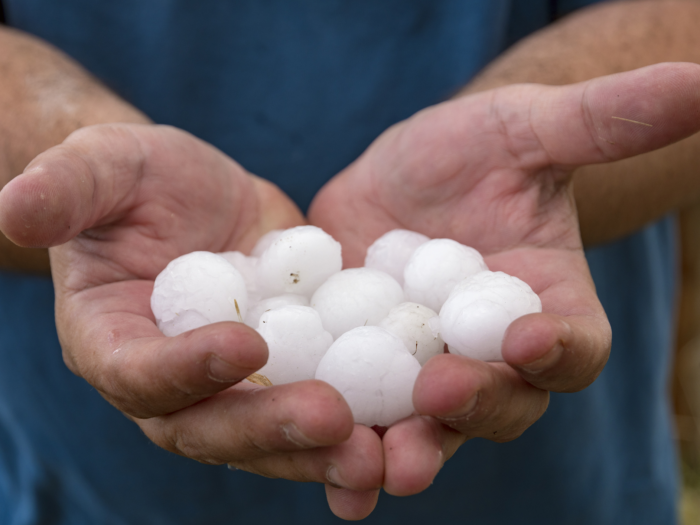
While tornadoes tend to dominate headlines, hailstorms account for an estimated 50% to 80% of all SCS losses, the report found. An analysis of more than 3,000 hailstorm claims worth approximately $2.5 billion from 2016 to 2025 revealed that damage to aircraft was the most expensive category, representing 16% of claims by value. Solar panel damage and vehicle damage also ranked among the costliest drivers.
The pharmaceuticals and cosmetics sector accounted for the largest share of hail-related claims by industry at nearly a quarter of the total value analyzed, followed by major airlines and airport operations. The U.S. represented 47% of the value of hailstorm claims, with France, Canada, Spain, Germany and Mexico rounding out the top six loss locations.
Beyond the U.S., significant hailstorm losses have hit multiple regions. A 2023 hailstorm in Italy produced $6.3 billion in insured losses and a record-breaking hailstone measuring 19 centimeters, while a 2022 outbreak in France resulted in more than $4.5 billion in insured losses. In Europe, severe hailstorm frequency is rising faster than anywhere else in the world, a trend researchers have linked to climate change, according to the report.
Urbanization and Inflation Compound the Problem
Allianz Commercial attributed rising SCS losses to a confluence of factors beyond weather patterns. Urbanization and development into hazard-prone areas have dramatically expanded exposure, with Oklahoma City’s building stock increasing by an estimated 40% and its developed land area by 60% between 1990 and 2025.
Inflation has compounded the financial impact. The cost of asphalt roof replacements — a significant factor in insured SCS losses — has reportedly surged 250% since 2000, with a 45% increase in the last five years alone. Supply chain disruptions, skilled labor shortages and aging infrastructure further amplify costs, the report noted.
The rapid expansion of solar farms and data centers in storm-prone areas has introduced new vulnerabilities. In March 2024, thousands of solar panels at a 350-megawatt facility in Texas were damaged by golf ball-sized hailstones. Warehouses and data centers are increasingly being constructed in at-risk regions, often with vast footprints that concentrate exposure, the report noted.
Building Resilience Through Roof Hardening and AI
The report emphasized that more stringent building codes could reduce losses by 12% to 28% for hail and over 30% for tornadoes. Roof hardening — including impact-resistant materials, reinforced edges and sealed roof deck systems — was highlighted as a critical mitigation measure. Research from the Insurance Institute for Business & Home Safety found that sealing roof deck systems can reduce water intrusion by up to 97%, the report noted.
Artificial intelligence is also reshaping how organizations assess and mitigate SCS risk. A 2024 survey found that one in four insurers already use AI to assess SCS exposures, with 73% believing AI will play a crucial role in managing climate-related losses. AI-driven models can now process satellite imagery, roof geometry, material aging patterns and local weather data to generate more granular vulnerability assessments than traditional catastrophe models, the report said.
“Traditional catastrophe models have long struggled to capture property-specific risk factors, such as roof type and asset value, or the cumulative effects of hazards like hail on building envelopes. As AI becomes embedded in core risk processes, its most meaningful benefit for customers is its ability to support smarter, evidence-based resilience strategies that adapt to changing weather patterns, rather than relying on historical norms,” said Michael Bruch, Global Head of Risk Advisory Consulting Services at Allianz Commercial.
Obtain the full report here. &