Newsletters
 Risk Central
 Digital Edition
RISKWORLD 2026: Intact Insurance Specialty Solutions’ Lucas Hockenberry
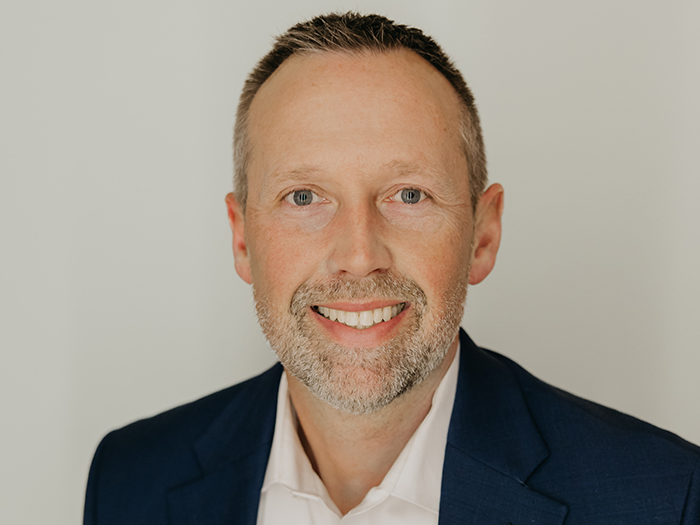
This May at the RISKWORLD event in Philadelphia, Dan Reynolds, editor in chief of Risk & Insurance, caught up with Lucas Hockenberry, President, Inland Marine for Intact Insurance Specialty Solutions. What follows is a transcript of that discussion, edited for length and clarity.
Risk & Insurance: Thanks for meeting with us Lucas. In what ways are inland marine exposures becoming more complex and bespoke?
Lucas Hockenberry: From my perspective, having worked in inland marine for almost twenty years, it has always been fairly complex and specialized. What has changed is that the industry as a whole is now recognizing the specialty aspect of it, rather than reserving that recognition for other, more complex lines of business.
Over the last ten years, there has been a real shift toward appreciating that complexity. Brokers and customers understand that what they have is more intricate, and they need underwriting expertise. They want a trusted partner, and that is where we try to come in.
From a complexity perspective, some of the projects we see are much larger in value than anything we’ve encountered before. But at the end of the day, most of them are still very typical of a traditional builder’s risk—just on a bigger scale.
R&I: What emerging risks are adding complexity to the insurance landscape today?
LH: Data centers are a significant area of growth and complexity that we’re seeing right now.
R&I: What distinguishes data center builder’s risk projects from traditional construction projects in terms of energy requirements?
LH: Data center builder’s risk projects differ significantly from traditional construction because of their extraordinary energy demands. Data centers typically include dedicated on-site power infrastructure and require extensive backup systems, such as generators and redundant electrical feeds, since even brief downtime is unacceptable once operations begin.
These specialized power requirements introduce a level of complexity that goes well beyond what is typically seen in standard ground-up projects like apartment buildings or office developments. This is one of the primary reasons why our risk engineers, who have much deeper electrical design expertise, are so involved and so critical to our data center capabilities.
R&I: How does the transition from constructing a data center to operating one impact insurance coverage?
LH: It’s important that everyone understands the difference between occupancy and operational. Traditionally, on a builder’s risk policy, you’re going to have some occupancy tied to it.
However, once it becomes operational, the coverage would be transferred to the fixed property carrier at that time. The reason being, for data centers in particular, is the exposure profile changes materially once it reaches the operational stage. It’s important that our customers have appropriate coverage to match.
R&I: How aware are builders and owners of data centers about the transition point when builder’s risk coverage ends and property coverage must take over?
LH: They are becoming more aware, and there are a lot of conversations happening on that topic. In my opinion, working with an expert on the builder’s risk side is key, as they can clearly explain these details to the broker and the insured.
That expertise ensures everyone understands when builder’s risk coverage would cease and when the property policy needs to be in place.
R&I: How important is it to involve a specialized builder’s risk underwriter in launching a project securely?
LH: On any builder’s risk project, a specialized builder’s risk underwriter with experience should be involved.
It’s even more important on the larger, more complex risks because we’re not just involving an underwriter, we’re involving our risk engineers. They’re heavily involved from the beginning as well.
R&I: Despite its significance, why does the importance of risk engineering remain underrecognized across the broader industry?
LH: Within our specialized space, the value of risk engineering is well understood and regularly discussed. However, from an industry wide perspective, there is not a full understanding of how much involvement risk engineers have in these more complex projects. This is in large part due to a majority of their work being done behind the scenes.
R&I: How do engineers contribute to the underwriting process and risk mitigation?
LH: From an underwriting perspective, most underwriters are not engineers. We have to know what we don’t know and ensure we’re utilizing the experts from an engineering perspective on our team to gain a full-scope view of the risk.
They can bring us up to speed on risks we may not have recognized, and they can also help mitigate losses ahead of time by generating those conversations with the broker and the customer.
R&I: What are the current challenges in recruiting and retaining talent within the risk engineering field?
LH: The situation is very similar to the underwriting world, where there is likely an upcoming talent gap.
Finding and bringing in newer talent is a key focus for us, and I imagine it is for every carrier as well. We do it well at Intact, and we have a very high retention rate. Having an engaged employee population is a key focus for us, and we were delighted to be named a Mercer Best Employer in the U.S. in 2025 for the seventh consecutive year.
R&I: How are quota share structures expanding builders’ risk capacity?
LH: Quota share structures are essential because of the sheer scale today’s projects. No single insurer is willing or able assume a $20 billion exposure on its own, so these structures allow risk to be distributed across multiple insurers.
Without them, there simply wouldn’t be enough capacity available to achieve the limits these projects require. Even in today’s market, on some of the jumbo or hyperscale projects valued at $20 billion and above, the ability to build up to that capacity is extremely challenging, if not unattainable.
R&I: We were intrigued to see that you are building a fine arts team. Can you tell us more about that?
LH: We recently hired Kyle Gosselink, who has been with us for about a month now. She has twenty years of experience on both the broker and carrier side, all fine arts related.
It really comes back to our mentality as a specialty lines insurer in that expertise is essential to everything we do. While fine art has always been a part of our offering, we recognized the need to expand that offering. Doing so required someone with the specialized expertise to grow that line of business for us.
Kyle has been tasked to lead that effort and has been a phenomenal addition to the team. I’m really looking forward to seeing how she can enhance our Fine Arts offerings.
R&I: How significant is transit risk in the fine art insurance space?
LH: One of the first things Kyle highlighted was the transit exposure associated with Fine Arts. It’s a tough exposure, and my understanding is that a majority of fine art losses occur during transit. Having the underwriting expertise that Kyle brings will better position us to understand and manage the nuances associated with Fine Art transit exposures.
R&I: What trends are emerging in transportation risks, and how are carriers responding?
LH: From a loss perspective, thefts methods are becoming more sophisticated, with chameleon carriers being a very common occurrence now. Criminals are able to create falsified bills of lading, allowing them to pick up a shipment while posing as the legitimate trucking company assigned to that shipment.
The shipment is gone before anyone realizes what occurred. This is a somewhat newer exposure that has become far more common the last ten years. Carriers are responding to the rise of chameleon carriers through a combination of tighter underwriting, enhanced verification controls, and stronger risk‑management requirements around transit exposures. &