Newsletters
 Risk Central
 Digital Edition
Q1 2026 Natural Catastrophe Losses Fall Well Below Average, Leaving Insurers in Strong Position
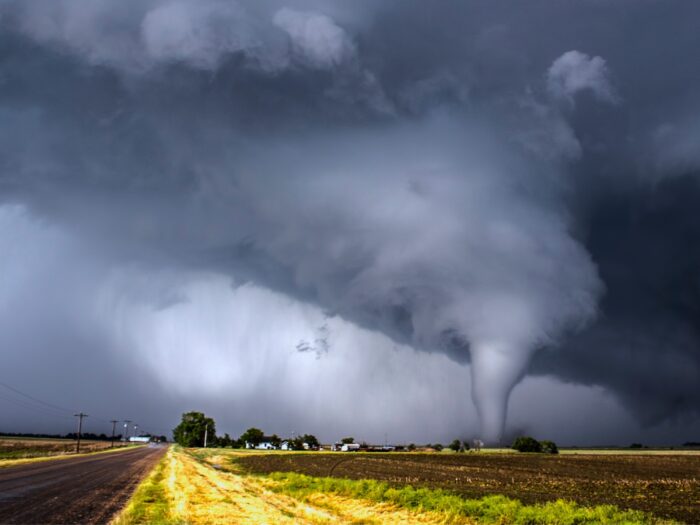
The first three months of 2026 produced no single insured loss event exceeding $10 billion, leaving the global insurance and reinsurance industry with ample catastrophe budgets heading into the historically costlier second and third quarters, according to Gallagher Re.
Total economic losses from natural disasters reached $58 billion in Q1, 12% below the 10-year first-quarter average of $67 billion. The below-average results were largely driven by a later start to U.S. severe convective storm activity and the absence of billion-dollar industry events at the upper end of the scale, the report said.
The quarter saw 17 individual billion-dollar economic loss events but only two multi-billion-dollar insured loss events, the fewest since 2021. Four of the five costliest insured loss events in Q1 occurred in the U.S., which accounted for 74% of global insured losses. Gallagher Re noted that the manageable start to 2026 marks the fourth consecutive quarter with aggregated insured losses below $40 billion, the longest such stretch since early 2019 through mid-2020.
European Windstorms Drive Record Economic Costs but Limited Insured Losses
A clustering of extratropical cyclones from late January through February made Q1 2026 the costliest calendar year start for the European windstorm peril since 1999, with economic losses approaching $22 billion. However, insured losses totaled only about $3.5 billion, reflecting a substantial protection gap — more than 80% of losses were uninsured — concentrated in flood-prone areas of Portugal and Spain with low insurance penetration, the report said.
Storm Kristin became Portugal’s costliest insured windstorm in the modern record, generating more than $6 billion in economic losses. An estimated 50% to 70% of homes in Portugal’s Leiria district sustained some degree of damage. In Spain, agricultural and infrastructure costs exceeded $4.6 billion from storms that brought exceptional rainfall and flooding to Andalusia and Extremadura.
Despite the significant toll, the report raised a pointed question about whether European windstorm still merits its classification as a “peak” peril, noting that the last event to produce more than $10 billion in industry losses was Kyrill in 2007. Every other major peril category — tropical cyclone, severe convective storm, wildfire, earthquake, winter weather, flooding, and drought — has produced at least one such event since then.
U.S. Severe Convective Storm Losses and Their Non-Hazard Drivers
Insured losses from U.S. severe convective storms was preliminarily listed at $7 billion for Q1, the lowest first-quarter total since 2022. March accounted for the bulk of activity, with at least 204 confirmed tornado touchdowns — the third-highest March total since 1950. The costliest individual event was a March 10-12 outbreak that generated at least $2.3 billion in insured losses across 14 states, the report said.
In a detailed analysis, Gallagher Re attributed 80% to 90% of annual U.S. SCS insured loss growth over the past 25 years to non-hazard factors rather than changes in storm behavior. The report traced the inflection point to 2008, when rising energy prices drove a permanent increase in asphalt and construction material costs.
Population growth into storm-prone regions — with 14.3 million new housing units added in the top 20 SCS loss states since 2000 — and the dominance of hail-vulnerable asphalt shingle roofing have compounded the trend. Emerging exposures including rooftop solar installations and the rapid buildout of data centers in SCS-prone states represent additional sources of future loss growth, according to the report.
El Niño Outlook and Reinsurance Market Implications
NOAA indicated at least a 90% chance of El Niño during peak Atlantic hurricane season, which typically reduces Atlantic hurricane activity but increases Pacific basin storms. The agency projected a 98.4% chance that 2026 will end as one of the top five warmest years on record.
For the reinsurance market, Gallagher Re estimated it would require a single event or series of large events producing insured losses of $115 billion to $125 billion above expected average annual catastrophe losses to meaningfully shift property catastrophe reinsurance pricing, which saw further reductions of 15% to 25% at the April 1 renewal for loss-free programs.
Obtain the full report here. &