Newsletters
 Risk Central
 Digital Edition
Renewable Energy Insurance Market Softens, but Data Quality Separates Winners From the Rest
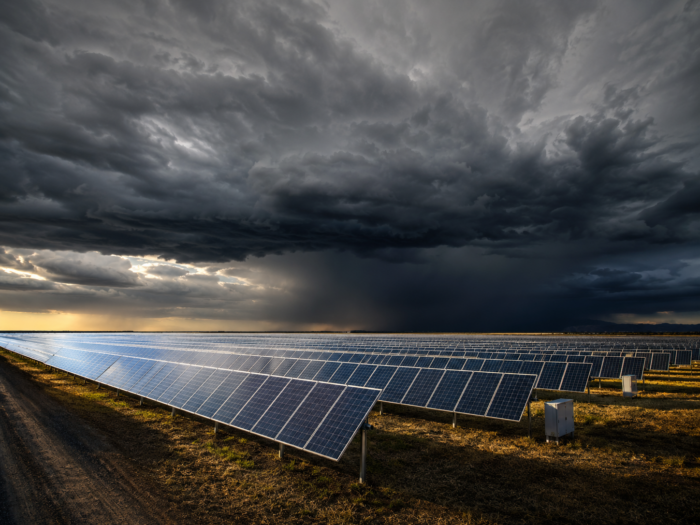
The renewable energy insurance market is in a sustained softening phase, with well-engineered, data-rich risks seeing property damage premium reductions of 20% to 30%, according to WTW’s Renewable Energy Market Review 2026.
The broker’s annual review, drawing on observations across global markets, finds that new market entrants, auto-follow facilities, and growing insurer appetite for renewable assets have pushed most placements into oversubscription. Yet beneath the favorable pricing trends lies a technically demanding underwriting environment shaped by natural catastrophe accumulation, evolving technology risks, and the growing complexity of supply chains dominated by Chinese equipment manufacturers, WTW said.
“A benign catastrophic 2025 paved the way for continued softening of the property market. Equally, casualty capacity continues to flow into renewables and is helping to counter trend the persistent rate environment,” said Alex Forand, U.S. Head of Power and Utility Broking for Willis Natural Resources.
A Softening Market With Technical Conditions Attached
Insurers are competing aggressively to participate in renewable energy placements, with experienced follow markets seeking lead positions and new syndicates adding further capacity pressure, the review said.
The result is a tiered pricing environment for property coverage: Tier 1 accounts — defined as well-engineered, clean, large-income risks — are achieving rate reductions of 20% to 30%. Tier 2 accounts, described as clean but generating lower premium income, are seeing reductions of up to 10% to 15%. Tier 3 accounts affected by losses face renewal outcomes contingent on the amount of losses.
WTW noted that long-term coverage agreements are re-emerging, typically yielding discounts of 5% to 10% in year two, alongside low-claims bonuses collected at inception. Combined ratios across the market have averaged sub-90%, the review said, reflecting sound portfolio performance overall.
However, the report cautioned that the softening is not a permanent reset. Claims history for many renewable technologies remains short relative to traditional power assets, leaving loss modeling less mature.
Three forces are shaping property damage exposure: technological advances that introduce new performance risks, natural catastrophe events that have not produced a quiet year for the industry in six years, and increasing asset scale that creates aggregation and dependency challenges across multi-site platforms.
Supply Chain Concentration Reshapes Risk Thinking
Geopolitical volatility has intensified scrutiny of global renewable energy supply chains while simultaneously deepening reliance on Chinese original equipment manufacturers, the review found. China accounts for approximately 85% of solar PV supply chain production capacity and around 80% of lithium-ion battery supply chain production capacity, according to International Energy Agency data cited in the report. Its share reaches approximately 95% in PV wafers and 97% in battery anode materials.
The review described this as a structural paradox: the same energy security pressures driving governments to seek supply chain diversification are compressing deployment timelines in ways that concentrate demand on suppliers capable of delivering at scale immediately. Chinese solar exports reached a record 68 gigawatts in a single month in March 2026, with panel exports rising 91%, the review reported.
For insurers and lenders, WTW said the risk has shifted from isolated component failures to systemic dependency risks. Disruption is more likely to manifest as project delays through logistics bottlenecks, certification challenges, or installation constraints than as physical damage, and the financial impact of those delays can exceed the cost of replacing damaged equipment. The review flagged that delay-in-start-up coverage limits and waiting periods may not reflect current component lead times, which have extended materially in some categories.
Emerging Technologies Face Bankability as the Central Test
Green hydrogen, next-generation geothermal, and space-based solar are each advancing toward commercial deployment, but the review found that insurability and bankability remain the key constraints on scaling all three.
Green hydrogen faces cost disadvantages against fossil-based alternatives, regulatory uncertainty that complicates offtake agreements, infrastructure gaps across pipelines and storage networks, and safety risks from hydrogen’s flammability and potential to cause material embrittlement.
Geothermal benefits from technology transfer from oil and gas, including horizontal drilling and hydraulic fracturing techniques, but subsurface uncertainty, induced seismicity risk, and high loss severity continue to concern insurers and lenders. Repurposing depleted oil and gas wells can eliminate drilling costs that represent more than 50% of geothermal capital expenditure, the review noted.
Space-based solar moved from concept to commercial agreement in 2026, with Meta reaching a deal with startup Overview Energy for up to 1 gigawatt of space-based solar capacity targeting commercial delivery by 2030. The review said the technology introduces risk profiles spanning energy regulation, space licensing, spectrum allocation, aviation safety, and cybersecurity that conventional renewable energy policies do not adequately address.
Obtain the full report here. &