Newsletters
 Risk Central
 Digital Edition
QBE’s Julie Minor on the Importance of Broker-Carrier Alignment
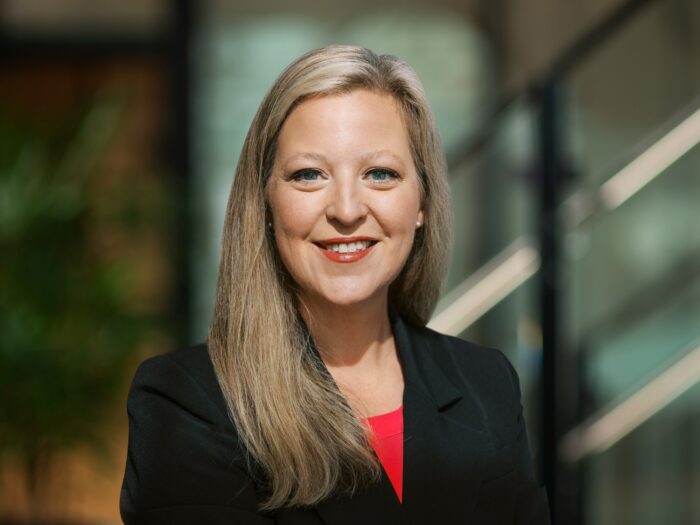
As part of our expanded coverage of our 2026 Specialty Power Broker® winners and finalists, Risk & Insurance® recently spoke with Julie Minor, global head of distribution for QBE. What follows is a transcript of that discussion, edited for length and clarity.
Risk & Insurance: Thanks for meeting with us, Julie. Is specialization crucial for brokers placing specialty risk, or can generalist brokers be effective placement partners?
Julie Minor: In my opinion, clients value brokers with specialization, particularly those brokers who have both risk and industry expertise. This specialization gives brokers a deep understanding of macroeconomic dynamics and key risk issues facing clients in a particular industry segment.
In today’s economy, insurance can be the vehicle that enables growth in a variety of different industries and ultimately, specialization drives innovation. A great example of this is how brokers are developing unique solutions to support capacity needs for the growth in digital infrastructure around the world. You can’t have an insurance conversation in the industry today without talking about the rapidly growing digital economy and the risk capital and insurance needs for data centers. Those brokers who have invested in specialized expertise in this space will have the ability to innovate and deliver unique value to their clients.
That said, generalist brokers also bring meaningful value to their clients, and they have several ways to access specialization. The wholesale distribution channel, for example, is a great platform for generalist brokers to access specialty expertise. Wholesale brokers, who are experts in specific products, niches, or industries, can provide valuable partnerships for generalist brokers, to ultimately deliver the benefit of specialization to their clients.
R&I: In an era dominated by texting, emails, and screen-based communication, how important are face-to-face meetings between brokers and carriers for communicating nuance and understanding the needs of insureds?
JM: Commercial insurance remains a relationship-based business, and at QBE, we firmly believe that strong relationships with our broker partners is a key component to our success. Face-to-face meetings are a critical part of building those relationships and fostering trusting, long-term partnerships. I also feel strongly that in person communication leads to better clarity in conversations with fewer distractions, which leads to better outcomes for both brokers and insurers. That said, the use of technology and virtual meetings are important to improve the efficiency of our business, particularly for a global company like QBE where we’re conducting international business transactions daily. There’s an important place for both approaches, and ideally technology and virtual meetings complement in-person face-to-face meetings.
Additionally, face-to-face meetings between the insurer, broker, and customer are very important to us at QBE. When we have an opportunity to hear directly from customers about their organizational priorities, risk profile, and insurance needs, we can help tailor our offerings to them. This results in coverage that best meets their needs at a competitive price in a program that’s more sustainable over the long term. Ultimately, that enables better long-term relationships and outcomes for all parties involved.
R&I: What red flags indicate that a broker relationship may not be strategically aligned with QBE?
JM: Strategic alignment with brokerage partners who understand and appreciate your value proposition as an insurer is essential, and to achieve that, effective communication between both parties is critical. As the insurer, it’s our responsibility to clearly articulate our underwriting expertise, risk appetite, and claims value proposition to brokers so they can communicate that value to their clients.
Brokers who take the time to ask questions and fully grasp the value we bring to the table—not just in terms of price and capacity—can advise their clients holistically. They can identify the right insurer partner who offers the coverage needed at a competitive price, sustainable over the long term, and who will deliver an excellent service experience in the event of a claim.
For example, at QBE, our integrated underwriting and claims strategy is a key market differentiator for us, and we believe it’s important for our brokers to appreciate this unique approach, alongside our expertise and commitment to service excellence. Those brokers who understand this aspect of our value proposition, and can articulate it meaningfully to their clients, make great partners and are well-aligned with what we’re trying to achieve at QBE.
R&I: What significant developments occurred in your distribution network in 2025, and what can we expect in 2026?
JM: In 2025, we focused on streamlining our distribution network by being more selective about who we trade with globally, and particularly here in the U.S. We aligned our strategy around three core groups: our top global brokers, specialty retail brokers that are well-aligned with our offering, and the wholesale channel.
In the US, we continued to invest in our growing specialty business, and our strategic distribution partners across all three groups were key to our success last year. We also partnered closely with our top retail and wholesale brokers to build out new portfolio solutions and evolve existing facilities. This collaboration allowed us to deliver sustainable capacity and long-term value across a broad range of risks, which was a key area of success.
Our wholesale strategy remains an important priority, playing a vital role in our distribution both here in the U.S. and in London. The wholesale channel enables local and regional brokers to access our capacity through brokers with specialized expertise. We’ve been intentional about building relevance in the U.S. wholesale market through launching our commercial property offering while continuing to grow our specialty casualty business, both of which are predominantly wholesale distribution focused. We’re encouraged by the growth we’ve achieved with our top wholesale brokers and feel well positioned as we head into 2026.
Finally, we continue to invest in customer engagement globally. We see customers as an essential part of the distribution ecosystem, whether through strengthening relationships with existing customers or asking for their willingness to serve as referrals. We recognize the importance of proactively engaging with customers and delivering an excellent service experience. The customer continues to be an important priority for us at QBE.
R&I: How often do you see client referrals occurring in the insurance industry?
JM: Insurance buyers and Risk Managers operate across a network of industry communities where there is a lot of information sharing that goes on among them regarding strategic approaches to risk management and key insurer and broker relationships. In my year and a half in this role at QBE, I’ve seen customers become a strong source of referrals.
R&I: What final thoughts would you like to share on this topic?
JM: I would underscore the importance of specialization and effective communication for both the broker and insurer to partner most effectively together and deliver relevant solutions and great service to our customers.
For QBE, our distribution focus in 2026 is to continue executing the same strategy we set out this year. We will drive greater consistency in our market engagement with key broker partners and focus on delivering excellent customer service.
We continue to see a significant opportunity to grow our business in the U.S., and we expect that a substantial portion of that growth will come from our top retail and wholesale brokers. We are grateful for their support and we’re excited about what’s ahead for 2026. &