Newsletters
 Risk Central
 Digital Edition
Predict & Prevent® Podcast Episode 29: Hidden Connections That Can Turn Risk Into Catastrophe
When it comes to climate risks, the global conversation is heavily skewed toward decarbonization and the race to net zero. While mitigating future climate damage is undeniably critical, this focus often overshadows an equally urgent crisis: surviving the climate reality we already live in.
The latest Predict & Prevent podcast from The Institutes, “Hidden Connections That Can Turn Risk Into Catastrophe,” explores this critical “adaptation gap” and the groundbreaking technologies being deployed to bridge it.
Host Pete Miller, CPCU, CEO of The Institutes, sits down with Moustafa Naiem, founder and CEO of Resiliocs Intelligence, a climate data and risk analytics company working with institutional asset owners worldwide to quantify, predict, and respond to physical climate risk.

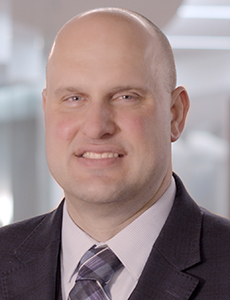
Moustafa Naiem, CEO and Founder of Resiliocs Intelligence.
Naiem said he realized that traditional consulting methods were relying on “a climate that no longer exists.” He built Resiliocs to provide actionable, asset-level decision support that tells asset owners exactly what climate risks will cost them and, crucially, how to prevent those financial losses.
Naiem observed that for every dollar spent on climate adaptation, at least five go toward decarbonization. “People are losing their homes, people are losing money, the insurers are pulling out of entire markets and people are being evacuated,” he said. “All of that because the risk wasn’t accounted for.”
Resiliocs provides asset owners with not just risk identification but also financial loss projections at the individual asset level, along with specific adaptation measures, cost estimates, and return-on-investment timelines. Naiem describes the goal as delivering “actionable intelligence” rather than expert opinion grounded in historical climate data that no longer reflects present conditions.
To achieve this, Resiliocs uses innovative “Spatial Twin” technology. Unlike traditional digital twins that require expensive, continuous IoT sensor networks, Spatial Twins leverage satellite data and advanced climate modeling. This allows for highly accurate, scalable predictions of physical climate risks without the prohibitive deployment costs, Naiem explained.
One of the most fascinating segments of the episode dives into “Black Swan” events.
“A Black Swan event isn’t just a high intensity hazard. A Black Swan event is when everything that can go wrong goes wrong at the same time,” Naiem said.
For example, a severe storm causes a flood that cuts power, which disrupts transport, which prevents ambulances from reaching hospitals. “That’s a Black Swan event because all of these systems failed on top of each other. Not that the rain was too much,” he said.
Asset managers and insurance have long focused on single-asset risk scores while missing the hidden dependencies between buildings, infrastructure networks, and the communities that keep them functioning, Naiem said.
Naiem also is deeply passionate about community resilience. He argues that protecting isolated, high-value assets is futile if the surrounding community’s infrastructure fails. True resilience means ensuring that the people who operate these assets can live safely and maintain their livelihoods during extreme weather events.
Listen to the full episode at predictandprevent.org or search for Predict & Prevent on any major podcasting platform. &