Newsletters
 Risk Central
 Digital Edition
Insurers Abandon Non-Renewals as Climate Risk Strategy, Yet AI Integration Lags

Property and casualty insurers dramatically reduced their reliance on non-renewals as a climate risk strategy in 2025, with only 14% of executives prioritizing this approach compared to 32% the previous year, according to ZestyAI’s State of Property Insurance 2025 survey of more than 220 P&C insurance professionals.
At the same time, the survey found that while 83% of insurers say they’re equipped to use AI, just 40% have integrated it into core workflows.
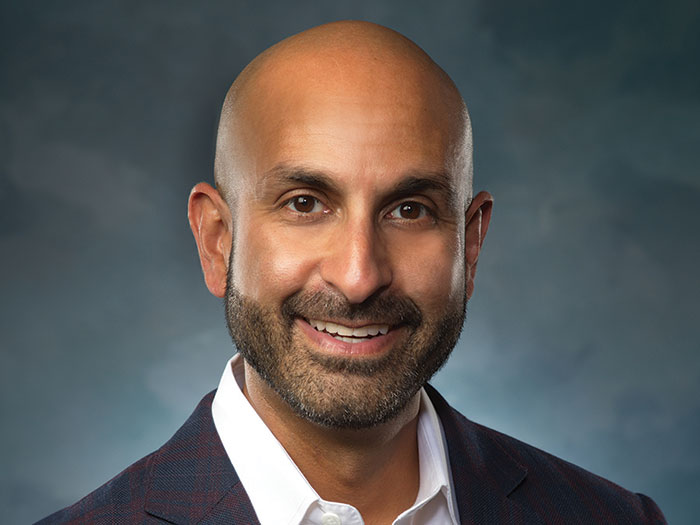
“The industry is still modeling risk as if little has changed, even as climate volatility accelerates. Relying on yesterday’s tools is leaving insurers exposed to today’s billion-dollar events, from urban wildfires to catastrophic hailstorms,” said Attila Toth, founder and CEO of ZestyAI.
Industry Confidence Gap Reveals Divergent Adaptation Speeds
The insurance sector displays a striking confidence paradox when assessing climate adaptation efforts. While 61% of executives said they believe the insurance sector overall is not adapting quickly enough to climate-related risks, 64% maintain their own companies are moving faster than peers. This perception gap varies significantly by carrier type, with MGAs and insurtechs expressing the strongest confidence at 73% and 67%, respectively, while traditional mutual insurers and regional carriers show more tempered optimism at 57% and 51%.
The shift away from non-renewals marks a fundamental change in risk mitigation strategies, according to the report. Carriers are replacing this blunt instrument with more surgical approaches, as actual cash value endorsements surged 18 percentage points to 71% adoption. This pivot reflects mounting pressure from regulators and customers who increasingly scrutinize withdrawal strategies, pushing insurers toward what the report calls “recalibration over retreat.”
Perhaps most concerning, a significant portion of carriers operate without any risk models for critical perils, ZestyAI said. The survey found 15% lack models for non-weather water damage, 14% for attritional fire, and 12% for both wildfire and severe convective storms—gaps that leave insurers vulnerable to rapidly evolving loss patterns.
Trust Paradox Blocks AI Implementation Despite Clear Business Case
Artificial intelligence presents both the industry’s greatest opportunity and most vexing challenge, according to ZestyAI. Nearly three-quarters of executives report AI is creating new revenue opportunities and improving underwriting decisions, with two-thirds highlighting its role in meeting policyholder expectations and maintaining competitive positioning. Yet implementation remains fragmented, the report said, with AI often producing insights that fail to reach decision points in underwriting and claims processes.
The barriers are organizational rather than technical. Reliability concerns for AI top the list at 49%, followed by insufficient training at 43% and poor workflow integration at 37%. This creates what ZestyAI described as “enthusiasm without impact”—carriers aren’t failing because models don’t work, but because their organizations aren’t built to use them effectively.
Five Strategic Imperatives Define Path Forward for 2026
The insurance industry faces clear choices as it navigates mounting climate volatility and technological transformation, according to ZestyAi. Based on survey findings, the report recommended that carriers act on five strategic imperatives to remain competitive:
- Modernizing risk modeling before the next billion-dollar loss becomes critical. With legacy stochastic and actuarial models still dominating despite their inability to capture clustered, property-specific events, carriers need AI-driven, property-level modeling especially for rapidly escalating perils like non-weather water damage and severe convective storms.
- Closing the AI operational gap requires moving beyond pilot programs to full integration. The report emphasizes that measuring adoption by experimentation rather than implementation leaves AI “waiting in the wings while decisions are still made with blunt tools.”
- Surgical precision must replace one-size-fits-all approaches. As non-renewal strategies decline, carriers need accurate risk segmentation that keeps good risks in force while demonstrating to regulators that resilience comes through precision rather than withdrawal.
- Elevating AI from back-office tool to growth engine becomes essential. Leading carriers will use AI to guide strategy, shape pricing, and define customer experience across the entire value chain, not just risk scoring.
- Transparency emerges as a market advantage. With trust serving as both barrier and breakthrough, carriers that can clearly explain how risk scores are built and mitigation works will gain regulatory approval while building market credibility. As the report’s authors noted, explainability becomes “more than compliance: it’s a license to operate.”
“AI-driven, property-specific models don’t just predict risk more accurately; they also show how mitigation changes outcomes, giving insurers, regulators, and policyholders the transparency they need to build resilience,” Toth said. “As we look to 2026, the industry faces a choice: continue relying on models built for yesterday’s risks, or embrace a future where every property can be understood, priced, and protected on its own terms.”
Obtain the full report here. &