 Newsletters
 Risk Central
 Digital Edition
How to Maintain Consistent Claims Service as Programs Grow

Growth is often a sign of success, but for claims organizations, scaling up can expose weaknesses that smaller programs never encounter. As volumes rise, locations multiply, and complexity increases, the fundamentals that drove early success can begin to erode, often in ways that don’t appear in financial reports until much later.
For employers and risk managers, the question isn’t just how to grow, but how to grow without sacrificing the quality of outcomes that make a claims program worthwhile in the first place.
“Maintaining focus on what’s really important has to be intentional,” said Mark Bertels, Executive Vice President of Risk Management Services at CorVel. “You have to protect the fundamentals of the business and make them non-negotiable.”
The Principles of Managing Claims Effectively at Scale

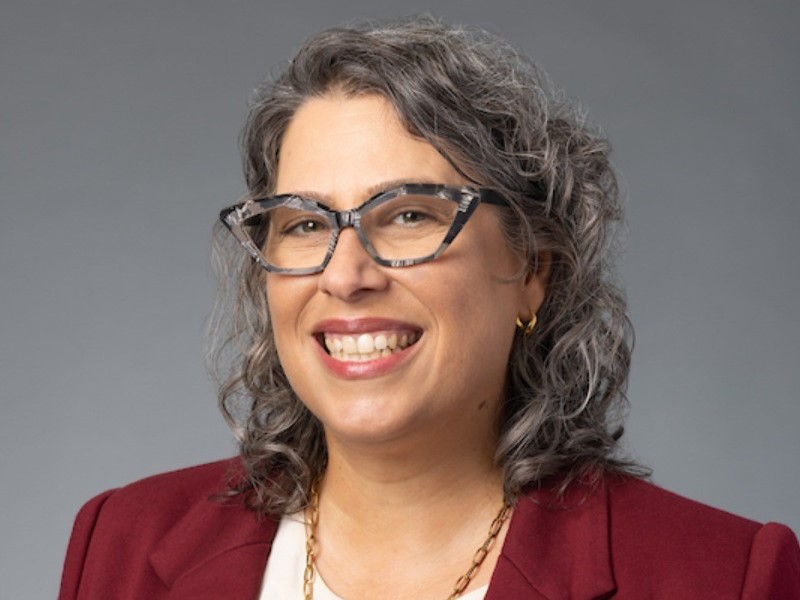
Mark Bertels, Executive Vice President of Risk Management Services, CorVel
According to Bertels, consistency across teams starts with disciplined execution during the earliest stages of a claim. Actions taken early in the claims process can significantly influence a claim’s direction.
“We know we have to make an impact early in the claims process,” Bertels said. “Getting a claim off on the right foot is essential.”
That means maintaining discipline around initial contacts, thorough investigations, accurate compensability decisions, and early engagement with the injured worker to begin building trust. As programs grow, that same level of care has to be replicated across every team and every file.
Timely decision-making is the second principle. “A timely decision upfront is much better than a decision that comes later, or no decision at all,” Bertels said. “Delays in taking the next step can prove costly.”
The third principle, and perhaps the most important, is strong supervision. Bertels described supervisors as “the most effective control in a growing program,” provided their role is clearly defined and consistently reinforced.
“Supervisors need to spend less time on administrative functions and more time working strategically with their claims professionals,” he said. “The more work we do upfront through coaching and strategic conversations, the less retrospective corrective work is needed.”
Where Claims Programs Go Wrong
As claims programs grow, an emphasis on operational metrics can sometimes shift attention away from strategic claim management. Leadership decisions can also create challenges, particularly when strong adjusters are promoted into supervisory roles that may not fit their skill set.
“Sometimes we have excellent adjusters whom we want to recognize and retain, so we promote them into supervisory positions even though those roles may not be the right fit,” he said.
“The supervisor position is too important to use simply as a career ladder. We can find other ways to reward and advance outstanding claims professionals without necessarily making them supervisors.”
The skills that matter in a supervisor extend well beyond technical claims knowledge. “I want someone who is a leader and a coach, rather than primarily a quality control specialist,” Bertels said.
“They need the personality, drive, and passion to help their claims professionals succeed and see the bigger picture.”
Another pitfall is confusing activity with progress. As companies grow, operational excellence models can create pressure to complete tasks rather than move claims forward.
“A claims professional may be completing numerous tasks, entering notes, sending emails, and documenting activity because those are the things they’re expected to do,” Bertels said.
“But despite all that activity, the claim may not actually be moving forward. A former colleague used to tell me, ‘Never confuse activity with results.'”
Early warning signs rarely show up in financial metrics first. Instead, they appear in behaviors: delayed initial contacts, postponed investigations, late return-to-work conversations, and supervisors consumed by transactional work rather than strategic coaching.
“By the time poor financial results appear, the problems have often already developed,” Bertels said. “The earliest indicators are behavioral and operational, rather than financial.”
Heavy workloads can also create challenges for employee retention. “If you’re a supervisor and suddenly have 900 claims on your desk and 12 direct reports, that’s not good for you, the injured workers, or the customer,” Bertels said.
“Leadership has a responsibility to create an environment where people are positioned to succeed.”
Leading Forward, Supported by Technology
Meaningful accountability, Bertels argued, is forward-looking rather than retrospective. A simple change in how leaders ask questions can shift the entire dynamic of a claim review.
“Instead of asking, ‘Can you give me an update on this claim?’ ask, ‘What is the next decision you’re going to make, by when, and what is the anticipated outcome?'” Bertels said. “That changes the entire dynamic of the conversation. It places accountability on the individual to identify the next meaningful step that will move the claim toward the desired outcome.”
Rather than receiving what Bertels called “a weather report” of past activity, the supervisor gets a commitment, a timeline, and an opportunity to coach. The supervisor documents that commitment and revisits it at the next check-in.
Technology plays a growing role in making this forward-looking approach possible. As claim volumes rise, artificial intelligence and automation can offload much of the routine administrative work that pulls claims professionals and supervisors away from strategic thinking.
“Technology, and certainly A.I., can take away many of the routine administrative functions that consume time as organizations grow and claim volumes increase,” Bertels said. “We’re working to reduce those administrative responsibilities so claims professionals and supervisors can spend more time addressing difficult claims and applying their expertise where it matters most.”
The result is a claims team that can focus on the human side of the work, including the empathy, relationships, and judgment that no algorithm can replicate, while still making the tough decisions the job requires.
Underlying it all is a principle Bertels returns to often: Respect.
“Every stakeholder in this industry, whether it’s an injured worker, claimant, provider, broker, customer, colleague, or team member, deserves to be treated with dignity and respect,” he said. “That doesn’t mean we have to please everybody all the time. There are situations where we have to say no. But we can make those decisions in a confident, professional, and respectful manner.”
That respect, he added, is the foundation of trust, and trust is what allows growing programs to keep delivering on their commitments.
“If we don’t have trust internally with our teams, if our teams don’t have trust with injured workers and claimants, and if we don’t have trust with our customers and brokers, it’s going to be very difficult to succeed,” Bertels said.
As claims programs continue to scale, organizations that maintain consistency, accountability, and care will be best positioned to deliver strong outcomes for employers and injured workers alike.
Click here to view CorVel’s full Inside Outcomes Podcast: Scaling Performance Without Losing Accountability with Mark Bertels. &