Newsletters
 Risk Central
 Digital Edition
Data Centers Powering AI Create Unprecedented Risk Accumulation Challenges for Insurers
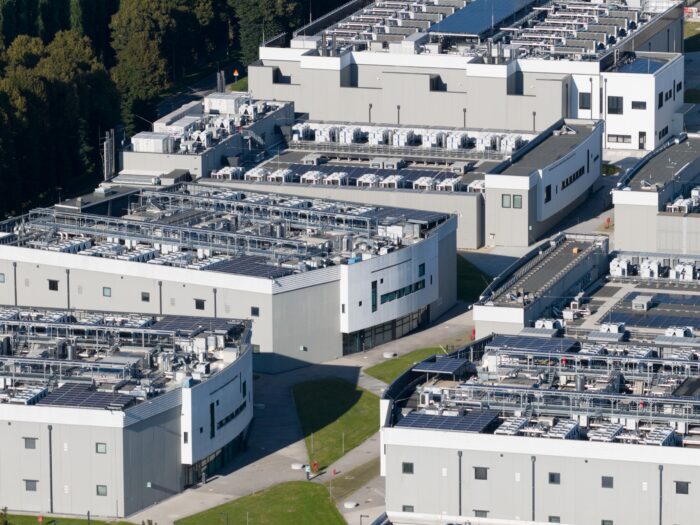
The rapid buildout of data centers to support artificial intelligence workloads is generating insurance demand that the industry may struggle to meet, with global premiums tied to data centers expected to more than double to $24.2 billion by 2030 from $10.6 billion, according to a report from Swiss Re Institute.
Capital spending by the five largest cloud service providers is widely forecast to exceed $600 billion in 2026, a 36% annual increase, with roughly 75% of that spending directly tied to physical AI infrastructure housed in large data centers, the report said.
The sheer scale of individual projects — with construction costs that can reach $20 billion before equipment installation — is driven by financing requirements that demand coverage for the full replacement value, even when maximum probable loss scenarios are much lower. The re/insurance industry can support only a fraction of the required limits at competitive rates for traditional construction risk policies, the report said.
Natural Catastrophe Exposure Is Rising
New data centers increasingly occupy locations with significant natural hazard exposure, driven by extensive land and renewable energy requirements, according to the report. Using Swiss Re’s CatNet catastrophic risk assessment tool and U.S. Department of Energy data, the report found that more than a quarter of U.S. data center capacity may sit in locations experiencing three or more large-hail days per year, averaged over a 64-year historical period. Also, roughly 40% of capacity could be in significant-to-very-high tornado-day zones, the report said.
The risk is compounded by developers clustering multiple data centers within approximately 20-mile radiuses in locations such as Abilene, Texas, meaning a single regional catastrophe event could affect a high density of insured value simultaneously. A tornado’s debris field can traverse separated structures on the same campus, damaging multiple buildings at once — producing losses higher than typical single-location maximum probable loss assumptions, the report said.
Data center construction characteristics make them particularly susceptible to storm damage. Large footprints, low-slope roofs, numerous surface penetrations for building services, and equipment highly sensitive to humidity all contribute to water damage vulnerability. Critical outdoor equipment faces direct exposure to hail and debris impacts.
Fire, Cooling and Power Risks Intensify
While fire accounts for only about 11% of data center loss events, it drives more than 42% of loss costs, according to an FM 15-year study cited in the report. A key emerging concern is the integration of lithium-ion battery backup units into server racks, creating an ignition source “that did not previously exist” within data processing equipment rooms. FM’s 2026 loss prevention guidance increased recommended fire-resistance wall ratings from one to two hours and introduced more stringent sprinkler expectations, the report noted.
Liquid cooling systems, adopted to manage the significantly higher heat output of modern GPUs, present another growing exposure. Liquid-related losses represented nearly 24% of total data center loss costs in FM’s review. The increased scale and complexity of cooling networks create water damage risks from improper installation or maintenance, Swiss Re said.
Power supply remains the largest driver of business interruption risk, responsible for 45% of data center outages, according to the Uptime Institute. AI server racks can require more than 100 kilowatts — up from 5-15 kilowatts for traditional servers. Roughly 30% of planned U.S. data center capacity could include on-site power generation, and battery energy storage systems bring significant fire, explosion and toxic gas hazards, the report noted.
Accumulation Management Demands New Discipline
Risk managers and their carriers face significant accumulation challenges. Large data centers are sometimes presented to insurers through separate programs for buildings, equipment and power plants, making it difficult to track total capacity exposure. A single physical event could trigger claims across multiple insurance programs, Swiss Re said.
Growing internet connectivity of operational technologies — including power, cooling, security and monitoring systems — is also creating new cyber vulnerabilities.
The industry is evolving from relatively low-hazard electronic equipment occupancy to complex, high-energy-density facilities, often before researchers have fully assessed associated hazards or prescriptive regulations exist. With few next-generation facilities fully operational, empirical loss experience remains limited, making specialized technical assessment essential for underwriting, Swiss Re said.
Jimmy Keime, head of engineering and nuclear for Swiss Re, commented: “As data centers become increasingly concentrated, energy dependent and systemically critical, they face an evolving spectrum of exposures. For the re/insurance industry, that means moving beyond passive risk transfer to actively enabling resilience, engaging earlier in design, siting and power decisions, while also requiring greater transparency on the underlying risk.”
Obtain the full report here.