Newsletters
 Risk Central
 Digital Edition
Climate Risk Analysis Rarely Reaches Beyond Tier 1 Suppliers
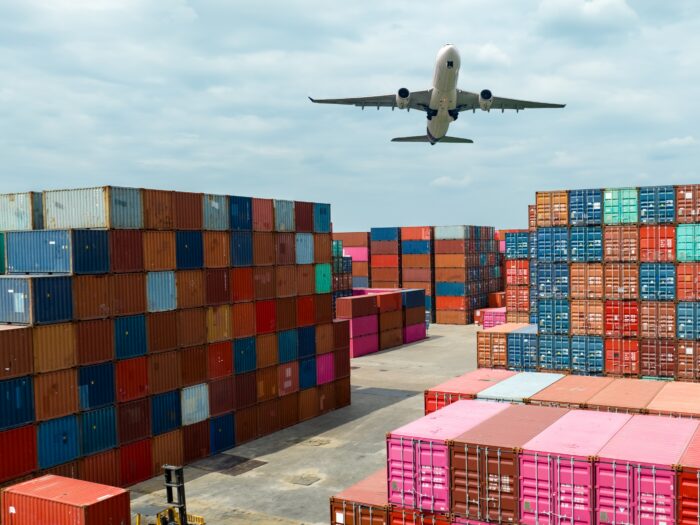
While 33% of global executives surveyed by Deloitte in 2025 said natural disasters and severe weather were affecting their business, supply chain risk assessment and operational reconfiguration remain among the less common sustainability actions taken in response, according to a report from the Deloitte Center for Integrated Research.
The report also cited outside research, including from S&P Global and CDP, showing only about one-fifth of companies have a climate adaptation action plan, and only about half assess the risk exposure of their suppliers. That gap matters because physical climate risks, from extreme weather to longer-term shifts in climate patterns, frequently originate well outside a company’s direct operations or its immediate suppliers, the report said. Those climate disruptions can still produce delays, shortages, price pressure, or reduced service levels for firms with no direct ownership stake in the failure.
Deloitte pointed to the 2021 winter storm that knocked out a Texas semiconductor plant as an example of how disruption cascades through interconnected supply chains. The shutdown reduced chip output, limiting availability for automotive and electronics manufacturers, which then faced delayed production schedules and rising inventory shortages, according to the report. Downstream suppliers, distributors and retailers worldwide experienced delivery disruptions and higher costs as a result; one company estimated the outage caused $100 million in disruption, the report said.
Mapping Risk Deeper Into the Value Chain
Many existing climate risk assessments provide detailed views of a company’s own facilities and direct suppliers but stop before capturing the harder-to-model second- and third-order dependencies that affect cost, capacity, delivery and demand, the report found.
These systemic effects can include crop losses that raise input costs, heat that reduces labor productivity, infrastructure disruptions that delay shipments, or broader climate-driven inflation and migration, according to the report. Because these effects touch markets, institutions and physical assets simultaneously, they rarely stay confined to a single geography or sector, the report said.
To capture that broader exposure, the report described input-output analysis paired with climate risk modeling as one approach for tracing dependencies across multiple supplier tiers. Input-output tables track the value of goods and services exchanged between every sector of the economy, revealing not only direct relationships, such as an automaker buying steel, but indirect ones, such as the energy needed to fuel the furnace that produces that steel, according to the report.
Applying modeled industry-level climate damages projected out to 2030, the analysis found that exposure varies significantly by industry: Retail appears more exposed once deeper dependencies are factored in, while much of manufacturing’s risk is already visible within its direct supply chain, the report said.
Without that systemic view, the report warned, companies risk misallocating time, resources and capital by overemphasizing some value chain risks while missing others.
A Five-Part Framework for Resilience
The report outlined a five-part framework for organizations assessing and strengthening operational resilience.
- The first area, risk assessment and mapping, calls for multi-tier visibility into tier-2 through tier-4 supplier dependencies, identification of geographic hot spots such as water-stressed regions and coastal zones, and mapping of cascading disruption scenarios.
- The second, operational and supply chain adjustments, covers diversification through multisourcing or nearshoring, inventory and capacity buffers, and resilient logistics planning.
- The third area, financial and strategic planning, involves stress-testing revenue and cost impacts under climate scenarios and directing investment toward the suppliers and assets most critical to continuity.
- The fourth area, collaboration and governance, emphasizes coordination with shared suppliers, customers and infrastructure partners, along with clear board-level oversight of resilience priorities and disclosure of systemic risks, according to the report.
- The fifth area, social, regulatory and market adaptation, addresses tracking disclosure requirements and pricing mechanisms, planning for impacts on labor availability and productivity, and anticipating shifts in customer demand tied to changing environmental conditions.
The report characterized resilience as a potential source of strategic advantage rather than solely a means of reducing disruption, noting that companies with deeper visibility across their value chains can act earlier and adapt faster as climate risks intensify. Even under ambitious mitigation scenarios, climate impacts are expected to increase in the coming decades, underscoring the value of earlier adaptation, Deloitte said.
Read the full report here. &