


 Newsletters
 Digital Edition
Workers' Comp





 Risk Central
White papers, service directory and conferences for the R&I community.

Time is almost up for submitting speaker proposals for the 2016 National Workers’ Compensation and Disability Conference & Expo.

Employees and employers must learn to spot the red flags that signal a situation on the brink of turning violent.

Significant workers’ comp legal decisions from around the country.

A new study suggests that both age and job tenure impact disability durations for injured workers.

The Internet of Things is fueling “the next industrial revolution” and is poised to make a significant impact on workplace safety.


Data analytics help pinpoint which opioid patients need more or less urine drug screening.

An employee wellness program that requires employees to undergo biometric screenings and complete a health questionnaire won court approval.

Although joint injuries are better understood than complex injuries, the type of care provided for similar injuries on a state-by-state basis is inconsistent.

Just because integrated absence management is hard to achieve doesn’t mean it shouldn’t be attempted.

While insureds with losses can expect an increase, others can look forward to level pricing or even modest discounts.

Researchers produced what they believe is the first scientific proof that consistently applied treatment guidelines are effective in treating injured workers.

Kids’ Chance, which provides scholarship assistance to kids whose parents have been catastrophically or fatally injured on the job, is working to reach the people who need it most.

Rhetoric simplifies workers’ comp for the general public, but details matter in the opt-out debate.
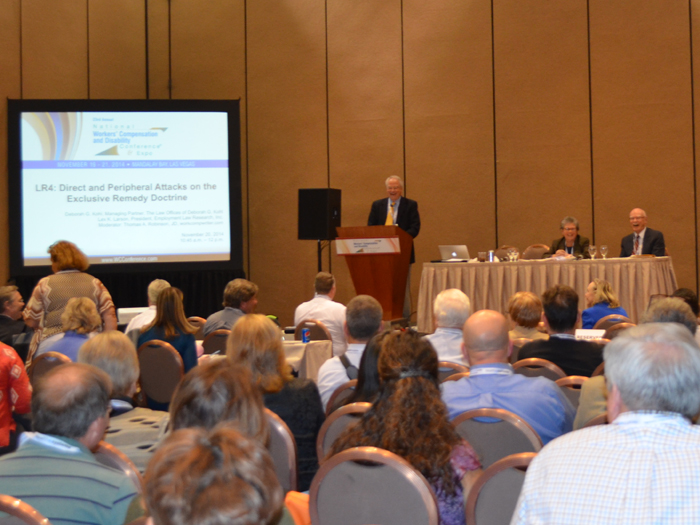
Professionals wishing to speak at the 2016 National Workers’ Compensation and Disability Conference & Expo may now submit proposals. Deadline is Feb. 26.
National Institute for Occupational Safety and Health has created the virtual National Center for Productive Aging and Work, a project of NIOSH’s Office for Total Worker Health.

A round-up of nationwide regulatory changes affecting the workers’ compensation industry.

A new survey shows that 74 percent of small business don’t drug test their employees. Nearly half don’t have written policies banning marijuana in the workplace.

More employers are looking beyond cost when evaluating wellness programs, and considering factors such as employee morale, productivity and safety.

Noted workers’ comp bloggers share their thoughts on the recent call for federal oversight of the workers’ comp system.