 Newsletters
 Risk Central
 Digital Edition
California’s Homeowners Insurance Crisis Is About More Than Affordability

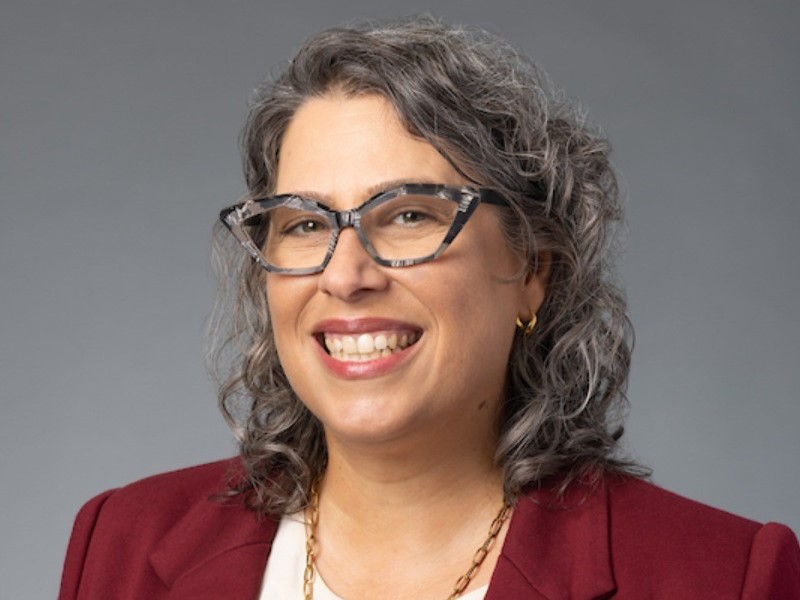
Jessica Crumrine has nine years of industry experience and brings deep expertise in pricing, reserving, product strategy and regulatory support across personal and commercial insurance lines. Jessica’s reserving experience includes catastrophe IBNR estimation, development of new reserving studies and more. Jessica has developed homeowners rate indications, actuarial cost estimates and competitive analyses that guide strategic rate actions. She has led the development of rate proposals, prepared state filing documentation and partnered with underwriting to ensure profitable growth.
“We are unable to renew your insurance for the upcoming term.”
That was the opening of a letter I received from my insurance company earlier this year.
And then: “We are unable to continue this Homeowners Policy due to an ineligible wildfire risk score.”
I suppose I shouldn’t have been surprised. I live in a suburban development in a Wildland-Urban Interface area of Southern California. When I purchased my home four years ago, I did my due diligence. I wanted to confirm that homeowners’ insurance was both available and reasonably priced and found several mainstream carriers willing to write a policy.
While my home is located in a higher wildfire-risk area, I felt comfortable with the risk. The house was newly constructed to California’s stringent fire-resistance standards, and I took additional steps to reduce flammable materials around the property. Like many homeowners, I hoped that responsible mitigation efforts, combined with modern building standards, would help ensure continued access to insurance coverage.
I was wrong.
A System Under Strain
Anyone who’s paid attention to the California homeowners’ insurance market knows there’s a problem. The number of homeowners insurance policies written by private insurers declined by 28% between 2020 and 2023. And in 46 of the 58 counties in California, non-renewals outnumbered the number of new policies written.[1] But how did we get here?
A study of insurance premiums shows that the average homeowner in California pays 55% less than the national average. For areas without high wildfire risk, that number is unsurprising due to lower risk from hurricanes, tornadoes, hail and other weather exposures that tend to be expensive to insure. Yet even in high-wildfire-risk areas, premiums remain significantly below national averages. This is the result of California’s highly regulated insurance framework.[2]
In 1988, amid widespread concerns that insurance rates were becoming excessive, the state’s voters passed Proposition 103, requiring prior approval of rate filings and strengthening regulatory oversight of insurers.[3] Over time, California’s implementation of Proposition 103 generally required insurers to rely heavily on historical loss experience when justifying rates, limiting their ability to incorporate forward-looking catastrophe models when pricing wildfire risk.
The limitations of that approach become apparent when looking at modern catastrophe models. The U.S. Federal Emergency Management Administration’s (FEMA) National Risk Index estimates California’s expected annual wildfire loss at $1.79 billion.[4] This estimate is based on catastrophe modeling and represents expected annual losses, not a severe or worst-case wildfire scenario. Even so, it indicates a level of wildfire risk that may not have been reflected in rates derived primarily from historical loss experience. In other words, even a model designed to estimate average annual losses suggested greater wildfire exposure than California’s historical-loss framework may have allowed. Moreover, expected annual losses do not capture the financial impact of truly catastrophic events. Gallagher Re estimated that the January 2025 Los Angeles-area wildfires alone would cost insurers more than $40 billion,[5] illustrating the scale of losses that insurers must ultimately be prepared to absorb.
Additionally, insurers that purchased reinsurance to protect themselves from low-frequency, high-severity events generally could not recover those costs from policyholders in the way they can in many other states.
Compounding these challenges, the California Department of Insurance (CDI) has faced criticism for lengthy rate-review timelines to approve even rates that they would consider acceptable, sometimes taking a year or more to grant approval. This means that by the time a rate increase has been approved, it is already outdated.
Taken together, these factors have contributed to a market in which insurers have become increasingly reluctant to write or renew coverage in higher-risk areas.
My Insurance Was Nonrenewed. Now What?
For many Californians receiving nonrenewal notices, the question is no longer how much insurance costs, but whether it can be obtained at all.
The FAIR Plan: California’s Safety Net
Many homeowners rejected by the admitted insurance market are turning to the California Fair Access to Insurance Requirements (FAIR) plan, California’s insurer of last resort. FAIR plan policies increased 152% between September 2022 and March 2026.[6] This is estimated to be over 8% of the current residential market share.
It should be noted that a FAIR plan policy is not a full-coverage insurance policy. It only covers wildfire-related losses and certain other named perils, requiring homeowners to obtain a Difference in Conditions (DIC) policy to cover things like theft, personal liability or water damage.
While this may be the only option for some Homeowners, the FAIR plan is not sustainable long-term. In the top 10 wildfire-risk counties, nearly 33% of residential policies are being written by the FAIR plan. And roughly 90% of FAIR plan policies are in “Relatively High” or “Very High” wildfire risk areas, according to FEMA’s National Risk Index.[7]
While FAIR plan policies do cost more than admitted policies, rapid growth in high-risk areas has raised concerns about whether premium levels adequately reflect the concentration of risk. The FAIR plan operates much like a traditional insurance company, collecting premiums and paying losses out of its own premiums and surplus. When FAIR plan funds run low however, they can assess all admitted insurers writing homeowners’ insurance in the state.
The FAIR plan received approximately 5,000 claims from the Palisades and Eaton fires in January 2025, with an estimated $4 billion in total losses.[8] As a result, an assessment of $1 billion was approved. While this was the first assessment in 30 years, it is a substantial amount, and insurers are only permitted to pass half of the assessment along to policyholders (after filing for that rate and having it approved),[9] further increasing the financial burden on any admitted insurers willing to remain in the state.
The Surplus Lines Market: A Growing Alternative
Another option would be to obtain a surplus lines (or non-admitted) policy. Contrary to popular belief, the non-admitted market is not an unregulated market.[10] While it is true that these insurers are not subject to Proposition 103, which makes changing rates faster and easier, they are still subject to federal and state regulations, including California surplus lines laws and the regulations of their domiciliary state.
These are typically full-coverage policies, although wildfire deductibles may be higher than for other perils.
One important thing to note is that guaranty fund protection is unavailable to these policyholders, meaning that if the surplus lines insurer becomes insolvent, there is no backup protection from the state to cover outstanding claims.
While the surplus lines market in California is still relatively small, it has been growing. Surplus lines homeowners’ transactions (which includes new business, renewals, extensions and endorsements) were up 119% in the first half of 2025 over the prior year.[11] It’s also becoming more common for large, admitted carriers that have a surplus lines side to their business to move towards writing more non-admitted homeowners’ policies in California.
Beyond Affordability
When I shopped for replacement coverage following my nonrenewal, quotes from the surplus lines market ranged from a 36% increase to more than 500% above my prior premium. Those policies often came with higher deductibles and additional financial risk due to the lack of guaranty fund protections.
The conversation about California’s insurance crisis has become centered on price. But my insurer did not ask me to pay more for coverage. It simply and summarily informed me that my coverage would not be renewed at all.
Affordability matters. Yet affordability means little when coverage is unavailable. If California hopes to build a sustainable insurance market, policymakers must focus not only on what homeowners pay for insurance, but also on whether they can obtain it in the first place.
Balancing Affordability and Availability
State Farm, the largest writer of homeowners’ insurance in California, recently received approval for a 17% rate increase. Discussions surrounding the increase have largely focused on the impact that higher premiums may have on housing affordability.[12] While affordability concerns are real, this framing overlooks a growing reality: many homeowners are not choosing between expensive insurance and inexpensive insurance. Increasingly, they are choosing between the FAIR Plan, the surplus lines market, and the loss of access to the admitted market altogether.
California policymakers have increasingly recognized this tension between affordability and availability. Recent reforms represent an attempt to address both objectives simultaneously.
In 2024, the California Insurance Commissioner helped push through the Sustainable Insurance Strategy reforms, which now allow insurers to use catastrophe models to set rates and include reinsurance costs in rate indications. The CDI is also working to expedite rate filing approvals and have made significant advances in turn-around times.
These reforms are meaningful improvements. However, insurers have not yet broadly committed to expanding their presence in California, suggesting that additional changes may still be necessary. &
[1] https://www.moneygeek.com/insurance/homeowners/california-wildfire-fair-plan-insurer-retreat/
[2] https://www.moneygeek.com/insurance/homeowners/average-cost-home-insurance-california/
[3] https://leginfo.legislature.ca.gov/faces/codes_displayText.xhtml?lawCode=INS&division=1.&title=&part=2.&chapter=9.&article=10
[4] https://www.fema.gov/about/openfema/data-sets/national-risk-index-data
[5] https://www.ajg.com/gallagherre/-/media/files/gallagher/gallagherre/news-and-insights/2025/april/gallagherre-natural-catastrophe-and-climate-report-q1-2025.pdf
[6] https://www.cfpnet.com/key-statistics-data/
[7] https://www.moneygeek.com/insurance/homeowners/california-wildfire-fair-plan-insurer-retreat/
[8] https://www.insurance.ca.gov/0250-insurers/0500-legal-info/0700-commissioners-orders/upload/Order-No-2025-1-Approving-the-California-FAIR-Plan-Association-s-Request-to-Issue-Assessment.pdf
[9] https://www.insurance.ca.gov/0250-insurers/0300-insurers/0200-bulletins/bulletin-notices-commiss-opinion/upload/Bulletin-2025-4-Updated-Guidance-regarding-Insurer-Recoupment-Procedures-in-Response-to-Assessment-by-the-FAIR-Plan.pdf
[10] https://www.slacal.com/general-information/primer-on-the-non-admitted-market
[11] https://www.claimsjournal.com/news/national/2025/07/15/331782.htm
[12] https://www.jchs.harvard.edu/blog/californias-homeowners-insurance-market-national-bellwether