 Newsletters
 Risk Central
 Digital Edition
Brilliance in Focus: Aon Construction Power Broker Brian Hearst


Look for these expanded profiles on the Risk & Insurance website and in your social media feeds throughout the year.
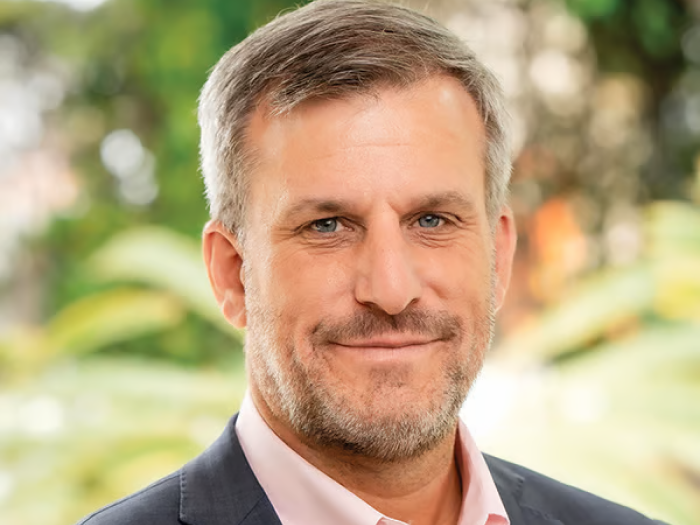
Here we talk to Brian Hearst, a managing director with Aon and a 2026 Power Broker in the Construction category.
Risk & Insurance: Thanks for talking to us Brian. What drew you to working in this particular niche of the insurance industry?
Brian Hearst: What attracted me to builders risk and construction insurance was that every project is tangible. You’re not just insuring a balance sheet or an abstract exposure. You’re helping clients bring something real into existence.
Early in my career I was fascinated by the combination of engineering, finance, logistics, and problem-solving that goes into major construction projects. Today, that interest has evolved into a focus on digital infrastructure and data centers, which are among the most complex and critical projects being built anywhere in the world.
Every project presents a unique challenge, whether it’s supply chain disruption, natural catastrophe exposure, testing and commissioning risk, or operational resilience. I enjoy working at the intersection of construction, technology, and risk, helping clients solve problems before they become losses.
R&I: What was the most complex or high-stakes project you’ve ever built a risk program for, and what did that win teach you about your capabilities as an advisor?
BH: While I can’t discuss specific client details, one of the most challenging assignments of my career involved developing a first-of-its-kind risk transfer solution for a global technology company that was rapidly expanding its digital infrastructure portfolio. The challenge wasn’t simply securing capacity. It required designing an entirely new approach that aligned construction risk, operational risk, and long-term portfolio strategy across multiple stakeholders.
What I learned from that experience is that the best advisors bring far more than insurance placement expertise. They serve as translators between executives, engineers, contractors, lenders, insurers, and risk managers. Success came from listening carefully, challenging assumptions, and assembling a solution that solved a broader business problem rather than merely buying insurance. It reinforced my belief that innovation in our industry comes from deeply understanding a client’s objectives and having the persistence to build something that does not yet exist.
R&I: What was the pivotal moment or early mentor in your career that helped you transition from just selling insurance to truly understanding the grit and mechanics of the construction industry?
BH: I’ve been fortunate to learn from a number of outstanding construction professionals, brokers, underwriters, engineers, and clients throughout my career. The pivotal lesson came early when I realized that credibility is earned in the field, not in the office. Spending time on project sites, talking with project managers, superintendents, contractors, and owners helped me understand that construction projects succeed or fail based on thousands of decisions made every day.
One mentor in particular encouraged me to spend less time discussing insurance and more time understanding how projects are actually designed, financed, built, tested, and delivered. That advice fundamentally changed my career. Once you understand the project itself, insurance becomes a tool to support successful outcomes rather than the center of the conversation.
R&I: How do you draw a clear line between being there for your clients during a critical project emergency and protecting your dedicated personal and family time?
BH: Construction and digital infrastructure projects don’t always operate on a nine-to-five schedule, and when a major loss or project crisis occurs, clients need immediate support. I take that responsibility seriously. At the same time, sustaining a long career requires creating boundaries and building strong teams around you.
I’ve learned that being available doesn’t mean being available for everything. It means making sure clients can reach the right expertise when it matters most. Aon’s strength is the depth of our team, and that allows us to support clients around the clock while still maintaining healthy personal lives. For me, the key is being fully present wherever I am. When a client faces a critical challenge, they deserve my complete attention. When I’m with my family, they deserve the same commitment. Striking that balance isn’t always perfect, but it’s something I consciously work toward every day. &