 Newsletters
 Risk Central
 Digital Edition
An E&S Products and Solutions Discussion with The Hartford’s Pete Hill
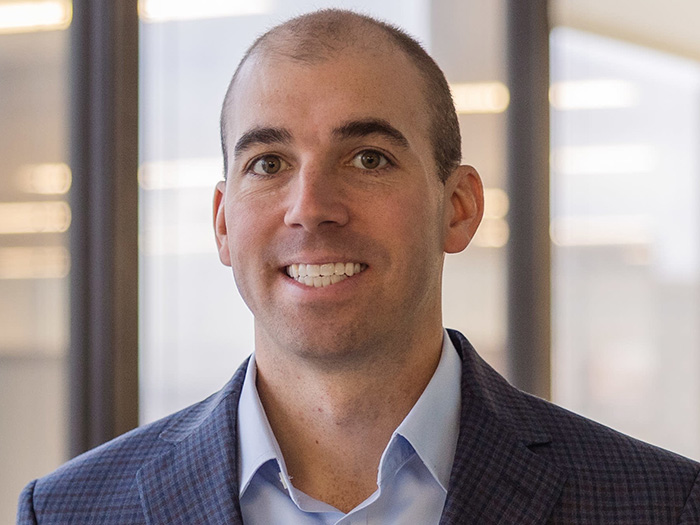
At the WSIA meetings in San Diego in mid-October, Dan Reynolds, the editor-in-chief of Risk & Insurance, sat down with Pete Hill, Chief Underwriting Officer & Head of Small Business E&S Binding, for The Hartford. What follows is a transcript of that discussion, edited for length and clarity.
Risk & Insurance: Thanks for meeting with us, Pete. What kind of growth is your practice seeing in the E&S products available to small businesses?
Pete Hill: The E&S binding market continues to be a very important market for solving more of our customer needs. Our core offering in binding is property, liability, and excess liability. We continue to expand our products and appetite to solve more customer needs in this dynamic and competitive market.
We’ve done a lot of work over the past couple of years to not only deepen relationships and write more business with the brokers, but also to listen to feedback on their pain points. This helps us fine tune our products to meet customer demand.
I’ll give you two recent examples. First, we’ve increased our property offering from $5 million in Total Insurable Value (TIV) to $10 million. That’s been a really important capability and offering for us in the past year, as we’ve been able to expand our addressable market. It filled a gap we had between navigating traditional brokerage business and business we consider bindable, allowing us to handle restaurants and some of those larger property schedules that we otherwise would not have had a solution for.
The second example relates to the liability pressure customers are facing. We’ve been offering an excess product over the past couple of months, which launched in June and rounded out more coverage for customers.
Now, in addition to the $1M primary liability layer, now we’ve got $5 million of excess on top of that. This meets the demand of what customers need to protect their businesses as we face more attorney representation, higher litigation, and larger losses from the liability side of things.
R&I: Is the challenging litigation environment affecting small businesses as severely as it has impacted large corporations?
PH: Small businesses certainly feel that pressure every day and the environment continues to be difficult. One thing I would say is that you’ll hear a lot about nuclear verdicts. Carriers with lower limit profiles may be somewhat insulated from that aspect, but other pressures like litigation financing and increased attorney representation rates remain.
While we are not seeing more liability claims happening, when claims do occur, the losses are larger than in the past.
R&I: Small businesses often have limited resources. What does The Hartford bring to the table to help small business owners with their risk mitigation and risk transfer needs?
PH: Our number one focus is making sure customers have the right coverage and protection for running their business. For small businesses, particularly those with one-person or smaller operations, insurance is not always top of mind. Our goal is to help customers understand the coverage they have, and we transparently communicate what is covered and what other options or coverages they might want to consider.
The relationship with our wholesale producers is a big part of this too. Through our small business binding channel, a majority of our business goes through the wholesaler and is underwritten by the terms and conditions for full quotes. This ensures customers are getting the solutions they need in real time from a broad network of markets.
The market is growing, and there’s continued demand for small business in the E&S space. We’re continually looking at making sure that as the market changes—with new products like excess coverage and increased property TIV —we’re able to meet that market demand. Our goal is twofold: one, protect the customer with the right coverage they need; two, continue to offer more products across a broader appetite for our wholesalers.
Wholesalers can come to our proprietary E&S binding platform and get property and liability, plus other embedded products like marine coverages and pollution coverage, in partnership with our Global Specialty team. They can do more in one spot rather than going to different places or different carriers to solve their needs. It’s not only about risk mitigation and peace of mind knowing they have the right coverage with The Hartford, but also being able to do that in a very efficient way, which is critical as small business expectations are to be very responsive.
R&I: How are MGAs helping large carriers connect with the small business market, and what role do they play in providing crucial market information?
PH: The small business marketplace has increasing demand and increasing competition.
Being able to fine tune the products with the right coverage, the right pricing and continuing to meet that demand as the market shifts is important to us. Understanding the market and participating in a consistent way is critical.
As we talked about at the start, we’re focused on expanding our appetite with new classes, expanding through different geographies, and creating new products. Our goal at Navigators, a brand of The Hartford, and really with The Hartford as a whole is to make sure that we are a consistent, sustainable market. We don’t want to enter into something new and have to non-renew books or create disruptions.
If we expand, we want to do it thoughtfully. That continues to be how we’re addressing the market even throughout this environment of increasing competition.
R&I: How does market disruption, such as carriers changing appetite or exiting lines of business, affect small business owners who lack dedicated risk management resources?
PH: Customers enter the E&S space for various reasons—their location, prior loss history, or their class of business operations overall. The beauty of E&S is that we can develop more creative and flexible solutions to provide coverage. Our partnership with wholesalers has been critical in ensuring small business owners understand they have solutions, even when they can’t place coverage in the admitted market.
The experience the customer has throughout this process is crucial. Many small business owners don’t have dedicated risk managers like large corporations do, especially at the smallest end of the market. Their ability to work with their retail agent, the wholesaler, and Navigators binding ensures they’re getting the right coverage quickly and without confusion about what’s covered and what’s not.
That whole ecosystem and our focus on the customer is critically important. Our wholesalers and retailers share this commitment. Customer centricity—really understanding customer needs and being able to personalize and tune coverage as their needs shift—is essential to us.
R&I: What characteristics define strong wholesale partners, and how does that focus on customer needs influence your selection process?
PH: The wholesalers we partner with are carefully selected, and our interaction with them is very thoughtful. It’s an important part of our team structure and distribution strategy.
Our underwriters meet with partners face to face in their offices, discussing our appetite, products, and capabilities. We ensure they understand what Navigators E&S Binding is offering and can translate that to the customer. These deep partnerships have been key to our success, with wholesalers understanding exactly what we do now, what we’ve done in the past, and where we’re going in the future.
This relationship also provides valuable feedback on where we might need to tune products or where there’s a gap in the market. Our excess product came squarely from wholesalers telling us the market was shifting and customers needed increased liability coverage for elevated large losses. Our ability to listen—recognizing that the wholesaler knows the customer and we want to focus on the customer—led us to build products tailored to that need, while maintaining our underwriting integrity and profitability
Customers and brokers have a choice of where they want to place insurance. Their willingness and desire to go with Navigators Binding has been central to our focus of delivering speed, ease, and accuracy.
R&I: How many wholesale brokers does The Hartford work with in this space?
PH: We work with about 25 wholesale brokers, and that number has remained consistent over the years. While the market has evolved and new wholesalers have entered this space, the specific partners we work with have shifted, but the total number hasn’t materially grown.
We are really thoughtful in how we partner with our wholesalers. We want to have deep relationships. We want them to know us, and we want to know them. That’s why we’ve been deliberate in how we manage how many wholesalers we appoint to work with Navigators binding.
R&I: How is The Hartford positioning itself to capitalize on the shift toward small business as a wholesale opportunity?
PH: A really nice part overall for Navigators Binding and The Hartford is that we have those pieces in place. We have the brokerage space for Navigators, we’ve got our Navigators binding, and we have the entire small business portfolio on the admitted side. We see that spectrum from the admitted side to the small E&S to the large brokerage.
The key question is: How do we look at where the markets are shifting? How do we use those insights to better create products, expand appetite, and find solutions? Our wholesalers—whether they’re focused on small business, large property, or larger business in general—want us to provide more solutions internally and make it easy for them to come to us and get as many customer needs met as possible without going to multiple places. It also allows us to identify trends and market changes quicker and adjust accordingly.
R&I: Do wholesalers focus strictly on small business, or do they operate across multiple segments?
PH: While there are some wholesalers that focus on small business,
teams are often organized by specialty—dedicated teams for binding, brokerage, casualty, property. The way we’re set up at Navigators mirrors this structure. Our teams organize very similarly to face up to the wholesalers.
We maintain key contacts in those relationships. We know who their binding contact is in the office, and we know who their excess casualty person is. The way that we talk internally across Navigators is very much how we interface with wholesalers. So yes, there are dedicated teams, and there are some dedicated wholesalers that focus on small business.
R&I: What emerging risks should small businesses be monitoring that may not currently be on their radar?
PH: We are constantly assessing the market and the ways that emerging risks are shifting. I don’t know if it’s really emerging, but the catastrophe environment on the property side is a key focus for us. That has moderated for this past year, and the lack of catastrophe activity has driven a lot of the competitiveness in the market.
Liability continues to be on the forefront of everyone’s mind. Our company, in partnership with wholesalers, our internal teams, and industry leaders, have done a lot of work to create success in different states and jurisdictions on how to mitigate some of the liability pressure.
Cyber is always one that’s out there. In Small Business—we’re talking about one-person operations—might not have their focus squarely on insurance all the time. They might think, “I’m not big. I’m not complex. I don’t have needs for these coverages.” But cyber continues to be critical. If you interact with a customer, if you have sales and you’re obtaining customer data, you need that protection from a cyber standpoint.
And the other one we always talk about is AI. This continues to be a core focus for The Hartford. Using AI to create more efficiency and productivity, and enabling customers to grow their business.
R&I: Among the sectors you work with, which face the most pressing needs—whether in liability or property coverage?
PH: All of our small businesses have needs, and they’re all different. We’re really focused on tailoring solutions across our entire broad appetite.
If I were to use an example, contractors is a good one. They’re facing significant liability pressure around job sites, the work they do, and labor demand—particularly how they maintain the right skills and expertise as they grow their businesses.
The operations in the small business space require us to understand their needs as they take on different jobs or as their business changes and evolves over time. We need to make sure we continue to deliver the right products and coverage so that when something happens, they’re adequately covered.
R&I: How are tariffs affecting property insurance, particularly regarding replacement costs for materials like aluminum and steel?
PH: Tariffs are a significant consideration on the property side of things. When a loss occurs, we need to understand what it would cost to replace the building and complete the work.
We are hyper-focused on protecting the customer from a valuation standpoint, ensuring they have the right limit and protection. If something happens, they’re not put in a position where they can’t get the business back up and running or continue on with their operations.
R&I: Given the current economic uncertainty and volatility in material costs, what products or tools are available to help businesses—such as a fabricator who builds barns and needs aluminum studs—manage fluctuations in material pricing?
PH: Yes, there are tools available in the industry. There are industry vendors and experts who specialize in this area. We look at a lot of that data internally, especially on the property side, to make sure we understand the building—how it’s made, the square footage, the materials, the occupancy types, and all of those pieces that would impact replacement cost valuation.
We’re able to tune those valuations in real time as the cost of different materials change. We’re looking at that consistently—monthly, quarterly—to adjust valuations and ensure that the price is reflected accurately in both the valuation and the risk that we’re taking, whether it’s tariffs or other material cost impacts.
R&I: What kind of reporting can you provide on property valuations, and how do you use that data?
PH: We receive valuation reports from some of our partners, which allows us to understand year-over-year changes and how those shifts vary by geography, since all states aren’t experiencing shifts the same.
Our focus is primarily on the property side of things. As the building owner or tenant, we need to adequately understand and know the risk so we can protect the customer. But certainly, it’s also relevant for contractors and their ability to work with materials, whether it’s metal, stone, or anything else they’re using.
R&I: How do advances in technology enable The Hartford to accelerate the cadence of information delivery to partners?
PH: Technology is a big part of what we do—not just providing the products and the appetite, but deploying that knowledge and those insights in real time to our wholesalers and customers. We want to make sure that when they come to us, they receive a quick, accurate response with the right underwriting expertise behind it.
As market conditions change quickly, we need to ensure that our customers are adequately covered. The technology is continuing to get better, and the digital capabilities that we’re building internally—allow us to deploy those insights in a real-time, accurate manner.
R&I: What other key points about The Hartford’s strategy should readers understand?
PH: The key points we’re focused on are customer centricity, knowing the customer deeply, and being able to provide the right solutions. At the same time, we’re building product, appetite, and capabilities to deliver these solutions in a fast, efficient manner. This approach enables us to solve more E&S needs and address more customer needs overall. &